
Samer Choucair: The Entertainment Economy Is Shifting From Ticket Sales to Maximizing Tourist Spending
The live music industry has entered a new phase following years of post-pandemic recovery, with the success of major events increasingly measured not simply by the number of tickets sold, but by their ability to generate spending across tourism, hospitality, retail, and transportation. Estimates from Luminate Intelligence indicate that the global live music market could expand from approximately $40.5 billion in 2026 to $52.6 billion by 2030 and $67.1 billion by 2035.
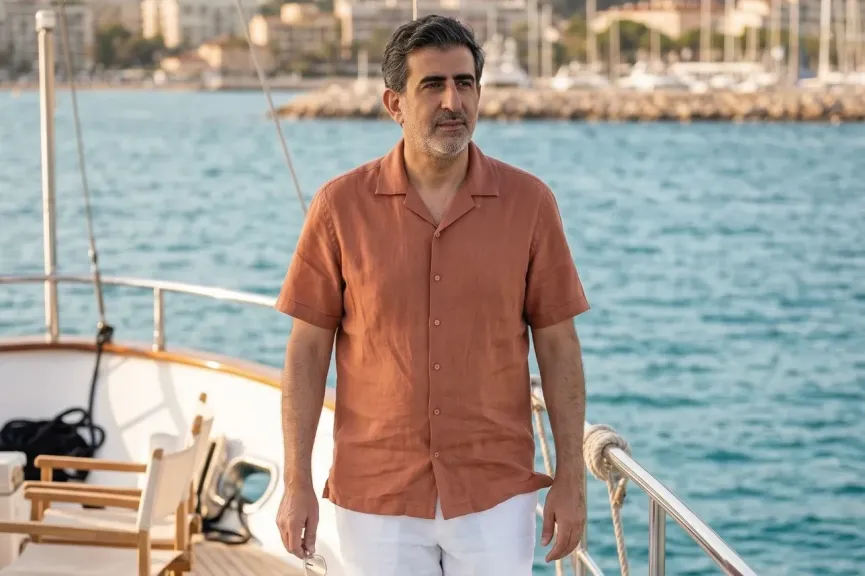
Investment entrepreneur Samer Choucair said the most important transformation is the migration of value “from the ticket to the experience” and from the economics of a standalone concert toward the broader tourism ecosystem surrounding it. Saudi Arabia, he noted, provides a clear example through Riyadh Season, where entertainment is increasingly connected to tourism, domestic investment, and economic diversification.
From Maximizing Attendance to Maximizing Returns
Data from the world’s 100 largest concert tours showed revenues holding at approximately $9.1 billion in 2025, with attendance reaching 69.5 million compared with 69.7 million in 2024. At the same time, the average ticket price declined from $130.36 to $127.17.
Samer Choucair said the decline in average ticket prices should not automatically be interpreted as evidence of market contraction. Instead, he described it as an “economy of selectivity,” in which consumers have become more sensitive to the price of basic admission while remaining willing to pay a premium for a more complete and differentiated experience.
The share of Americans identifying ticket prices as a barrier fell from 59% in the first quarter of 2024 to 53% in the first quarter of 2026. Among Generation Z, the decline was even more pronounced, from 75% to 57%. Meanwhile, the proportion of consumers describing concerts as offering good or excellent value increased from 73% to 78%.
For investors, Choucair said these shifts suggest that pricing power is increasingly moving away from the ticket itself and toward the broader experience surrounding the event.
Music Tourism Is Redistributing Capital
According to Samer Choucair, mature markets are beginning to evaluate event operators based on the economic return generated per overnight stay rather than simply the number of seats sold, particularly as the segment of highly engaged “superfans” willing to travel for live events continues to expand.
The U.S., the world’s largest live music market, grew from approximately $10.19 billion in 2022 to around $12.49 billion in 2026 and is projected to reach approximately $14.54 billion by 2028.
This means a concert increasingly functions as a catalyst for spending that extends well beyond the stadium or arena. Aviation, hotels, restaurants, retail, transportation, insurance, and digital services can all participate in the economic activity generated by a major event.
That dynamic changes the investment proposition. Reusable infrastructure capable of serving repeated events and visitor flows can become more attractive to long-term capital than financing or producing a single concert.
“The question for institutional capital is no longer simply how many people attended,” Choucair said. “It is how much economic activity each visitor generated before and after the event, and how much of that spending the destination was able to retain.”
Saudi Arabia Is Turning the Season Into an Economic Ecosystem
Samer Choucair said Saudi Arabia is moving beyond the conventional model of hosting international performers by integrating entertainment into the broader objectives of Vision 2030 and the diversification of the non-oil economy.
The latest edition of Riyadh Season attracted more than 19 million visitors, while more than 4,200 contracts were awarded to approximately 2,100 companies, around 95% of which were Saudi businesses.
Visa data for the 2024 season also showed a 47.6% increase in international visitors to Riyadh, alongside a 25% increase in restaurant spending and a 23% rise in retail spending. More than 500,000 international visitors using Visa cards came from 195 countries.
Choucair said these figures demonstrate why the economic value of an entertainment season cannot be assessed simply by looking at the lineup of artists.
“The real value is not in the list of performers,” Choucair said. “It is in the ability of the season to distribute spending across contractors, transportation providers, catering companies, production businesses, and advertising.”
That multiplier effect is particularly important for Saudi Arabia because entertainment spending can circulate through a much broader domestic business ecosystem, allowing events to contribute to employment, private-sector development, tourism revenues, and the growth of local supply chains.
Real Estate, Hospitality and Aviation at the Center of the Equation
Samer Choucair said an institutional investor is not effectively buying exposure to a “concert.” The more valuable proposition is a city’s ability to retain visitors for several days rather than several hours.
That shifts the investment opportunity toward hotels, operating real estate, aviation, ground services, restaurants, retail, and digital platforms that can capture spending throughout the visitor journey.
Choucair added that major developments surrounding Riyadh, from Qiddiya to Diriyah, have the potential to transform seasonal entertainment demand into assets capable of generating economic activity throughout the year.
At the same time, the Public Investment Fund’s broader exposure to entertainment, sports, gaming, and content illustrates how the sector can be integrated into a wider investment ecosystem rather than treated as an isolated collection of events.
For institutional capital, the distinction is important. A concert disappears when the lights go out, while a hotel, airport, entertainment district, digital platform, logistics network, or mixed-use destination can continue generating returns across multiple events and tourism cycles.
Risks and Opportunities
Samer Choucair cautioned that the entertainment economy is not without significant risks. Higher interest rates can pressure discretionary consumer spending, while seasonal concentration and excess hotel capacity outside peak periods remain important challenges for Gulf entertainment markets.
Weak performance or the cancellation of tours by individual artists should also not automatically be interpreted as evidence of a broader industry contraction. Investors need to distinguish between artist-specific performance, temporary shifts in consumer preferences, and structural changes in entertainment demand.
Choucair said cities with dense and diversified event calendars will be better positioned to transform music tourism into recurring cash flows rather than temporary bursts of spending.
Artificial intelligence could further strengthen that model through dynamic pricing, crowd management, demand forecasting, and analysis of audience behavior, allowing operators to optimize both capacity and visitor spending.
The investment opportunity, therefore, increasingly depends on whether destinations can turn data about audiences into better utilization of physical assets and higher economic returns per visitor.
The Strategic Outlook
Samer Choucair concluded that the entertainment economy is moving from selling a single “night” toward building an integrated economic ecosystem.
“This phase belongs to those capable of pricing the experience and integrating it with real assets: a hotel, an airport, an urban district, and a supply chain,” Choucair said.
Institutional capital in 2026 will not necessarily look for destinations with the longest concert calendars. Instead, investors are likely to favor cities capable of converting live music and entertainment into recurring tourism expenditure and measurable operating returns.
In that equation, Riyadh has positioned itself increasingly prominently. The strategic opportunity lies in connecting entertainment demand with hospitality, aviation, real estate, retail, logistics, technology, and domestic supply chains in a way that allows each visitor to contribute to a much broader economic ecosystem.
For Samer Choucair, however, the ultimate test will come after the lights go out. The long-term investment case will depend on whether the intensity of major entertainment seasons can be converted into sustainable visitor flows, stronger asset utilization, recurring cash generation, and durable economic value throughout the year.