
Samer Choucair: Smart Homes Lead a New Investment Wave in Saudi Arabia Under Vision 2030
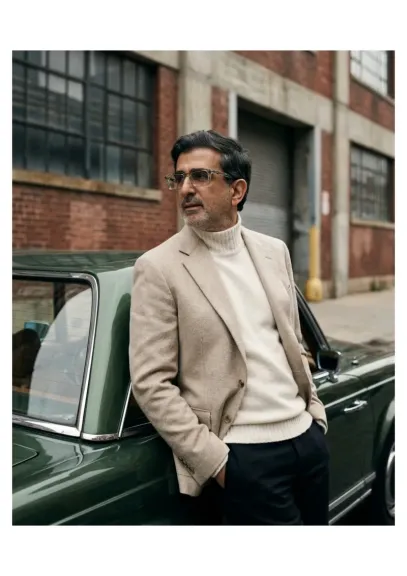
Samer Choucair, investment entrepreneur, said that the wide circulation of a simplified guide for improving home energy efficiency reflects a rapidly accelerating global shift toward sustainability, affirming that these trends aren't limited to reducing electricity bills, but open new investment horizons in the green real estate and smart homes sector, particularly in Saudi Arabia, which continues implementing Vision 2030's targets.
He explained that the widely circulated diagram showing a home in snowy conditions alongside a set of practical improvements such as attic insulation, sealing doors and windows, using energy-saving lighting, and modern ventilation systems, carries a message extending beyond awareness, reflecting a global economic direction making energy efficiency one of the most prominent investment drivers in the coming years.
*Energy Efficiency Transforms Into an Investment Opportunity*
Choucair affirmed that improving home energy consumption efficiency is no longer just a measure aimed at reducing expenses, but has become an influential factor in raising real estate asset value and strengthening their appeal to investors and buyers.
He added that Gulf states, led by Saudi Arabia, possess major opportunities to benefit from this shift, given high energy consumption rates in cooling and air conditioning systems, making investment in thermal insulation, high-efficiency windows, smart lighting, and energy management systems among the most promising sectors in the period ahead.
He noted that global studies show that green, energy-efficient homes achieve a price premium reaching up to 7% compared to traditional homes, while properties that don't keep pace with these requirements may see their value decline by roughly 4%, creating direct investment opportunities in developing sustainable projects, renovating existing buildings, and supplying smart construction materials and technologies.
Choucair said: "Energy efficiency is no longer just an environmental choice, it has become an economic investment achieving sustainable returns. The simple improvements homeowners apply today actually represent major investment opportunities for companies and developers who recognize market trends early."
*Vision 2030 Leads the Shift Toward Sustainable Real Estate*
Choucair explained that the Saudi Green Initiative, integrated with Vision 2030's targets, is pushing the construction and real estate sector toward a new phase relying on sustainability and resource use efficiency.
He noted that the Kingdom targets reducing carbon emissions by roughly 278 million tons annually by 2030, alongside raising renewable energy sources' contribution to 50% of electricity production, as well as developing the Saudi Energy Efficiency Program and expanding the application of sustainable building standards.
He added that these targets encourage developers to integrate solar energy systems, thermal insulation, and smart technologies within new projects, particularly in major cities and giga projects such as NEOM and the Red Sea, while also supporting the growth of green financing instruments, including green sukuk.
Choucair said: "The transformation underway in the real estate sector today isn't temporary, it represents a complete reshaping of the market. The investor who focuses on sustainable development or renovating existing real estate assets will be among the biggest beneficiaries of growing demand and government support."
*Smart Homes Strengthen Real Estate Market Appeal*
Choucair noted that the smart home market in Gulf states is experiencing accelerating growth driven by rising urbanization rates, increasing reliance on Internet of Things technologies, and growing interest in reducing energy consumption.
He added that the Saudi market is seeing growing demand for properties incorporating smart air conditioning systems, energy-saving lighting, and electricity consumption management, in addition to thermal insulation and residential solar energy, elements that have come to influence purchase decisions, particularly among youth and families.
He explained that opening the real estate market to foreign investors starting January 2026 strengthens the appeal of sustainable real estate projects, with expectations of new investment flows targeting high operational efficiency assets.
Choucair said: "With the Saudi real estate market continuing to grow during 2026, smart homes and green buildings have come to represent one of the most attractive investment opportunities, whether in real estate development or in supporting technologies and services."
*Samer Choucair: Opportunities Extend Across Green Economy Sectors*
Choucair explained that investment opportunities aren't limited to purchasing real estate, but encompass a number of sectors tied to the shift toward sustainable construction, led by companies manufacturing thermal insulation materials, green building technologies, energy management systems, and smart homes.
He added that real estate investment trusts, green sukuk, and existing building renovation projects also represent promising opportunities for investors looking to achieve stable returns alongside supporting sustainability goals.
He affirmed that renovating existing buildings to raise their energy consumption efficiency has become one of the fastest fields for achieving returns, given the reduction it provides in operating costs and rise in asset value.
*Investing in Sustainability Is Investing in the Future*
He concluded his remarks by affirming that the shifts underway in the global housing sector prove that sustainability has become a core part of the modern investment equation.
He added that Saudi Arabia, thanks to Vision 2030 and the Saudi Green Initiative, possesses an investment environment capable of leading this transformation in the region, noting that investors who move early to invest in green real estate, smart homes, and energy efficiency technologies will be in a strong position to benefit from expected growth in the coming years, affirming that genuine investment opportunities arise when daily consumer needs meet the state's strategic directions, and home energy efficiency represents today one of the most prominent of these opportunities in the Saudi economy.