
Samer Choucair: The Iran War Has Accelerated the Repricing of Energy Security and Capital
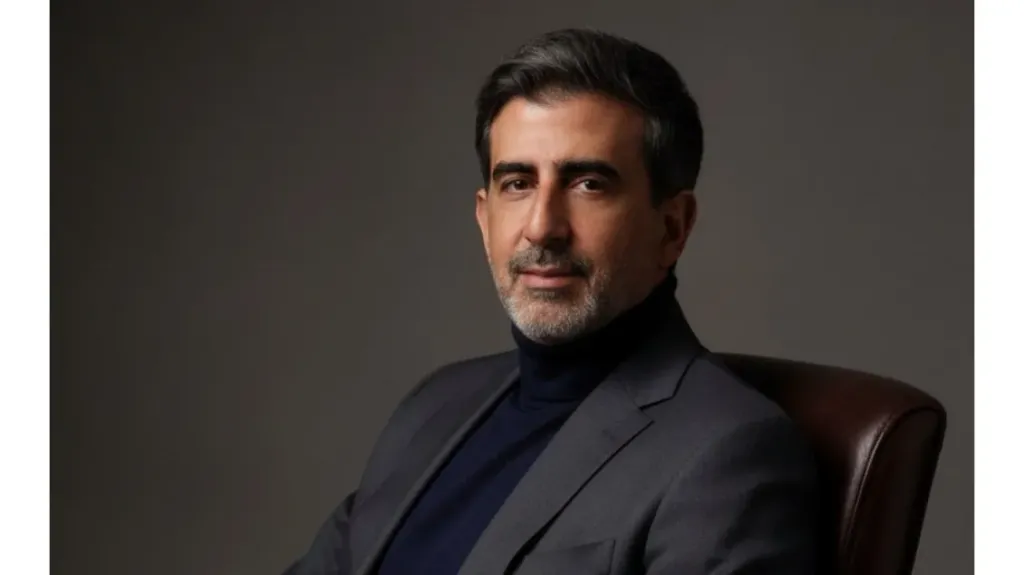
Investment leader Samer Choucair said the Iran war, which began on February 28, 2026, has not produced the scenario some markets initially expected: a prolonged return to fossil-fuel dominance, Brent crude remaining sustainably above $100 a barrel, and renewable-energy projects being pushed indefinitely into the future.
Instead, Choucair said the conflict has repriced two variables simultaneously: energy security and the cost of capital.
Fossil-fuel importers have incurred more than $330 billion in additional costs over the six months since the conflict began compared with what pre-war futures markets had implied. Brent crude surged to nearly $126 a barrel in late April before retreating toward the high-$80s to low-$90s. The result, Choucair argued, is not a return of oil to the center of the global investment cycle, but a broader reassessment of which energy systems can deliver security, affordability, and resilience under geopolitical stress.
Oil Is No Longer the Only Investment Bet
Samer Choucair said approximately 8.3 million barrels per day of Gulf oil production remained shut in during July, while observed global oil inventories had declined by roughly 410 million barrels since the beginning of the war. The International Energy Agency has also projected a contraction in global oil demand during 2026, reinforcing the tension between disrupted supply and weakening consumption.
Choucair said this combination has moved markets away from pricing a short-lived “scarcity panic” and toward pricing a more prolonged period of depletion and supply uncertainty.
Higher fuel costs, he added, have encouraged governments and corporations to accelerate their search for energy sources that can be deployed domestically and relatively quickly, including solar power, battery storage, electric vehicles, and energy-efficiency technologies.
The investment implication is important. High oil prices can support hydrocarbon producers, but they can simultaneously improve the economics of technologies designed to reduce dependence on imported fuels.
Clean-Technology Surplus Becomes an Opportunity
Choucair said the war has coincided with substantial Chinese manufacturing capacity in clean-energy technologies, creating an unusual combination of geopolitical urgency and abundant equipment supply.
Since the conflict began, China has continued expanding exports across solar equipment, electric vehicles, batteries, and other clean technologies. The broader response to disruption in Gulf oil and gas supplies has also pushed several European and Asian economies to accelerate renewable-energy deployment as they seek to reduce exposure to imported fossil fuels.
Chinese automakers have increasingly relied on overseas markets, while demand for solar equipment has expanded across emerging regions, including Africa.
Choucair cautioned, however, against interpreting the transition as a one-way movement toward renewables. Some fuel-importing Asian economies have simultaneously increased coal generation as they attempt to protect electricity systems from disruptions in oil and gas markets.
That creates a more complicated picture: renewable generation can grow rapidly while fossil-fuel use also increases temporarily as governments prioritize security of supply.
For investors, Choucair said, that distinction matters because energy transition is no longer being driven exclusively by environmental policy. It is increasingly being driven by national security, trade balances, and the economics of import substitution.
The Federal Reserve Is Repricing the Cost of Capital
Samer Choucair said the second variable reshaping investor calculations is not oil itself, but the discount rate applied to future cash flows.
Federal Reserve Chair Kevin Warsh used his August 28 Jackson Hole speech to emphasize that inflation must move toward the Fed’s 2% objective at a sufficiently convincing pace. His remarks prompted investors to sharply increase expectations of another rate increase at the September meeting. Market-implied odds of a hike rose from roughly 35% to around 60%, while the federal funds target range remained at 3.50%–3.75%.
That shift matters because energy markets are now interacting directly with monetary policy.
A sustained energy shock can keep inflation elevated, which can push central banks toward tighter policy. Higher interest rates then raise financing costs for infrastructure, renewable projects, technology companies, real estate, and other long-duration assets.
“Markets punish uncertainty faster than they punish a high price,” Choucair said.
He argued that a higher discount rate can compress valuations across energy-transition projects, particularly those dependent on significant upfront financing. But it does not eliminate demand for assets capable of permanently reducing exposure to imported fuel costs.
This creates a more selective investment environment in which financing structure, execution speed, and operating cash flow become more important than headline capacity targets.
Saudi Arabia Is Reordering Its Energy Investment Priorities
Choucair said the conflict has not eliminated Saudi Arabia’s diversification objectives, but it has increased execution costs and sharpened the need to prioritize projects according to their strategic and financial value.
The Kingdom faces a substantial renewable build-out requirement as it works toward its 2030 power targets. At the same time, Saudi Arabia is accelerating investment in storage, which is becoming increasingly important as intermittent renewable capacity expands.
The Saudi Power Procurement Company recently finalized agreements covering 2 GW / 8 GWh of battery storage, representing more than $1.16 billion of investment and the first phase of a broader battery-storage procurement program.
Separately, ACWA Power, Badeel — a company wholly owned by the Public Investment Fund — and Saudi Aramco Power Company reached financial close on approximately $8.2 billion of financing for seven solar and wind projects with a combined capacity of 15 GW.
For Samer Choucair, these investments show how the definition of energy security is expanding.
The strategic question is no longer simply how many gigawatts of renewable generation can be announced. It is whether the underlying system includes sufficient storage, transmission capacity, grid resilience, financing, manufacturing capability, and operational expertise to deliver power reliably when external supply chains are disrupted.
Energy Security Is Becoming an Investable Asset
Choucair said higher fossil-fuel prices improve the economics of domestically generated renewable electricity, but they also create a financing contradiction.
The same inflationary shock that makes alternative energy more attractive can raise interest rates, increase debt costs, and lengthen project-development schedules.
That means the Gulf investment opportunity is increasingly concentrated not only in generation capacity, but in battery storage, grids, transmission infrastructure, logistics, Red Sea export routes, manufacturing, and local operating capabilities.
Funds that continue to view energy transition exclusively as an environmental theme risk mispricing the opportunity, Choucair said.
Institutional investors are more likely to treat the transition as infrastructure for economic security and therefore prioritize partners with access to long-term capital, proven execution capability, predictable regulatory frameworks, and the ability to operate through commodity and geopolitical cycles.
“The investable asset is no longer simply renewable capacity,” Choucair said. “It is the infrastructure that allows an economy to keep functioning when imported energy becomes expensive or unavailable.”
Capital Is Searching for Several Forms of Protection
Samer Choucair said institutional capital is increasingly moving toward a combination of clean technologies, resilient conventional energy, and high-quality liquid assets.
Clean-technology companies, battery manufacturers, electric-vehicle supply chains, and renewable infrastructure can benefit from the drive to reduce fuel-import dependence.
At the same time, conventional energy assets located away from the most vulnerable geopolitical chokepoints can retain considerable value, particularly when global supply remains constrained.
A more hawkish Federal Reserve introduces a third dimension. If interest-rate expectations continue rising, high-quality fixed income, cash, and the U.S. dollar can regain importance as portfolio stabilizers.
The conflict has also created direct costs for Gulf energy producers. Damage to energy infrastructure has been significant, and Rystad Energy has estimated that repair and restoration costs across energy-linked infrastructure in the region could reach as much as $58 billion, including up to approximately $50 billion associated with oil and gas facilities.
That reinforces Choucair’s argument that higher commodity prices alone do not determine investment returns. Physical resilience and the cost of restoring infrastructure must also enter valuation models.
Emerging-Market Compliance Risk Enters the Equation
Choucair said the energy crisis is increasingly intersecting with another source of investment risk: cross-border financial compliance in emerging markets.
The recent U.S. action concerning Banque Misr’s operations in the UAE illustrates the point. U.S. authorities have alleged that the UAE operation processed approximately $1.8 billion in transactions for 103 companies potentially connected with Iranian shadow-banking networks between January 2024 and June 2026.
The proposed measure applies to Banque Misr’s UAE operation rather than its wider Egyptian business, but the case demonstrates how sanctions exposure can rapidly become a governance, counterparty, and funding issue for financial institutions operating across borders.
Choucair said strong earnings cannot by themselves neutralize compliance risk.
For institutional investors, the lesson is that profitability, capital adequacy, and balance-sheet growth must increasingly be evaluated alongside sanctions controls, correspondent-banking exposure, transaction monitoring, and the quality of cross-border governance.
The Next Scenario: Oil Has Less Monopoly Over Capital
Choucair said his base-case scenario is an oil price that remains sufficiently elevated to support substitution and investment in energy alternatives, but not high enough for long enough to trigger a massive new global fossil-fuel investment cycle.
Under such a scenario, capital would continue flowing toward clean electricity, storage, grid infrastructure, and technologies capable of being exported across multiple markets.
A more reliable reopening of the Strait of Hormuz could remove part of the geopolitical premium embedded in crude prices relatively quickly.
Investor behavior, however, may take much longer to reverse.
Companies and governments that have already spent six months redesigning procurement strategies, accelerating solar deployment, increasing storage requirements, or diversifying fuel supplies are unlikely to immediately abandon those strategies simply because crude prices decline.
The more dangerous scenario, Choucair said, would involve a broader confrontation or deeper disruption to trade through the Gulf.
That could push refined-product prices higher, reinforce inflation, and force the Federal Reserve into additional tightening. Under those conditions, valuation multiples for long-duration assets could contract further, while liquidity, the dollar, and highly rated debt gain relative importance.
The Strategic Outlook
Samer Choucair concluded that “the war has turned energy security and the energy transition into the same investment file.”
In his view, the most disciplined institutional portfolio in 2026 should combine electricity and grid infrastructure capable of generating long-duration cash flows, flexible conventional-energy exposure located away from critical chokepoints, and sufficient liquidity to protect the portfolio against the possibility of a simultaneous Hormuz shock and another round of U.S. monetary tightening.
“Capital will reward those who turn energy security into an operating model, not those who turn it into a narrative,” Samer Choucair said.
The central investment question of 2026, therefore, is not whether oil has returned permanently to the center of the global economy.
It is whether investors can redesign their energy and capital allocations around three increasingly decisive variables: execution quality, financing costs, and supply-chain resilience.
The Iran war has accelerated that repricing. Oil remains strategically important, but it no longer has a monopoly over energy capital. The assets likely to command the greatest institutional value are those capable of delivering reliable energy, reducing external dependence, surviving higher financing costs, and continuing to generate cash flows through geopolitical disruption.