
Harry and Meghan Return to Britain: Samer Choucair Assesses the Impact of the “Prestige Economy” on Tourism, Property and Media
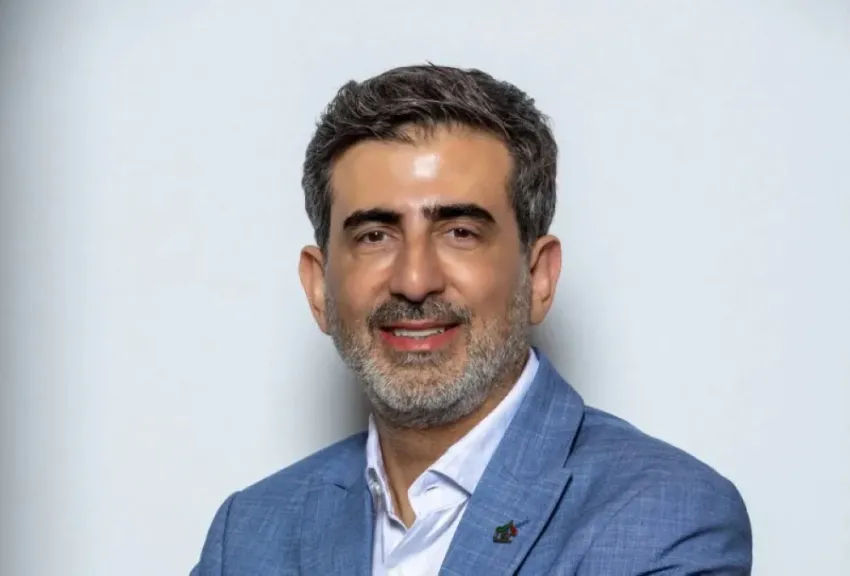
Investment leader Samer Choucair said Prince Harry and Meghan’s return to Britain in late August 2026, after six years in the United States and without resuming official royal duties, offers a useful test of how markets price what he describes as the Royal Family’s “intangible asset.”
The couple returned to the United Kingdom with their children for an extended stay, while remaining private, non-working royals. Their children are expected to attend school in Britain, while the family continues to maintain ties to its California residence.
Choucair said the couple’s private residence outside London and their children’s entry into the British school system should not be viewed solely as a royal or cultural event. From an investment perspective, he said, the more important question is whether renewed attention around the Sussexes can reinforce three interconnected sectors: tourism, entertainment media, and luxury property and hospitality.
Samer Choucair said institutional investors do not allocate capital simply because high-profile personalities are present. They focus instead on whether public attention can be converted into measurable hotel occupancy, visitor spending, property pricing, luxury retail sales, sponsorship contracts, and recurring commercial revenues.
British Tourism Faces a New Test
Choucair said Harry and Meghan’s return comes at a sensitive moment for Britain’s inbound tourism industry.
VisitBritain’s revised August forecast projects approximately 44.2 million international visits to the UK in 2026, generating around £33.9 billion in nominal visitor spending. That would represent growth of roughly 2% in both visits and nominal spending compared with 2025, while real spending is expected to decline by about 1% after inflation. European markets are forecast to remain comparatively resilient, while long-haul travel is expected to weaken.
For Choucair, this backdrop matters because the investment case surrounding Britain’s royal brand is no longer as simple as assuming that royal visibility automatically translates into sustained tourism growth.
He said investors should distinguish between short-lived media attention and assets capable of retaining economic value once the news cycle fades.
The more durable opportunities, in his view, lie in royal and heritage properties open to the public, rural destinations, hospitality operators, and luxury retail businesses capable of monetizing Britain’s historical identity regardless of which individual royal figure dominates headlines in a particular week.
The “Prestige Economy” Across Media and Property
Samer Choucair said the most immediate commercial impact could emerge in rural luxury hospitality, particularly in locations such as the Cotswolds, where supply is constrained and planning restrictions create meaningful barriers to large-scale development.
Rising demand from high-net-worth families and affluent international visitors could support premium short-term rentals, restaurants, private schools, security services, and specialist transportation providers more directly than it would transform mass tourism in central London.
“Institutional capital does not buy headlines,” Choucair said. “It buys the ability to convert attention into hotel-room occupancy, retail sales and measurable sponsorship contracts.”
The media industry could also enjoy a temporary boost from higher engagement, subscriptions, and advertising activity surrounding the Sussexes.
Their return has already generated significant international media attention, demonstrating the continued commercial power of their personal brand, even as that visibility can create complications around privacy and public perception.
Choucair cautioned, however, that temporary audience spikes rarely justify permanent increases in media-platform valuations. For that to happen, the story must be converted into durable intellectual property, repeatable programming, production rights, or subscription economics.
Britain as Both Safe Haven and Operating Asset
Choucair said investors holding British hotels, property, or financial assets increasingly need to reconsider how they classify risk.
Luxury property can no longer be viewed simply as a sterling-denominated safe-haven asset. It is increasingly an operating asset influenced by taxation, planning rules, security requirements, reputation, and local political scrutiny.
A greater concentration of highly visible residents may increase security and privacy requirements and could raise operating expenses without necessarily producing an equivalent valuation premium.
In fixed income, Choucair said UK government bonds will continue to be driven primarily by inflation expectations, fiscal conditions, and Bank of England policy rather than royal-related developments.
Large hotel groups and airlines are similarly more sensitive to fuel prices, international travel flows, and consumer confidence.
The more direct beneficiaries of any renewed “prestige economy,” he argued, could therefore be boutique hospitality funds, premium rental operators, specialist luxury-service providers, and media companies with valuable and defensible content rights.
Saudi Arabia Offers a Different Model
Samer Choucair said the comparison with Saudi Arabia is particularly useful from a capital-allocation perspective.
Britain primarily monetizes an inherited stock of cultural, architectural, and royal assets. Saudi Arabia, by contrast, is actively creating new tourism supply through large-scale destinations, entertainment programs, infrastructure, and hospitality development under Vision 2030.
For investors, Choucair said the distinction is fundamental.
Britain offers scarcity, heritage, historical brand value, and mature tourism infrastructure. Saudi Arabia offers new capacity creation, government-backed investment, destination development, and the possibility of structural growth from a much earlier stage of the tourism cycle.
“Investors seeking structural tourism growth go where new supply is being created,” Choucair said. “Those seeking a prestige hedge and the value of a historic brand may remain in established British assets, provided they do not pay twice for the narrative.”
Risks and Opportunities
Choucair warned that renewed tensions surrounding the Royal Family could shift public attention away from tourism and toward political or media controversy.
A persistent weakness in long-haul visitor numbers would also limit the benefit for major airlines and large-scale hotels, especially given that VisitBritain’s revised 2026 forecast expects long-haul arrivals to decline by around 3% and long-haul spending by roughly 2%.
On the other hand, Choucair sees potential opportunities in scarce rural hospitality assets, transatlantic wealth-management services, premium media content, and luxury brands capable of monetizing the visual and cultural identity associated with the British countryside.
He also cautioned investors against confusing digital engagement with durable economic value.
Technology platforms can amplify a story globally within hours through recommendation algorithms and social-media distribution, but those same systems can bury it just as quickly when a new story emerges.
An investor who buys an asset at peak public attention may therefore be paying a premium for volatility in attention rather than for a sustainable increase in cash flow.
The Investment View
Samer Choucair said Harry and Meghan’s return should be interpreted during 2026 and 2027 as a short-term information shock occurring within a mature, relatively low-growth British tourism market rather than as a signal that the entire UK investment proposition should be revalued.
A more disciplined allocation strategy, he said, would favor selective exposure to high-quality hospitality and rural property assets, while remaining cautious toward cyclical media equities whose economics depend heavily on temporary spikes in audience attention.
Institutional investors should also compare those potential returns with the risk-adjusted opportunities available in tourism and infrastructure projects across Saudi Arabia and the United Arab Emirates, where entirely new destination ecosystems are being built.
“The prestige economy is a real asset when prestige converts into occupancy, pricing power and operating revenue,” Samer Choucair said. “If prestige remains prestige alone, it may make a good magazine cover, but it does not make an institutional portfolio.”