
Samer Choucair: Genkis Deal Shakes Sports Rights Market Is the Era of Opaque Middlemen Ending?
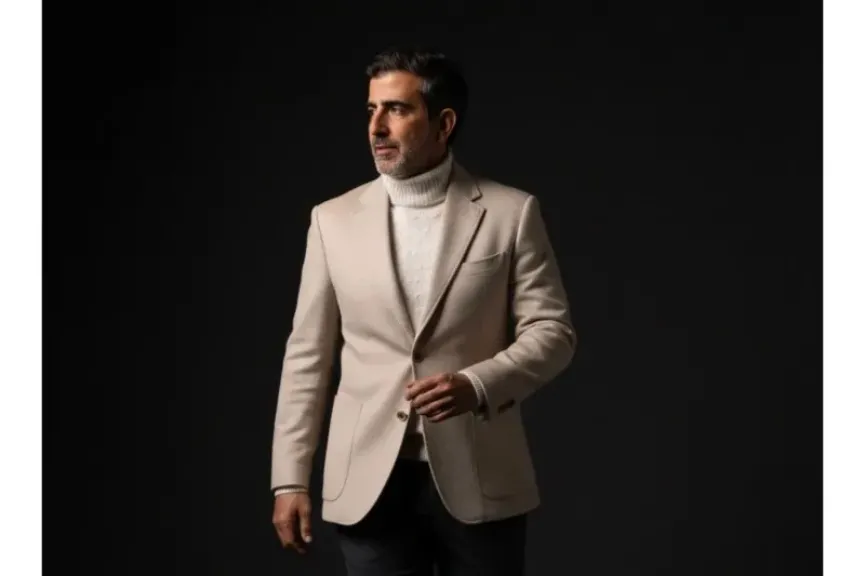
Investment leader Samer Choucair believes the deferred prosecution agreement reached by the U.S. Department of Justice with Hugo and Mariano Jinkis, owners of Full Play, marks a new stage in the long-running “FIFAgate” scandal that began in 2015. More importantly, he argues, the agreement carries implications that extend beyond the closing of another judicial chapter, potentially forcing investors to reprice governance risk across the sports broadcasting and sponsorship-rights market.
U.S. authorities accused the father and son of participating in schemes involving bribes to football officials in exchange for securing media and marketing rights to competitions including the Copa América, Copa Libertadores, World Cup qualifiers, and international matches. The pair remained outside the United States for more than a decade before voluntarily arriving in New York in May 2026 to negotiate with prosecutors. In August, the parties reached a deferred prosecution agreement, with further proceedings to be completed before the court.
According to Samer Choucair, the investment significance of the case lies not simply in the potential punishment, but in the message it sends to the global sports-media industry.
“An investor is not only buying an audience,” Choucair said. “The investor is buying a contractual claim on future cash flows. The greater the governance risk and uncertainty surrounding the legal ownership of those rights, the higher the cost of capital.”
The issue becomes increasingly important as the economics of global sport continue to expand. FIFA has projected 2026 revenue of approximately $8.911 billion, including $3.925 billion from broadcasting rights, $1.786 billion from marketing rights, and $3.017 billion from ticketing and hospitality. Across the 2023–2026 cycle, FIFA has targeted approximately $13 billion in revenue, while more recent expectations from FIFA leadership have suggested that total revenue could exceed $15 billion following the commercial success of the 2026 World Cup.
Samer Choucair argues that as sports rights become more valuable, governance increasingly becomes part of financial valuation rather than simply a legal-compliance obligation. Any weakness in the process through which media or commercial rights are awarded can potentially result in legal claims, delayed cash flows, higher insurance costs, and more expensive financing.
For investors, this changes the way sports-rights assets should be evaluated. A broadcasting agreement may appear highly attractive based on audience size, expected advertising revenue, or distribution reach, but those numbers become less valuable if the legal chain behind the rights cannot withstand scrutiny.
Choucair said institutional capital therefore has to look beyond headline audience figures and examine how the rights were acquired, who controls them, whether contracts are enforceable across jurisdictions, and whether the process through which they were awarded can be independently verified.
The lesson is particularly relevant to the Gulf as regional investment in sport continues to accelerate and Saudi Arabia prepares to host the 2034 FIFA World Cup.
According to Samer Choucair, sustainable value will not come from acquiring rights or building stadiums alone. It will depend increasingly on creating transparent and auditable contractual ecosystems capable of attracting institutional investors, global broadcasters, sponsors, insurers, and financing partners.
This is especially important as sports assets evolve from prestige investments into increasingly sophisticated commercial platforms combining broadcasting, sponsorship, ticketing, hospitality, tourism, digital content, licensing, and infrastructure.
For Choucair, stronger governance can therefore have a direct impact on valuation. A sports property with clearly documented rights, transparent bidding procedures, enforceable contracts, and independently verifiable commercial arrangements may deserve a lower risk premium than an economically similar asset dependent on opaque intermediaries.
The opposite is also true. Where the ownership or allocation of commercial rights depends heavily on poorly documented relationships or non-transparent intermediaries, investors may demand a higher return to compensate for the possibility of litigation, regulatory intervention, contract cancellation, or disruption to future cash flows.
Samer Choucair believes this could gradually reshape the role of intermediaries across the sports industry. Middlemen are unlikely to disappear completely, particularly in markets where rights aggregation, distribution, and negotiation expertise remain valuable. However, the economic premium may increasingly shift toward intermediaries that can demonstrate compliance, transparency, and documented value creation rather than those whose advantage depends primarily on access to decision-makers.
That distinction matters because institutional investors do not value all future revenue equally. The reliability, enforceability, and transparency of those cash flows influence the discount rate used to value them.
Choucair concluded that institutional capital is likely to assign a higher premium to sports assets with clear ownership structures and verifiable governance, while business models built around opaque intermediaries may face higher financing costs.
“Sport has become a major investment industry,” Samer Choucair said. “Governance is therefore no longer simply a defensive cost. It is an asset that can increase the value of future cash flows and reduce the discount rate applied to them.”