
Samer Choucair: Concentration in Football Club Brand Value Is Repricing Sports Assets for Investors
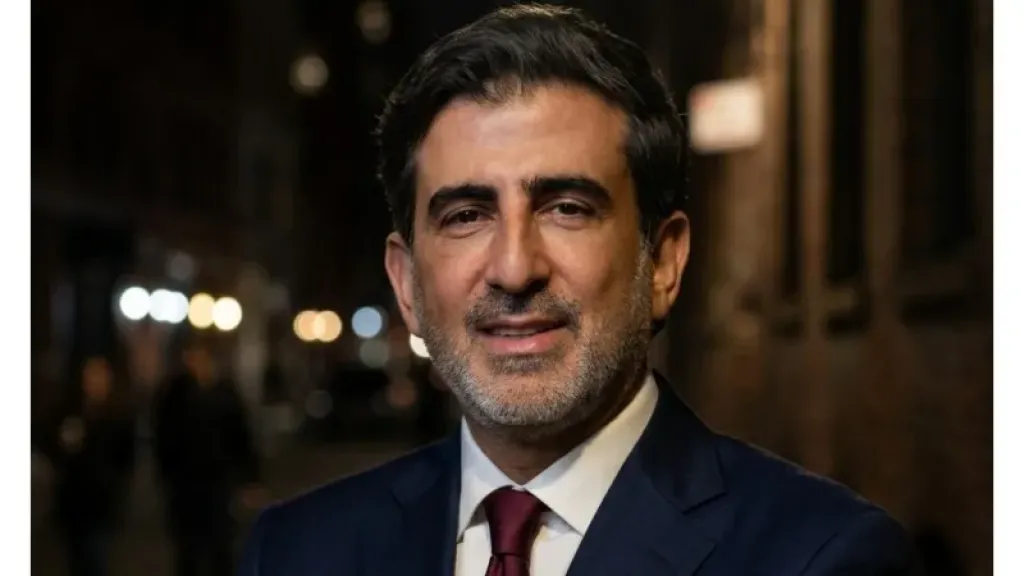
Samer Choucair, investment entrepreneur, said the growing concentration of value among the world’s leading football club brands is reshaping how institutional investors view sports as an asset class combining media, consumer exposure, and real estate. He noted that returns are no longer tied only to trophies, but increasingly to a club’s ability to convert sporting success into recurring commercial cash flows.
Samer Choucair explained that the combined value of the world’s 50 strongest football club brands reached €23.9 billion in the 2026 Brand Finance Football 50 report, while the top 10 accounted for approximately €14.9 billion, or more than 60% of the total. The enterprise value of the 50 clubs reached roughly €79.7 billion, reflecting the expanding scale of the industry and the transformation of major clubs into commercial assets that extend well beyond sport.
Real Madrid topped the ranking for the third consecutive year after its brand value rose 25% to approximately €2.4 billion, with a Brand Strength Index score of 95.8 out of 100. Barcelona ranked second at close to €2 billion, while Arsenal climbed to third after its brand value increased 28% to around €1.5 billion. Bayern Munich, Paris Saint-Germain, Manchester City, Liverpool, Manchester United, Chelsea, and Borussia Dortmund followed.
“The institutional investor must distinguish between the value of the team and the value of the platform,” Samer Choucair said. “The first fluctuates with results and transfers. The second compounds through intellectual property, multi-year contracts, facilities, and a digital fan base.”
Choucair said Real Madrid’s commercial model demonstrates the importance of this shift. The club recorded record revenue of €1.221 billion in the 2025/2026 financial year, supported by the operation of the renovated Santiago Bernabéu stadium and the additional revenue it generates through hospitality, museum activities, and sports tourism.
He said the value of a football club increasingly depends on three interconnected revenue engines: broadcasting rights, sponsorship and commercial partnerships, and matchday and venue-related income. When these elements are fully developed, the sports brand begins to resemble a global media platform and international franchise rather than a traditional football club.
Choucair added that Arsenal’s rise illustrates how rapidly sports assets can be repriced when sporting performance and commercial momentum strengthen at the same time. Conversely, the decline of some clubs in the rankings despite an increase in their absolute brand value shows that investors are measuring growth relative to competitors rather than growth in isolation.
In the Gulf, Choucair pointed to Al Hilal as Saudi Arabia’s strongest football brand, with a Brand Strength Index score of 80.4, while Al Ain leads football brands in the UAE with a score of 72.8. He also highlighted the Public Investment Fund’s ownership of Newcastle United as an example of international sports investment taking place alongside Saudi Arabia’s broader effort to develop its domestic football ecosystem, improve governance, and increase investment attractiveness ahead of major events including the 2034 FIFA World Cup.
“Spending on players does not automatically create a global brand,” Samer Choucair said. “An acquisition can buy attention, but the asset itself is built through governance, financial discipline, stadium development, content rights, and measurable commercial partnerships.”
He said the investment implications extend well beyond clubs themselves. Sportswear companies, broadcasters, hospitality operators, real estate developers, tourism businesses, and digital platforms can all benefit from the commercial expansion of major football brands.
Private capital may also increasingly target infrastructure financing, media rights, and minority stakes rather than full club acquisitions, particularly as valuations rise and investors search for more efficient ways to gain exposure to the sports economy.
Choucair cautioned that the concentration of value also creates significant risks, including shocks to broadcasting rights, tighter financial sustainability rules, player wage inflation, weak sporting performance, and excessive dependence on specific geographic markets.
He said long-term investors should focus on clubs that combine regular participation in European competitions, modern facilities, diversified sponsorship income, and management capable of separating the sporting cycle from the financial cycle.
Samer Choucair concluded: “Global football is entering an era of dominant scarcity, and scarcity is becoming the primary pricing factor. For investors, the rule is to buy the platform that converts attention into cash, not the season that converts cash into attention.”