
Samer Choucair: Sharia-Compliant ETFs Are Redrawing the Global Capital Allocation Map
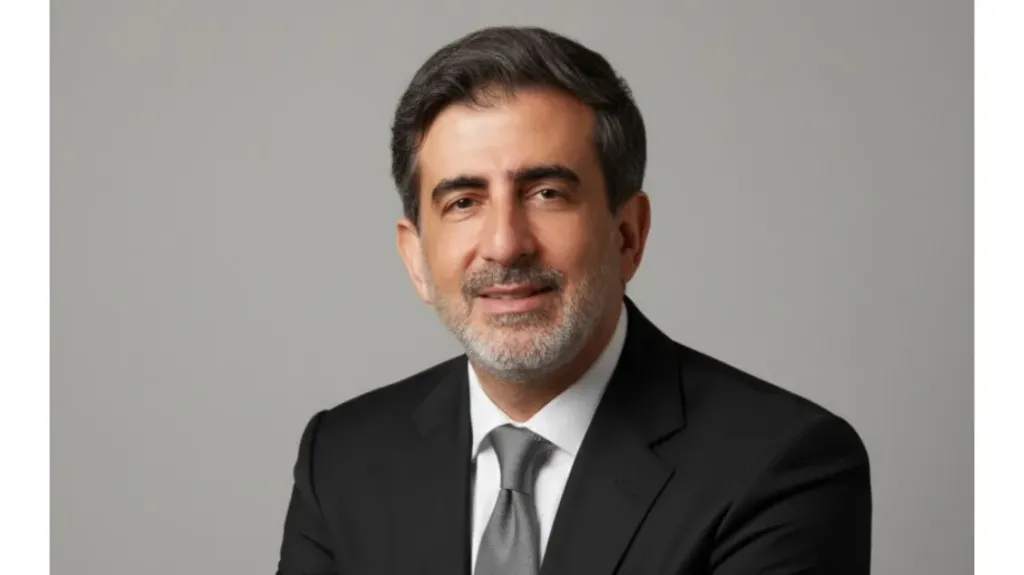
Investment leader Samer Choucair said the market for Sharia-compliant exchange-traded funds is undergoing a structural transformation, driven by growing institutional demand from sovereign wealth funds and asset managers across the Gulf and global markets.
Choucair explained that instruments such as SPUS, UMMA, HIEM, and HIEU have become examples of geographically diversified allocation, providing exposure to U.S. equities, international markets, emerging markets, and Europe while maintaining Sharia-compliant investment standards.
He added that this trend is coinciding with the growth of Saudi Arabia’s asset-management industry, whose assets exceeded $340 billion in the first quarter of 2026, with projections that they could surpass $400 billion by 2027. This is creating greater opportunities for capital flows into low-cost, transparent investment products that maintain Sharia compliance.
Technology Leads the Portfolios
Choucair noted that excluding sectors such as conventional banking, alcohol, and gambling has pushed Sharia-compliant portfolios toward technology, healthcare, and advanced industries.
He pointed out that SPUS tracks the S&P 500 after applying Sharia screening criteria and holds around 212 U.S. companies, including Nvidia, Apple, and Microsoft, with approximately $2.8 billion in assets and an expense ratio of 0.45%.
He explained that UMMA provides international exposure outside the United States through roughly 95 companies, including TSMC, Samsung, and ASML, with an expense ratio of 0.65%. Meanwhile, HIEM focuses on Sharia-compliant emerging markets and ESG criteria, while HIEU specializes in European markets.
According to Choucair, this diversification can help investors reduce geographic concentration and build more balanced portfolios.
Saudi Arabia as a Growth Engine
Choucair said Saudi Arabia’s asset-management industry grew by approximately 17% annually to more than $340 billion by the end of the first quarter of 2026, according to the estimates cited, with private funds accounting for more than half of total assets.
He added that Sharia-compliant products represent the overwhelming majority of mutual funds listed on Tadawul, while support from the Capital Market Authority, the Public Investment Fund, and the National Investment Strategy is strengthening Saudi Arabia’s ability to attract foreign capital.
He also noted that sukuk represent a major component of Saudi Arabia’s debt market, further expanding the ecosystem of Sharia-compliant investment instruments.
Returns, Opportunities, and Risks
Choucair emphasized that Sharia-compliant ETFs are no longer simply an ethical or religious investment choice. They have become tools for risk management and long-term diversification, particularly given their relatively low costs, liquidity, and ability to facilitate efficient portfolio rebalancing.
He added that some Sharia-compliant funds have, during certain periods, generated returns exceeding traditional equity benchmarks, benefiting from their relatively high exposure to technology companies.
Choucair noted that global Sharia-compliant fund assets exceeded $221 billion at the end of 2025, according to some estimates, potentially creating room for additional inflows from pension funds, family offices, and high-net-worth investors.
However, he cautioned about risks including corporate reclassification, currency volatility, emerging-market fluctuations, and the sensitivity of technology-heavy portfolios to interest-rate cycles and monetary policy.
Balanced Allocation Is the Key
Choucair believes the rise of artificial intelligence and the digital economy gives Sharia-compliant funds natural exposure to some of the world’s leading companies. However, he stressed that this does not eliminate the need for disciplined capital allocation and strong governance.
He said the real opportunity lies in building portfolios that combine strong exposure to the U.S. market with international diversification, while closely monitoring sector concentration and the valuations of technology companies.
Choucair concluded that continued implementation of Saudi Vision 2030, alongside the strengthening role of Tadawul and the Capital Market Authority, could establish Saudi Arabia as a regional hub for Sharia-compliant asset management, supporting long-term capital inflows and deeper Gulf capital markets in an increasingly uncertain global economic environment.