
Samer Choucair: Operational Neutrality Is No Longer Cheap in the Live Entertainment Industry
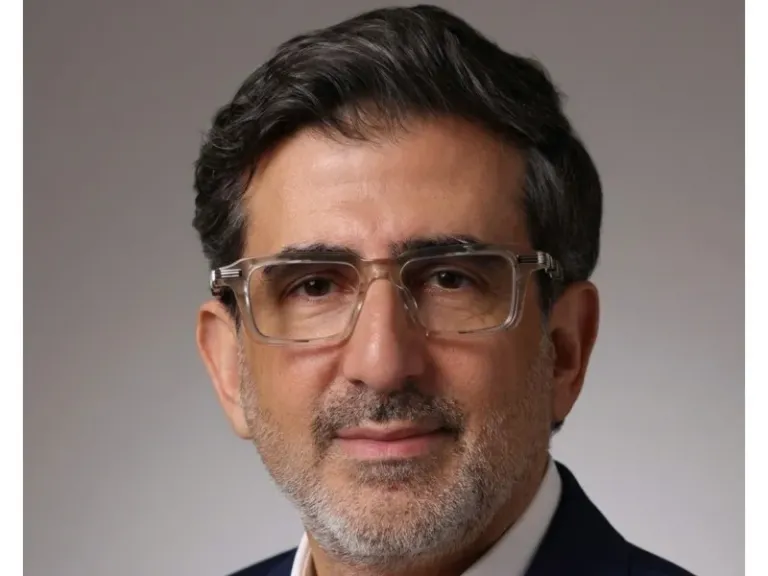
Investment strategist Samer Choucair said that the crisis surrounding artist Ed Sheeran’s North American tour, coupled with the removal of rapper Macklemore from the performance lineup following his pro-Palestinian statements, exposes a significant shift in the economics of the live music industry. Reputational and geopolitical risks have increasingly become direct variables in the pricing of assets, contracts, and investments.
Samer Choucair explained that the crisis has highlighted the fragility of the business model underpinning major concert tours when political expression intersects with venue ownership, insurance and sponsorship agreements, and divided audiences. He added that the withdrawal of several artists and bands from certain performances, alongside controversy surrounding ticket prices and the secondary market, demonstrates that a music tour is no longer merely an entertainment product. It has evolved into a complex operational and financial network characterized by high fixed costs and lengthy scheduling horizons.
Choucair noted that revenues generated by concerts and festivals exceeded $40 billion in 2025, according to industry estimates, with projections indicating that the market could approach $50 billion by 2030 under moderate-growth scenarios.
Choucair said the significance of these figures lies not merely in the size of the market, but in how revenues are generated through ticket pricing, VIP packages, venue sales, and sponsorships. These streams can substantially enhance profitability when performances succeed, but they also magnify the financial cost of any cancellation or operational disruption.
Samer Choucair emphasized that concentrated venue ownership represents one of the most prominent emerging risks, explaining that decisions made by promoters or venue owners can affect artist lineups and the continuity of performances. This effectively transforms venue-use agreements and sponsorship contracts into critical instruments of risk management.
Choucair said that markets do not price an artist’s position as an ethical commodity; they price the probability of revenue disruption. A major tour resembles an infrastructure project, characterized by sunk costs and high operating leverage, meaning that the cancellation of even a single night can have an immediate impact on cash flows.
Choucair added that the controversy surrounding the tour also underscores the need for more sophisticated reputational-risk governance across the entertainment sector. He pointed to the necessity of clearer contractual provisions governing cancellations, rescheduling, refunds, sponsorship arrangements, and insurance, arguing that the cost of ambiguity can ultimately exceed the cost of establishing explicit conditions from the outset.
Implications for the Gulf Entertainment Market
In the Gulf, Samer Choucair believes these developments carry direct implications as Saudi Arabia and other countries in the region expand their entertainment, tourism, and international concert industries as part of broader economic-diversification strategies.
He stressed that high-quality venues and sophisticated infrastructure alone are no longer sufficient. They must be supported by contractual and regulatory frameworks capable of managing multinational audiences as well as political and media-related risks.
Choucair also pointed out that artificial intelligence and digital analytics tools can play an increasingly important role in monitoring audience sentiment, managing crises, optimizing secondary-market pricing, and forecasting the probability of disruptions to scheduled performances.
Governance Becomes Part of the Investment Premium
Samer Choucair concluded that long-term investment value in live entertainment is not created simply by maximizing the number of performance nights. It is created by the ability to execute the schedule despite non-market shocks.
Accordingly, he argued that a growth premium should also incorporate a governance premium, while reputational risk should move from a peripheral consideration to a core variable in capital-allocation decisions.