
Samer Choucair: Eight Strong Players Could Become the Gateway to Reshaping Saudi Insurance Before 2027
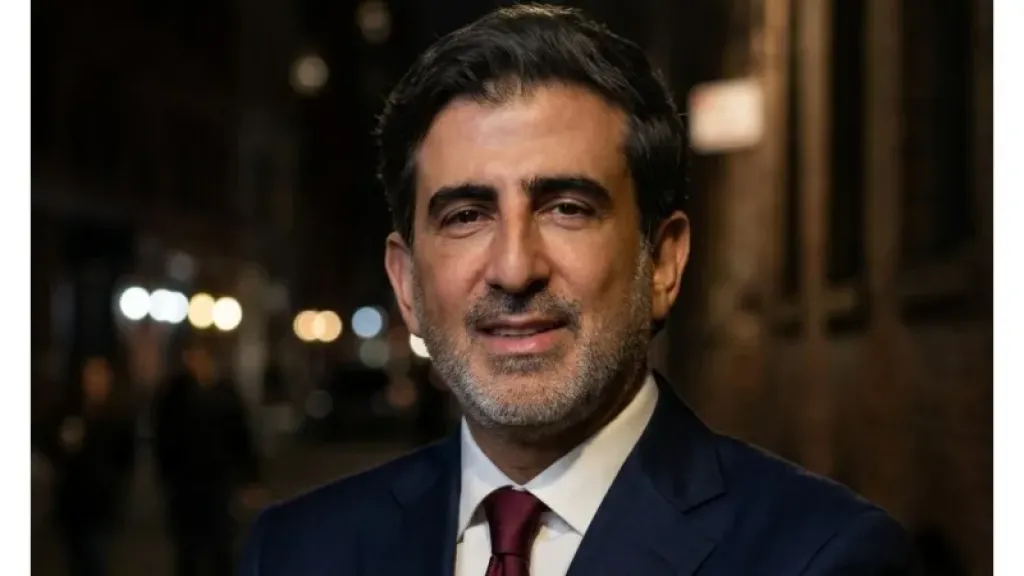
Investment leader Samer Choucair said Saudi Arabia’s insurance sector is entering a new phase of capital reallocation as the need for consolidation grows ahead of the mandatory implementation of the risk based capital framework on January 1, 2027.
Samer Choucair explained that premium growth does not necessarily translate into balance sheet strength. Gross written premiums reached approximately SAR 84.3 billion in 2025, up 10.7% from 2024 and nearly double the roughly SAR 42 billion recorded in 2021, yet market share and profitability remain concentrated among a relatively small group of companies.
He added that the five largest insurers account for approximately 74% to 77% of sector revenues, while two major companies represent close to half the market or more under some estimates. The remaining share is divided among more than twenty listed insurers, several of which continue to face persistent profitability and solvency challenges.
Samer Choucair said: “Premium growth creates a false sense of sufficiency if it is not measured against the cost of regulatory capital. Institutional investors are not buying exposure to a market simply because it is doubling in size. They are buying a company’s ability to retain risk, price it correctly, and reinvest surplus capital. The new framework will make that distinction visible on the balance sheet rather than in marketing statements.”
Samer Choucair noted that insurance revenue across 24 listed companies rose by around 14% in the first half of 2026 to SAR 38.5 billion, while aggregate net profit increased by approximately 13% to nearly SAR 1.5 billion. The improvement was supported by medical and motor insurance, stronger underwriting results, and investment income. Even so, nine of the 24 companies continued to report net losses.
He added that the sector’s average solvency margin declined to 156.7% in 2025 from 165.7% a year earlier, while net income for the industry fell to approximately SAR 1.9 billion. Samer Choucair said the heavy concentration in medical and motor insurance, which accounted for around 89% of premium growth, makes diversification of earnings one of the sector’s main strategic challenges.
Samer Choucair said the transition toward a risk based capital framework during 2026, followed by mandatory implementation in 2027, will increase pressure on companies with weaker capital bases. This comes as the sector targets an increase in risk based capital from SAR 25 billion to SAR 50 billion by 2030.
He explained that Tawuniya and Bupa Arabia benefit from scale, stronger data capabilities, and greater portfolio diversification, while smaller insurers face higher compliance costs and lower underwriting volumes that may not always be sufficient to absorb volatility in claims.
Samer Choucair said the sector has witnessed more than ten merger attempts since 2020. Some were completed, while others stalled because of valuation differences or difficulties integrating systems and insurance portfolios. Several transactions and consolidation paths remain active across the market.
He said: “Failed mergers do not mean the economic logic is absent. They often reflect a gap in negotiation governance. The weaker party wants a survival premium, while the stronger party wants a quality premium.”
Samer Choucair believes the market is increasingly dividing into three broad groups. The first consists of large companies with recurring profitability and strong distribution advantages. The second includes medium sized insurers that could become platforms for mergers or acquisitions. The third consists of smaller or loss making companies whose share prices are often more dependent on transaction expectations.
He said the strongest investment opportunities are likely to be found among insurers capable of improving underwriting quality, increasing retention, and diversifying their product mix. This is particularly relevant as the number of health insurance beneficiaries exceeded 14 million in 2025, while approximately 11 million vehicles were insured.
Samer Choucair said Saudi Arabia’s National Insurance Strategy and Vision 2030 are pushing the sector toward greater retention of property and casualty risk, broader health coverage, and stronger domestic reinsurance capacity. That transition requires more capital and greater operating capability, not necessarily a larger number of licenses.
Samer Choucair said: “Eight strong entities is not a magic number. It is an efficiency benchmark. Mature markets do not reward the number of licenses. They reward the ability to carry large risks and finance growth. Institutional capital in 2026 will move toward companies that can raise retention, not those that simply reprice policies year after year.”
He concluded that Saudi Arabia’s insurance sector is no longer simply a story of premium growth. It is becoming a story of capital restructuring under a clearer regulatory framework.
Samer Choucair expects the next phase to bring faster consolidation, capital increases, and potentially the exit of some companies from the market. He also expects the valuation gap to widen between insurers with strong distribution franchises, proprietary data, and advanced risk management capabilities and those that remain dependent on short pricing cycles.
He added that investors who treat the insurance sector as a single basket risk overlooking substantial differences between individual companies. Linking capital allocation to underwriting quality, solvency strength, and the ability of mergers to generate genuine operating efficiencies could provide a more effective way to invest in the next stage of Saudi Arabia’s insurance market development.