
Samer Choucair: World Cup 2030 Is Repricing Moroccan Infrastructure Before the Final Venue Is Decided
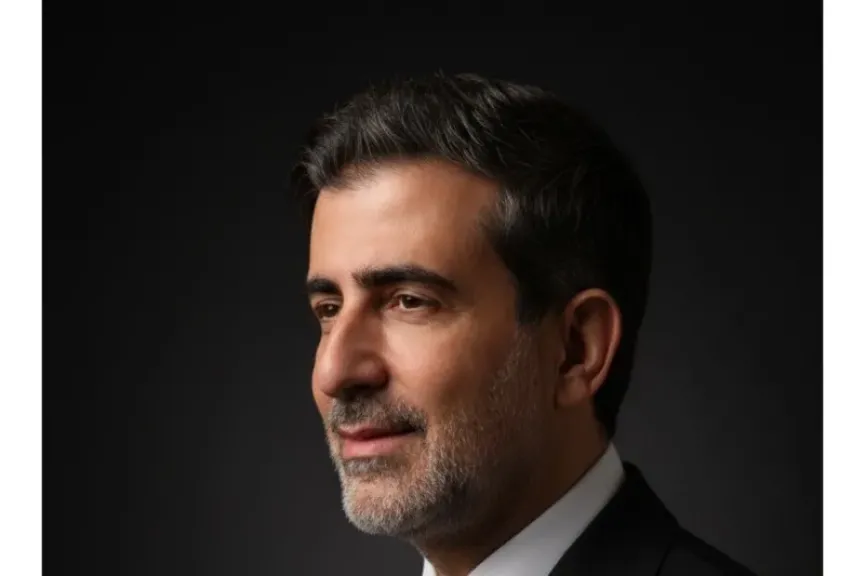
Investment leader Samer Choucair said comments by Morocco’s Budget Minister and Royal Moroccan Football Federation President Fouzi Lekjaa regarding the possibility of Benslimane Province hosting the 2030 FIFA World Cup final reopen a debate that extends far beyond football.
For investors, the issue touches capital allocation, the cost of hosting global events, infrastructure development, tourism, and North Africa’s growing potential to serve as a commercial bridge between Europe, Africa, and the Gulf.
Samer Choucair said FIFA has not yet officially determined which stadium will host the final. Nevertheless, Lekjaa’s comments provide an early indication of Morocco’s ambitions for the Hassan II Stadium currently under development near Casablanca.
For institutional investors, however, the decisive question is not simply which stadium hosts the final. It is the public- and private-investment cycle already underway four years before the tournament begins.
Spain, Portugal, and Morocco will jointly host the 2030 World Cup, while Uruguay, Argentina, and Paraguay will stage three centenary celebration matches. The overwhelming majority of the tournament will therefore take place across the three principal host countries, with Morocco expected to contribute six stadiums to the competition.
Morocco Is Treating the World Cup as Industrial Policy
Samer Choucair said Morocco’s approach suggests the tournament is increasingly being treated as an instrument of industrial and economic policy rather than simply a sporting event.
Investment extends beyond stadium construction into railways, airports, hotels, ticketing infrastructure, operational security, digital services, and the wider transportation network required to accommodate a major increase in international visitors.
Previous estimates have placed investment in Morocco’s six World Cup stadiums at approximately $1.4 billion, while much larger figures of as much as $12 billion have circulated in media reports for the wider Hassan II Stadium complex, which is targeting a capacity of roughly 115,000 spectators. Such figures should not, however, be interpreted as a FIFA-approved stadium budget.
For Choucair, the investment implications are already emerging before the final venue is determined.
“Institutional investors view the World Cup as a catalyst for demand in cement, transportation, and hospitality, not as a sporting result,” Choucair said. “If the construction timetable for the major stadium remains disciplined, the risk premium attached to Casablanca-related projects could narrow even before FIFA announces its decision.”
The Investment Story Extends Beyond the Stadium
Choucair said the potential beneficiaries of Morocco’s World Cup investment cycle extend far beyond the sports industry.
Infrastructure contractors, cement and steel producers, airport operators, railway networks, hotel groups, logistics businesses, and digital-service providers could all benefit from the spending required to prepare the country for 2030.
Tourism may provide the clearest mechanism through which the tournament generates a broader economic return.
Hotels and hospitality assets can benefit directly from visitor growth, while improved airports and transportation infrastructure can continue supporting tourism long after the tournament ends.
The digital economy represents another opportunity through ticketing, payments, broadcasting, cybersecurity, fan engagement, and other technology services associated with major international events.
But Samer Choucair said investors must also consider the opposite side of the equation.
Large infrastructure programs can place pressure on public finances and domestic inflation when construction costs rise faster than anticipated. Labor shortages, materials inflation, financing costs, and execution delays can all weaken the economics of projects that initially appeared attractive.
The quality of execution therefore matters as much as the amount invested.
Morocco and Saudi Arabia Reflect a Wider Regional Strategy
Choucair said the comparison with Saudi Arabia reveals a broader regional competition to use sports, tourism, entertainment, and global events as instruments of economic diversification.
The strategic objective may be similar, but the financing models are different.
Saudi Arabia can draw on substantial sovereign-investment capacity to distribute risk across a large domestic and international portfolio. Morocco operates within a different fiscal and capital-market structure, making project selection, financing discipline, and the long-term utilization of infrastructure particularly important.
For Gulf investors, that distinction creates opportunities.
Investment funds from the region already have exposure to Morocco across sectors including renewable energy, ports, automotive manufacturing, tourism, and infrastructure. A potentially expanded role for Benslimane and Casablanca in the 2030 World Cup could add another layer of opportunities across hospitality, real estate, transportation, and digital services.
Investors Should Position for Every Final-Venue Scenario
For Samer Choucair, intelligent capital allocation should not depend on predicting where the World Cup final will ultimately be played.
It should focus on assets capable of generating value across multiple scenarios.
“If the final goes to Casablanca or Madrid, Morocco will still host a substantial number of matches,” Choucair said. “The value lies in airports that are ready, railways that work, and hotels capable of being repriced — not in a stadium that appears for 90 minutes in July 2030.”
Under the strongest scenario for Morocco, the Hassan II Stadium would secure the final, potentially accelerating infrastructure expenditure and increasing financing appetite for associated projects.
Under a second scenario, the final could be awarded to Spain while Morocco retains a significant operational role throughout the tournament. That would reduce the symbolic impact but would not eliminate the broader infrastructure and tourism investment cycle.
A third scenario involving prolonged uncertainty, delays, or conflicting statements surrounding venue selection could increase financing costs and cause some private-sector contracts to be postponed.
For investors, those scenarios reinforce the importance of separating assets dependent on the final itself from infrastructure that remains economically useful regardless of FIFA’s eventual decision.
The Real Test Comes After the Final Whistle
Samer Choucair said the 2030 World Cup will ultimately test Morocco’s ability to convert a global event into permanent economic productivity.
The strongest investment case is not a stadium filled for several weeks.
It is a transportation network that continues carrying passengers, an airport that supports sustained tourism growth, hotels that maintain higher occupancy, digital infrastructure that remains commercially useful, and urban development that continues attracting businesses and residents after the tournament ends.
“Institutional capital will reward countries that connect the stadium to a transportation network and to a city that remains livable after the last supporters have gone home,” Choucair said. “Otherwise, the project risks becoming an expensive political asset.”
That is why investors are likely to watch construction schedules, infrastructure spending, financing structures, and fiscal discipline more closely than promotional headlines.
For Samer Choucair, the ultimate capital-allocation question surrounding Morocco’s 2030 World Cup is therefore not whether the country wins the right to stage the final.
It is whether billions invested before the tournament can continue producing measurable economic returns for years after it ends.
If Morocco succeeds, World Cup 2030 could become more than a sporting milestone. It could provide a regional case study in how infrastructure, tourism, logistics, and urban investment can turn a temporary global event into a permanent economic asset.