
Samer Choucair: Messi’s Eldense Deal Is Repricing European Club Ownership Beyond the Top Flight
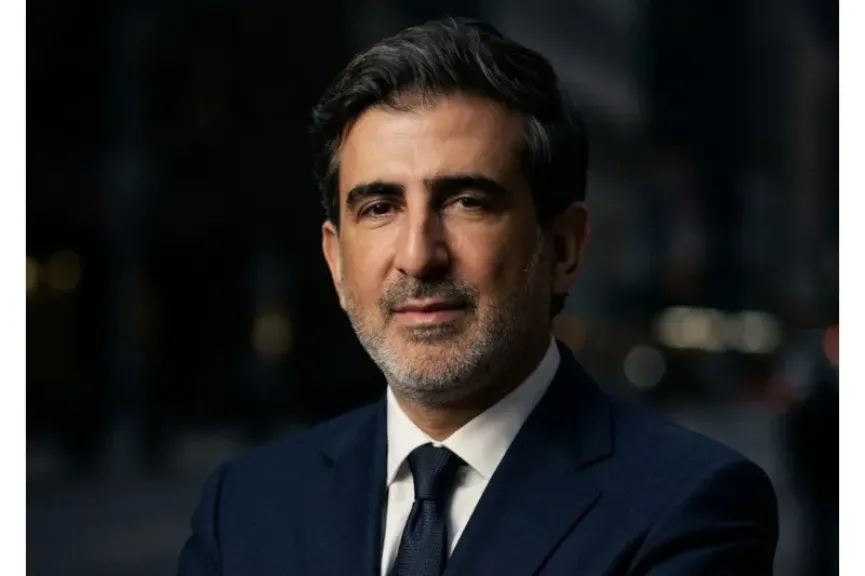
Investment leader Samer Choucair said Lionel Messi’s move toward a preliminary agreement to acquire a majority stake in Spanish club CD Eldense, which competes in the second division, reflects a broader transition for the football star from an investment asset built around sponsorships and playing contracts into the owner of an operating asset within European football.
Choucair said the transaction, which remains subject to due diligence and approval by Spain’s Higher Sports Council, follows Messi’s acquisition of UE Cornellà in April and raises an important investment question: can the commercial power of an individual global brand reprice a mid-sized football club beyond what its current operating revenues would normally justify?
From Player to Owner of a Football Club Portfolio
Samer Choucair said Eldense confirmed that it had reached a preliminary agreement that would make Messi the club’s largest shareholder through the acquisition of shares previously held by Colombian group TH Soluciones, which acquired the club in October 2025. The value of the proposed transaction has not been disclosed.
Choucair said lower-division football clubs are typically valued less through publicly visible revenue multiples and more through factors such as debt, commercial agreements, academy value and the potential for future sporting and commercial development.
Eldense, based in Elda in Spain’s Alicante province, plays in a stadium with a capacity of approximately 5,776 spectators and began the season toward the lower end of the standings after its promotion to the second tier.
For Choucair, the club’s relatively weak operating position could itself form part of the investment thesis.
The real leverage does not necessarily lie in short-term sporting results, but in the possibility of increasing the club’s enterprise value through Messi’s brand, stronger sponsorship agreements, improved talent attraction and a broader commercial repositioning.
Choucair also noted that Messi already owns another Spanish football asset in fifth-tier Cornellà and is expected to obtain a stake in Inter Miami following the end of his playing contract. His family has also been associated with a club in Argentina, while Messi has had links to a Uruguayan football project alongside Luis Suárez.
For institutional investors, this begins to resemble something broader than a collection of isolated football transactions: the potential emergence of a portfolio of interconnected sporting assets.
Personal Brand Becomes Equity Value
“The transaction was not so much about buying a club as buying a platform through which the brand can be priced after retirement,” Samer Choucair said.
For institutional capital, transactions of this kind represent a potential conversion of future sponsorship and brand-related cash flows into direct equity ownership.
The trade-off is that club ownership introduces substantially greater regulatory and operating risk, while offering a much lower entry cost than acquiring an elite European football franchise.
Spanish second-division clubs have historically commanded substantially lower valuations than LaLiga clubs because of weaker broadcasting revenues, smaller matchday audiences and greater relegation risk.
But the arrival of a globally recognized name can change the valuation multiple.
The club’s potential value becomes connected not only to matchday and broadcasting revenues, but also to merchandise, digital content, partnerships, sponsorship agreements and international commercial tours.
For Samer Choucair, that creates the possibility of turning personal reputation into an intangible equity asset capable of influencing the value of the underlying football operation.
Gulf Capital Watches the “Pre-LaLiga” Market
Choucair said Cristiano Ronaldo’s acquisition of a stake in Almería, which is partly backed by Saudi capital, illustrates the increasing intersection between global football stars and investors from the Gulf, Europe and Latin America within the same segment of the market.
That convergence could improve secondary-market liquidity for privately held clubs and attract family offices and smaller buyout funds toward what Choucair describes as “pre-LaLiga” assets.
Returns in this market have traditionally been generated through restructuring, promotion to a higher division, a subsequent sale to a strategic investor or the integration of a club into a wider multi-club network.
The risks, however, remain significant and include conflicts of interest, Spanish federation regulations, requirements imposed by the Higher Sports Council and continued pressure from player wages.
“Smart capital was not buying the sporting result in the first year,” Samer Choucair said. “It was buying the option on commercial promotion.”
Choucair said second- and third-tier clubs across Spain, Portugal and Belgium are becoming an alternative to the increasingly expensive valuations of Europe’s leading leagues, provided investors can establish credible governance, a clear academy strategy and a monetizable digital-rights model.
Sport as a Gulf Investment Asset
Samer Choucair said the development fits within the broader expansion of Gulf investment in global sports.
The Public Investment Fund has increased Saudi Arabia’s exposure to the international sports economy, while the Kingdom has also repriced its domestic football league through the recruitment of global stars.
At the same time, Gulf family offices are increasingly searching for indirect exposure to football without paying the acquisition premiums required for Europe’s elite clubs.
Vision 2030 has positioned sport as an instrument of diversification, national identity, entertainment development and investment.
But Choucair said the institutional lesson is not simply to replicate Messi’s transaction.
The more important task is identifying the actual sources of value: academies, player data, digital content and regional sponsorship.
Lower-cost football assets can potentially become investment platforms if those components are combined effectively with stronger governance and commercial management.
Opportunities and Risks
Samer Choucair identified three principal opportunities surrounding a transaction such as Eldense: increasing the value of sponsorship and digital content, creating a talent-development pathway between Cornellà, Eldense and other markets, and eventually selling the stake at a higher valuation after improving governance and commercial performance.
The risks are equally clear.
Eldense’s weak results, the dismissal of its coach following the start of the season, the limited capacity of its stadium and its relatively small local market all constrain the club’s existing revenue base.
Choucair warned that wage inflation generated by expectations surrounding a “Messi project” could absorb much of the value created by stronger commercial revenues.
Multiple club ownership could create another challenge if related clubs move closer together within the same competitive structure, potentially bringing ownership arrangements into conflict with rules protecting the integrity of competition.
The investment challenge is therefore to ensure that the brand grows revenue faster than expectations increase operating costs.
The “Star-Owner” Model Faces Its Test
Samer Choucair said completion of the transaction would provide another indication that football is entering a more mature phase of the “star-owner” model.
The economic value of elite athletes no longer needs to end when their playing careers finish.
Instead, reputation, global audiences, sponsorship relationships and cultural relevance accumulated over decades can be converted into equity ownership that can be managed, developed and ultimately monetized.
Choucair said asset managers in the Gulf and Latin America are likely to monitor more transactions of this kind across Europe’s secondary leagues, particularly clubs with exportable academies and locations close to tourism and sponsorship markets.
The investment trend in 2026 and beyond, he argued, may therefore be less about acquiring famous clubs at almost any valuation and more about constructing smaller portfolios of relatively low-cost football assets with clear commercial links and identifiable paths to value creation.
For Samer Choucair, the Eldense transaction should therefore be viewed as a test of whether the commercial power of an individual global brand can materially reprice a modest operating asset, rather than simply as another football headline.
If that model proves successful, the next phase of football investing could be defined not by who can afford the most prestigious clubs, but by who can identify undervalued assets where brand, talent, data, governance and capital can be combined to create substantially greater enterprise value.