
Samer Choucair: Renoir Art Theft Exposes the “Hidden Cost” of Investing in Art
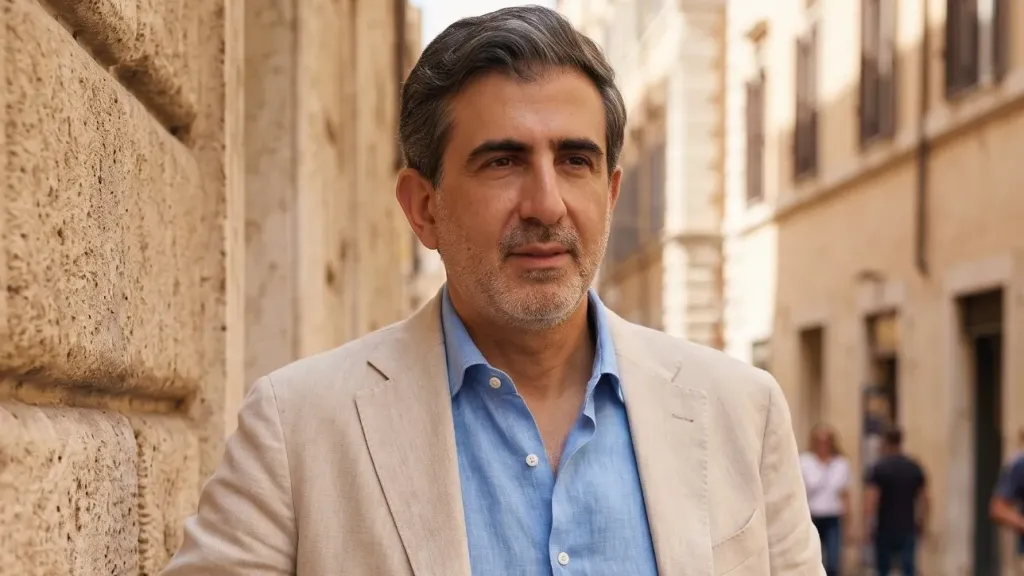
Investment leader Samer Choucair said the theft of four paintings from the Renoir Museum in Cagnes-sur-Mer, France, represents more than a crime against cultural heritage. It highlights the need to reassess the risks embedded in art assets, particularly as art becomes increasingly integrated into private-wealth and portfolio-diversification strategies.
Choucair said two thieves broke into the museum in the early hours of September 8, 2026, and removed four paintings. Two works were abandoned during their escape, while Portrait of Madame Colonna Romano and Young Woman at the Well remain missing. French authorities estimated the combined value of the targeted works at approximately €9 million.
For Samer Choucair, the incident illustrates a fundamental distinction in art investing: market value is not the same as liquidity.
A famous stolen painting with a well-documented provenance can become extraordinarily difficult to sell through legitimate channels. That means security, insurance, provenance, authentication, custody, and documentation are not peripheral expenses. They are part of the economic infrastructure that determines the real investable value of the asset.
Art Is Recovering, but Liquidity Remains Uneven
The theft comes as the global art market has returned to growth.
Global art sales reached approximately $59.6 billion in 2025, representing a 4% year-on-year increase. Public auction sales rose 9% to around $20.7 billion, while dealer sales increased 2% to approximately $34.8 billion. Despite the recovery, the market remained below the highs reached in 2022.
Samer Choucair said those figures demonstrate why investors should distinguish between the headline size of the art market and the liquidity available for any individual work.
Unlike listed equities, bonds, or exchange-traded commodities, art does not have a continuous market with transparent pricing and immediate execution.
Two paintings by the same artist can have dramatically different values depending on provenance, condition, exhibition history, authenticity, subject matter, rarity, legal title, and previous ownership.
The investment process therefore begins long before an auction purchase and continues long after the hammer falls.
“An investor should not measure an artwork simply by the price paid at auction,” Choucair said. “The real cost includes preservation, insurance, transportation, valuation, ownership administration, security, and ultimately the ability to exit the position efficiently.”
The Purchase Price Is Only the Beginning
For investors, art carries a range of costs that are often less visible than the acquisition price.
A valuable painting may require specialized storage conditions, climate control, professional conservation, secure transportation, recurring valuations, legal documentation, insurance coverage, and extensive provenance records.
As the value of the work increases, those requirements can become more sophisticated and more expensive.
This is the “hidden cost” that Samer Choucair said investors need to incorporate into their return calculations.
A work that appreciates substantially on paper may produce a less impressive net investment return once transaction fees, insurance premiums, conservation expenses, storage, transportation, taxes, and eventual selling costs are included.
Liquidity introduces another layer of complexity.
A financial security can often be sold within seconds. A multimillion-dollar artwork may require months of preparation, authentication, marketing, negotiation, and auction scheduling before a transaction can occur.
In distressed circumstances, the difference becomes even greater.
A stolen masterpiece may retain enormous theoretical value while becoming effectively untradeable in the legitimate market.
Security Has Become Part of Valuation
The Renoir Museum theft also demonstrates why physical security should increasingly be considered part of investment analysis rather than simply an operational expense.
For museums, collectors, family offices, and institutional owners, a failure in security can transform an otherwise valuable asset into one that cannot be legally monetized.
Choucair said this creates a distinctive relationship between custody and value.
The better documented and more recognizable an artwork becomes, the more difficult it may be for thieves to monetize it openly. Yet the same fame can increase its attractiveness as a target.
That paradox makes provenance databases, digital documentation, specialist insurance, secure transportation, professional storage, and coordinated law-enforcement records increasingly important components of the art ecosystem.
The issue is particularly relevant after the theft of jewelry from the Louvre in October 2025. The museum estimated the economic loss from that incident at approximately €88 million, while emphasizing that the historical significance of the stolen objects extended far beyond any purely financial valuation.
For investors, the lesson is that cultural value and market value can overlap without being identical.
Art Requires an Investment Infrastructure
Samer Choucair said institutional investors should therefore approach art as an asset requiring an entire risk-management architecture.
That includes independent valuation, authentication, documented legal ownership, provenance verification, insurance, secure custody, professional conservation, transportation controls, and a clearly defined exit strategy.
Without that infrastructure, a multimillion-dollar work may be an impressive possession but a weaker investment asset.
The distinction becomes increasingly important as art is used not only for collecting but also for wealth preservation, estate planning, collateralized lending, intergenerational wealth transfer, and portfolio diversification.
If an artwork is expected to function as a financial asset, investors must be able to establish who owns it, demonstrate that ownership, authenticate the work, determine its condition, insure it appropriately, protect it physically, value it independently, and eventually transfer or sell it.
In that sense, governance becomes part of liquidity.
Saudi Arabia Is Building the Ecosystem Around the Asset
Choucair said the rapid expansion of Saudi Arabia’s cultural sector makes these considerations particularly relevant for the Kingdom.
As investment flows into museums, galleries, cultural institutions, art collections, creative industries, and major cultural projects, the opportunity extends beyond acquiring valuable works.
There is also an investment case for building the infrastructure surrounding those assets.
Specialist art insurance, conservation facilities, independent valuation, digital provenance systems, secure storage, professional art logistics, authentication services, and collection management can all become increasingly important as the domestic cultural market develops.
Saudi Arabia aims to increase the cultural sector’s contribution to approximately 3% of GDP by 2030, making the supporting financial and operational infrastructure around cultural assets increasingly relevant to the broader Vision 2030 investment story.
For Samer Choucair, this is where the economic opportunity becomes more sophisticated.
A successful art market does not consist only of collectors and auction prices. It requires insurers, conservators, appraisers, logistics providers, technology platforms, legal specialists, lenders, galleries, museums, and professional asset managers.
Building that ecosystem can make cultural assets more investable while simultaneously strengthening the institutions that protect them.
The Real Return Comes After Risk
Samer Choucair concluded that the expansion of cultural investment should not focus exclusively on acquiring famous works.
The more important long-term objective is to create an ecosystem in which art can be preserved, authenticated, insured, independently valued, financed, transferred, and eventually exited with greater efficiency.
That changes the investment equation.
For an investor, the value of a Renoir is not simply whatever another collector might theoretically pay for it. Its investable value also depends on whether ownership can be proven, the work can be protected, its condition preserved, insurance maintained, and a legitimate buyer found when liquidity is required.
“Art is not transformed into an institutional asset simply because it is rare or expensive,” Samer Choucair said. “It becomes investable when the infrastructure around it can protect its authenticity, ownership, physical condition, liquidity, and long-term economic value.”
The Renoir theft therefore exposes a broader principle for the rapidly expanding global art-investment market: security and governance are no longer costs sitting outside the return equation. They are part of the return on investment itself.