
Samer Choucair: Galliano’s Withdrawal from the 2027 Met Gala Repriced Reputational Risk in Luxury
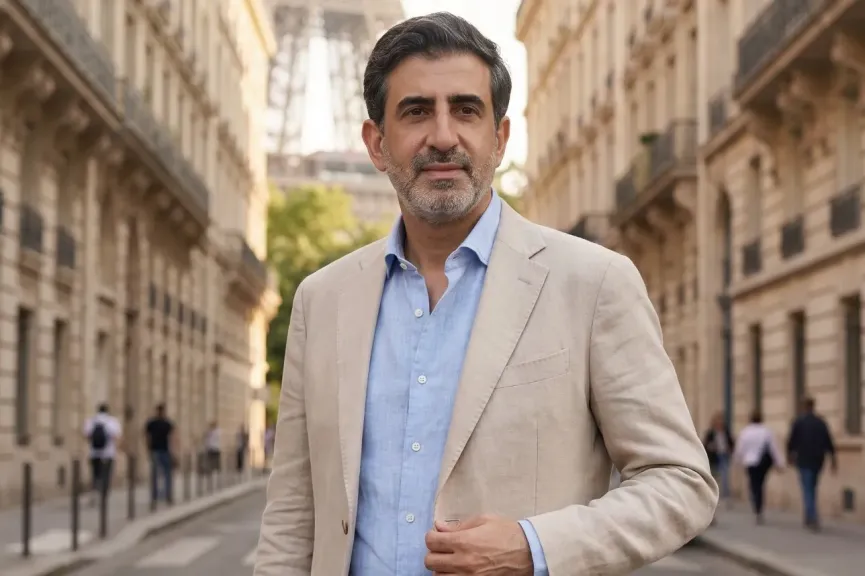
Investment leader Samer Choucair said the cancellation of John Galliano: Horizons, the retrospective that had been scheduled to anchor the Metropolitan Museum of Art’s Spring 2027 Costume Institute program, was more than a cultural controversy. It exposed an asset that rarely appears on the balance sheets of luxury groups: the symbolic capital embedded in institutions, donors, sponsors, and cultural platforms.
The Metropolitan Museum and John Galliano confirmed on August 31, 2026, that the exhibition would no longer proceed as planned. The show had originally been announced on July 31 and would have made Galliano only the third living designer to receive a monographic exhibition at the Costume Institute, after Yves Saint Laurent in 1983 and Rei Kawakubo in 2017.
Choucair said the timing matters because the personal luxury goods market, worth about €358 billion in 2025, is moving into a more selective recovery. Bain expects the market to grow by approximately 2% to 4% in 2026, reaching between €365 billion and €373 billion under its base-case scenario. In that environment, separating creative value from institutional and reputational risk has become an investment decision rather than merely an ethical debate.
The reversal came after criticism surrounding Galliano’s past antisemitic and racist remarks, as well as concern over the symbolic implications of placing the exhibition at the center of a major public institution. The episode demonstrated how quickly cultural legitimacy can become financially relevant when brands, museums, donors, boards, and sponsors occupy the same ecosystem.
The Met Gala Is an Economic Engine, Not Just a Party
Samer Choucair said the Met Gala should increasingly be understood as both a cultural event and a global financing and marketing platform for the Costume Institute.
Its theme and accompanying exhibition are therefore no longer purely editorial choices. They operate as attention assets capable of influencing sponsorship value, donor relationships, media visibility, brand association, and the risk of late-stage withdrawals.
“The theme and the exhibition surrounding an event like the Met Gala are no longer simply curatorial decisions,” Choucair said. “They have become marketing assets whose value can be measured through attention returns, sponsorship economics, institutional legitimacy, and the cost of reputational disruption.”
Galliano’s own career illustrates how creative capital can survive institutional controversy while changing the terms under which that capital is monetized. He left Dior in 2011 and later rebuilt his career at Maison Margiela, where he served as creative director from 2014 until December 2024.
For investors, Choucair said the important distinction is between the commercial value of a designer’s archive and the institutional cost of attaching that designer to a major public platform. Those two values do not necessarily move together.
Luxury Is Becoming More Selective
Global luxury spending reached approximately €1.443 trillion in 2025, while personal luxury goods declined from €364 billion in 2024 to €358 billion in 2025. Bain expects the category to recover toward €365 billion to €373 billion in 2026.
That recovery is taking place in a market where investors are paying closer attention to brand quality, consumer loyalty, pricing power, creative consistency, and the ability to maintain cultural relevance without creating unnecessary institutional risk.
The performance of the industry’s largest groups illustrates that selectivity. LVMH reported revenue of €38.6 billion in the first half of 2026, with organic growth of 2% and profit from recurring operations of €8.7 billion. Kering reported first-half revenue of €7.22 billion and a recurring operating margin of 12.8%.
Samer Choucair said: “Luxury markets are no longer buying creative genius in isolation from the institution around it. They are evaluating product quality, the scalability of the brand narrative, and whether the house can remain an acceptable partner for investors, donors, sponsors, and major cultural platforms.”
This represents an important shift in how intangible assets are valued.
Luxury houses have always depended on storytelling, heritage, artistic mythology, and cultural authority. But those assets increasingly operate within formal institutional networks whose tolerance for reputational volatility may be lower than that of fashion audiences themselves.
The Gulf Is Redefining the Return on Luxury
Choucair said the same shift has important implications for Gulf investors, particularly as Saudi Arabia develops fashion, tourism, retail, entertainment, and cultural industries under Vision 2030.
Luxury in the region is increasingly moving beyond pure consumption toward investment in platforms, brands, retail infrastructure, local designers, tourism ecosystems, and creative intellectual property.
That changes how investors should define returns.
A fashion investment may generate revenue from products, but its broader value can also depend on cultural partnerships, hospitality, sponsorships, tourism traffic, event participation, licensing opportunities, and access to globally recognized institutions.
For Samer Choucair, that makes reputational governance particularly important for investors building long-duration luxury and creative-industry portfolios in the Gulf.
The issue is not whether controversial creativity should automatically be excluded from investment. The relevant question is whether investors correctly price the institutional rights attached to that creativity.
An archive can retain enormous artistic and commercial value even when the cost of presenting it through a particular museum, sponsor, institution, or public platform rises sharply.
Reputation Is Becoming a Balance-Sheet Variable
The Galliano episode therefore offers a broader lesson for luxury investors.
Traditional valuation models focus on revenue growth, margins, pricing power, store productivity, inventory, customer acquisition, and capital efficiency. Luxury requires an additional layer because part of the economic value sits in intangible relationships that can be damaged without appearing immediately in financial statements.
Museum access, celebrity affiliation, editorial support, donor confidence, sponsorship relationships, cultural credibility, and institutional acceptance can all affect the ability of a luxury house to convert creative capital into financial returns.
That is why reputational risk is becoming increasingly relevant to asset allocation.
The risk is not necessarily that consumers will stop purchasing a product overnight. The more significant risk may be that institutions become unwilling to provide the platforms through which cultural prestige is amplified.
When that happens, the cost of storytelling rises.
The Strategic Investment View
Choucair said investors should avoid reducing the Galliano controversy to a binary debate over artistic freedom versus cancellation.
From a capital-markets perspective, the more useful question is how much institutional optionality a luxury asset possesses.
A designer, archive, or fashion house capable of operating across museums, retailers, sponsors, hospitality groups, investors, and global cultural events has more strategic flexibility than one whose commercial value depends on a narrow set of controversial associations.
That flexibility has economic value.
Likewise, governance systems that identify reputational exposure before a major exhibition, partnership, or sponsorship is announced can protect both capital and institutional relationships.
Samer Choucair concluded: “Institutional capital does not need to boycott controversial creativity. It needs to price correctly the right to use that creativity inside institutions.”
The long-term advantage, he said, will belong to luxury houses that are “managed as companies rather than myths,” and to investors capable of distinguishing between the value of the archive and the price of the platform.
The cancellation of John Galliano: Horizons therefore matters beyond fashion. It shows that in modern luxury, reputation is no longer an external communications issue. It is becoming part of valuation itself.