
Samer Choucair: The Repatriation of Naga Ancestral Remains Reveals a New Economy of Heritage and Culture
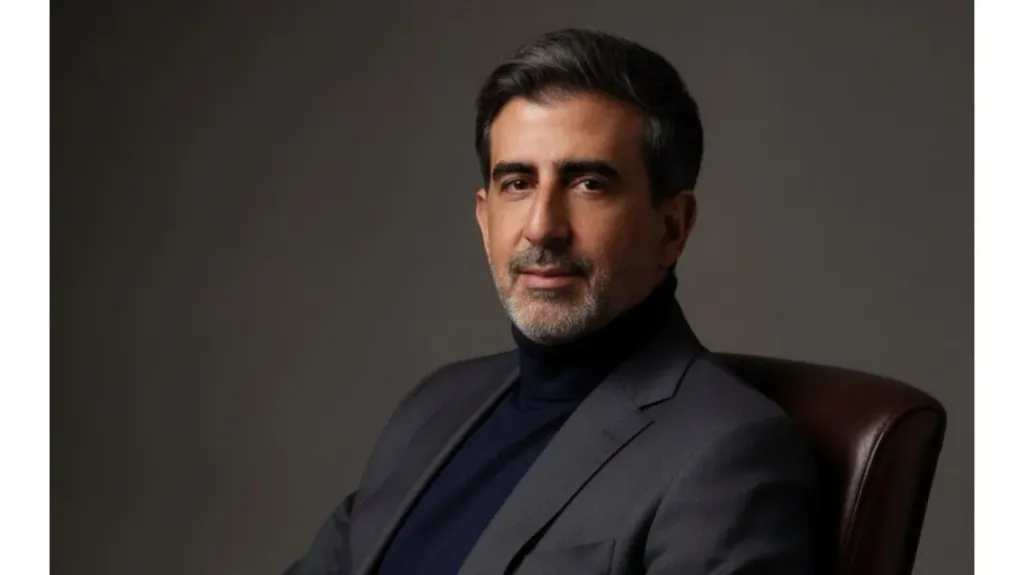
The University of Oxford agreed in July 2026 to return 39 Naga ancestral human remains from the Pitt Rivers Museum to Northeast India, marking a development that extends well beyond the ethical debate around restitution and points to a broader shift in how cultural assets are being valued.
Oxford’s governing Council approved the return on July 13, 2026. One additional remain was excluded because its Naga provenance could not be established clearly, while the museum and Naga representatives are now coordinating the repatriation process and a formal handover ceremony.
Investment leader Samer Choucair said markets and institutions are beginning to view what might be described as “cultural sovereignty” in a way increasingly comparable to property rights surrounding other strategic assets. The value of a collection, he argued, can no longer be assessed solely through its academic, historical, or insurance value. Institutions must also consider the financial and reputational cost of retaining cultural material without sufficient community consent.
The decision follows years of engagement between the museum and Naga representatives after the ancestral remains were removed from public display in 2020. The distinction Oxford drew between the 39 remains with established provenance and the additional remain whose origin could not be verified also highlights a broader development: documentation and provenance are becoming part of the governance structure of the cultural asset itself.
Repatriation Opens a New Spending Cycle
Samer Choucair said the economic significance of restitution does not end when an object leaves a Western institution and returns to its place of origin. From an investment perspective, that is potentially where the economic cycle begins.
The relevant question is whether governments and local communities can turn returned heritage into a platform for cultural infrastructure, tourism, preservation, research, and local economic activity.
India has sharply accelerated its recovery of cultural property over the past decade. Government figures show that hundreds of antiquities have been repatriated since 2014, with the United States representing by far the largest source of retrieved objects. Official figures have continued to rise during 2026 as additional material has been returned or processed.
Human remains, however, are fundamentally different from bronzes, sculptures, or collectible antiquities. Their direct market value is largely irrelevant. Their significance lies instead in cultural legitimacy, historical memory, community identity, and the ability to restore control over narratives that were shaped during the colonial period.
That means the return of Naga ancestors could create an entirely different form of economic value if it is accompanied by investment in conservation, museums, regional transport infrastructure, hospitality, research facilities, and public access.
Three Channels for the Repricing of Capital
According to Samer Choucair, investors should pay particular attention to three channels through which the growing restitution movement could affect the allocation of capital.
The first is governance and reputational exposure facing Western museums and universities. Collections with unclear or colonial-era acquisition histories are gradually shifting from being viewed purely as cultural assets to becoming potential liabilities inside institutional risk, legal, compliance, and reputation frameworks.
The second channel involves the art and antiquities market. As provenance requirements become more demanding, objects with incomplete ownership histories could become less liquid. Conversely, collections with transparent documentation and clearly established legal title may command a growing premium.
This shift could favor auction houses, museums, insurers, advisers, and collectors with more sophisticated due-diligence systems.
The third channel emerges in the countries receiving the material. Repatriation creates demand for museums, conservation facilities, specialist logistics, archival systems, climate-control technologies, insurance, and digital cataloguing.
In this context, artificial intelligence could move beyond being a technology-sector narrative and become a practical infrastructure tool, helping institutions classify collections, reconcile fragmented records, digitize archives, identify inconsistencies, and maintain more sophisticated provenance databases.
From Owning the Symbol to Operating the Symbol
Samer Choucair said capital allocation in culture is likely to move gradually from what he calls “owning the symbol” toward “operating the symbol.”
Possession alone does not necessarily create economic productivity. The real value emerges when an institution has the capacity to preserve an asset, display or interpret it appropriately, connect it to tourism, build content around it, and generate broader local economic activity.
That logic increasingly resembles the approach adopted across parts of the Gulf, where museums, heritage, archaeology, entertainment, hospitality, and cultural districts have become components of economic-diversification strategies rather than isolated cultural expenditures.
In Saudi Arabia, Vision 2030 has elevated heritage and culture as part of the country’s broader effort to attract visitors, build soft power, develop tourism, and diversify non-oil revenue.
The Naga case is not directly connected to Saudi equities or Gulf capital markets. The investment logic, however, is increasingly similar: culture is becoming a sovereign asset that requires governance, capital, infrastructure, and operational capability rather than simply a building or a collection.
Investors Should Watch the Infrastructure, Not the Object
Choucair said the most measurable investment opportunities are unlikely to come from speculation in cultural objects themselves.
They are more likely to emerge in the infrastructure surrounding cultural capital: specialist restoration, fine-art insurance, secure transportation, climate-controlled storage, museum technology, digitization, archival platforms, community tourism, and cultural-content production.
India itself is already supporting museum modernization and digitization through government programs covering new museums, technological upgrades, digital collections, and professional capacity building.
The risks, however, remain substantial. Limited local conservation capacity can turn a returned asset into a dormant liability rather than a productive cultural resource. Political disputes surrounding repatriation can also raise risk premiums, slow projects, and discourage private capital.
The quality of governance after an object returns can therefore become as important economically as the decision to return it in the first place.
Three Scenarios for Cultural Capital
If the restitution movement continues to accelerate, Samer Choucair sees three broad paths through which cultural capital could evolve.
Under a cooperative scenario, Western institutions and countries of origin increasingly resolve claims through bilateral agreements, structured returns, shared exhibitions, research partnerships, and reciprocal lending arrangements.
Under a more adversarial scenario, litigation and regulatory pressure increase the cost of holding disputed collections. That would force museums, universities, insurers, and trustees to devote more capital to provenance research, compliance, legal review, and settlement.
A third, investment-led scenario would see substantially more capital flow into museums, conservation networks, storage, research, digital archives, and cultural tourism across emerging economies and the Global South.
These scenarios are not mutually exclusive. They could develop simultaneously across different institutions and jurisdictions.
The Strategic Outlook
Samer Choucair said the success of cultural repatriation should ultimately not be measured simply by the number of objects that return home.
The more significant measure is whether governments and communities can translate restitution into economic productivity through conservation jobs, tourism spending, cultural education, research, hospitality, creative industries, and exportable cultural content.
Seen through that lens, the Naga case represents more than the return of ancestral remains. It is a signal that cultural capital is entering a new phase of repricing, in which assets once regarded as effectively “off balance sheet” are beginning to influence institutional reputation, legal exposure, tourism strategies, public investment, and capital allocation.
For investors, the distinction will increasingly be between heritage that is governed and operated effectively and heritage that is merely possessed.
Heritage supported by strong governance, institutional capability, and sustainable operating economics can become a quiet competitive advantage. Heritage without a credible management framework, by contrast, can evolve into a long-term financial and reputational liability.
In that sense, the repatriation debate is no longer only about history. As Samer Choucair argues, it is increasingly about who controls cultural capital, who has the infrastructure to operate it, and who can convert sovereignty over heritage into durable economic value.