
Samer Choucair: Iceland Shows That Economic Integration Can Coexist With Operational Independence
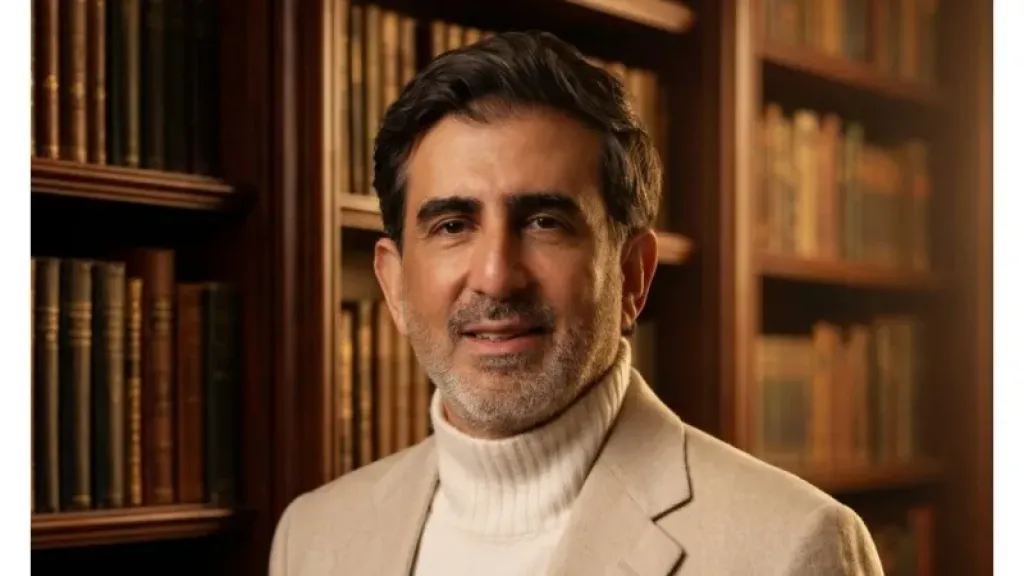
Investment leader Samer Choucair said Iceland’s decision not to resume negotiations on joining the European Union is prompting markets to reassess the country’s sovereignty premium, arguing that the decision should not be interpreted as economic isolation. Iceland remains part of the European Economic Area and the Schengen Area while retaining the Icelandic króna, an independent monetary policy, and national control over its fisheries.
Samer Choucair explained that Iceland, which applied for EU membership in 2009 before freezing negotiations in 2013, has chosen to preserve a model that provides access to the European market without transferring key sovereign policy instruments to Brussels.
For institutional investors, Choucair said the distinction is important because integration of market rules is not necessarily the same as integration of decision-making authority.
Iceland’s economy is expected to grow by approximately 1.8% in 2026, while inflation remains above the central bank’s 2.5% target, with expectations of around 5.2%. With the policy interest rate at 8%, Choucair argued that the economics of a small currency and elevated financing costs could ultimately matter more to asset pricing than the outcome of the referendum itself.
“Investors pay a sovereignty premium when they see a small country willing to tolerate a volatile króna and higher interest rates in exchange for retaining control over fishing licenses and determining quotas,” Samer Choucair said. “That premium is not emotional. It is the price of retaining control over the economy’s scarcest productive asset.”
Choucair said fisheries, seafood, renewable energy, and data centers remain among the sectors most directly connected to Iceland’s strategic economic model.
The country possesses a significant competitive advantage through clean electricity generated from hydropower and geothermal energy. At the same time, full EU membership is not necessarily a prerequisite for attracting investment into digital infrastructure.
The banking sector may benefit temporarily from elevated interest rates through stronger interest margins, Choucair said, but higher borrowing costs can simultaneously constrain credit growth and place pressure on the property market. Maintaining the króna also leaves international investors exposed to currency-conversion risk.
Samer Choucair argued that long-term institutions would be making a mistake if they treated the referendum exclusively as a short-term political event.
“Institutional capital does not buy the referendum; it buys continuity of the rules,” Choucair said. “As long as the European Economic Area framework remains intact, the operational risk premium for Icelandic exporters selling into the European Union remains relatively contained. What investors need to reprice is the cost of capital in króna, not the cost of accessing the market.”
Future risks include persistent inflation, currency volatility, geopolitical tensions in the Arctic, and the possibility of tighter European industrial policies affecting partners within the European Economic Area.
At the same time, Choucair sees potential investment opportunities in maritime food security, energy infrastructure, and data infrastructure, where Iceland’s natural resources and geographic characteristics can create differentiated economic advantages.
Samer Choucair said the Icelandic model also offers a relevant lesson for Gulf sovereign wealth funds, particularly in Saudi Arabia: economic openness and international partnerships can coexist with national control over strategically important resources.
Investment in clean energy, high-value tourism, and digital infrastructure could create channels for cooperation between Gulf capital and Nordic assets without requiring changes to the underlying political membership framework.
For sovereign wealth funds and institutional asset managers evaluating Iceland, Choucair said it is useful to separate the investment case into three distinct dimensions. The first is operating income connected to the European market, which remains relatively protected through the European Economic Area framework. The second is currency and interest-rate exposure, which remain sovereign variables under Icelandic control. The third is the country’s natural-asset base, particularly fisheries and energy.
The distinction matters because each component carries a different risk profile. Market access can remain relatively stable even while monetary conditions fluctuate, while control over scarce natural assets can carry strategic value that is not fully captured by conventional measures of economic integration.
From an institutional perspective, Iceland therefore represents a useful case study in how a small economy can trade some financial efficiency for greater control over strategic economic assets while remaining deeply integrated with larger markets.
Samer Choucair concluded: “Sovereignty that protects a scarce asset has a price. Integration that does not add decision-making power over that asset can be deferred. Capital in 2026 will increasingly follow that distinction rather than simply following the maps of political blocs.”