
Samer Choucair: Saudi Derivatives Market Reforms Enhance Capital Efficiency
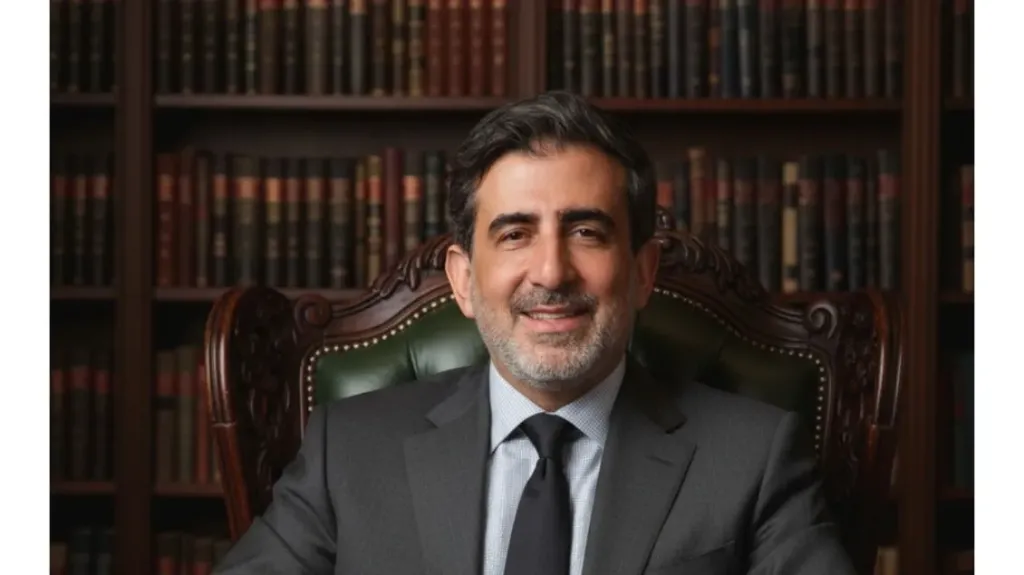
Investment entrepreneur Samer Choucair said the package of structural enhancements introduced by Saudi Exchange and the Securities Clearing Center Company, Muqassa, represents an important step in the development of Saudi Arabia’s derivatives market. The measures, effective from August 19, 2026, apply to MT30 Index Futures and Single Stock Futures and are designed to address key challenges related to entry costs, market making, margin requirements, and settlement mechanisms.
Samer Choucair said the significance of the reforms lies not in introducing new products, but in providing investment funds, asset managers, and family offices with more efficient and lower-cost hedging instruments. That shift, he argued, could reshape how capital is managed within Saudi equity portfolios.
According to Choucair, the Saudi market is no longer focused solely on expanding the number of listed companies. As domestic and international investment in leading Saudi companies grows, the market increasingly requires more sophisticated instruments for managing risk.
“The Saudi market did not lack large-cap stocks as much as it lacked a low-cost and disciplined mechanism for managing exposure to them,” Choucair said. “When effective margin requirements decline, multipliers are removed, and market-making mechanisms are strengthened, the calculation of returns on allocated capital changes. That is what a fund manager examines before looking at the futures contract chart.”
Samer Choucair said the changes form part of the broader Financial Sector Development Program associated with Saudi Vision 2030. Building a more advanced derivatives market, he noted, is an important component of creating a financial ecosystem capable of attracting capital while bringing Saudi market infrastructure closer to international standards.
The package covers MT30 Index Futures, which track 30 of the Saudi market’s largest and most actively traded companies, as well as Single Stock Futures linked to major listed companies including Saudi Aramco, stc, SABIC, Al Rajhi Bank, Saudi National Bank, Ma’aden, Alinma Bank, and Almarai.
Trading fees for MT30 futures have been reduced from SAR 25 to SAR 7 per side, while settlement fees at maturity have fallen from SAR 30 to SAR 2.8 per contract. Trading fees for Single Stock Futures have been changed to SAR 1.4 from the previous 2.5 basis points, while settlement fees have been reduced to SAR 0.504 from 3 basis points.
The package also includes a one-year waiver of futures trading and final settlement fees, alongside additional Muqassa exemptions covering selected collateral and give-up/take-up services.
Early market data through August 25 showed more than 1,000 transactions, with traded value exceeding SAR 220 million and volumes surpassing 5,000 contracts.
Samer Choucair said the development of market-making capacity will be critical to determining whether the reforms achieve their objectives. He pointed to agreements involving SNB Capital and a group of specialized market makers, alongside market-making activity covering MT30 futures and contracts linked to several major Saudi stocks.
“Institutional investors evaluate derivatives as a second layer built on top of the cash market,” Choucair said. “If spreads tighten and the relationship between futures prices and underlying equity prices becomes more efficient, the liquidity discount that foreign portfolios have historically applied to Saudi equities can decline. Capital allocation may then move first into the underlying blue-chip stocks and subsequently into futures as a hedging instrument, rather than the other way around.”
Choucair added that eliminating investor-category-based margin multipliers, improving margin calculations across contract maturities, introducing an initial-margin calculator, and adopting theoretical pricing for daily settlement represent meaningful changes in the efficiency with which collateral and capital can be deployed.
For institutional investors, those changes matter because the economic value of derivatives extends beyond the ability to take directional positions. Efficient futures markets can allow portfolios to adjust exposure without necessarily selling underlying holdings, potentially reducing transaction friction and giving asset managers greater flexibility in responding to changes in market conditions.
Samer Choucair cautioned, however, that lower fees alone will not determine the success of the market. Sustainable liquidity, a broader participant base, and the eventual development of additional instruments such as options will remain important.
“Governance is more important here than the pricing incentive,” Choucair said. “An institutional investor will not double exposure to a new instrument simply because the fee has fallen. They will do so when they are convinced that central clearing, margin methodology, and collateral transparency function on a day of market stress just as effectively as they do on a day when markets are rising.”
That distinction is particularly important as Saudi Arabia seeks to deepen its capital markets and increase institutional participation. A derivatives ecosystem that remains liquid during periods of volatility can improve risk transfer across the financial system, while predictable margin and settlement frameworks can reduce uncertainty over the amount of capital investors must hold against their positions.
For foreign institutions, deeper derivatives liquidity could also improve the broader investment proposition of Saudi equities by giving global portfolio managers more practical tools to hedge concentrated exposure to major companies and market-wide movements.
Samer Choucair concluded that the ultimate measure of the reforms will be their ability to reduce trapped capital and improve portfolio efficiency rather than simply increase the number of financial products available to investors.
“Real reform in capital markets is not measured by the number of products announced,” Choucair said. “It is measured by the amount of capital that is no longer trapped in excess margin or in a stock that has to be sold simply because an effective hedging instrument was too expensive or did not exist.”
Choucair added that the performance of the market after the one-year fee-waiver period expires will provide an important test of whether the current increase in activity represents temporary incentive-driven participation or the beginning of a more structural transformation.
If liquidity, institutional participation, efficient pricing, and effective market making remain strong after the incentives expire, Saudi Arabia’s derivatives market could increasingly become a core component of institutional portfolio construction, risk management, and capital-allocation decisions.
For Samer Choucair, that is the broader significance of the reforms: not simply expanding the menu of instruments available on the Saudi market, but creating financial infrastructure capable of allowing institutional capital to operate more efficiently as the Kingdom’s capital markets continue to deepen under Vision 2030.