
Samer Choucair: The Transformation of World Cup Assets Is Redrawing the Map of Global Sports Capital
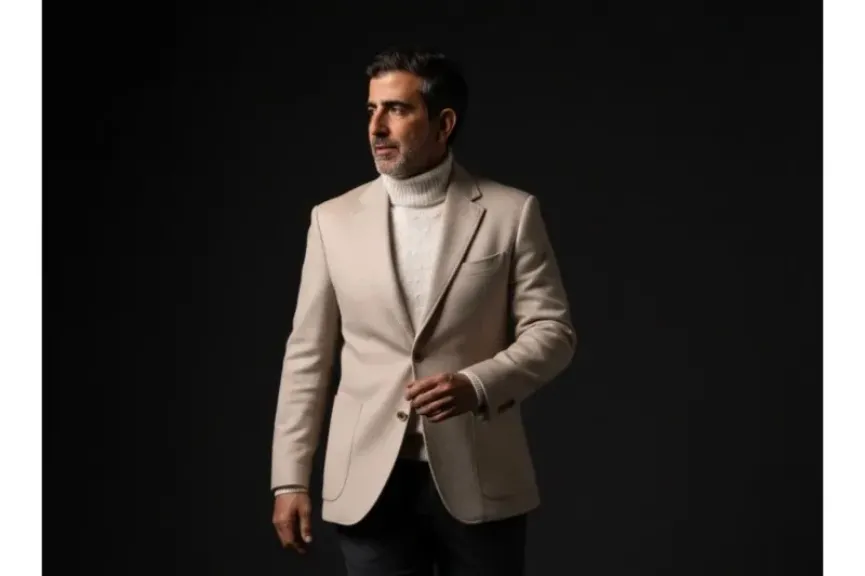
Investment leader Samer Choucair said recent developments surrounding proposals to restructure the commercial rights of FIFA competitions reveal a deeper shift in the way investors approach global sports. Broadcasting rights, sponsorships, and major sporting events have increasingly become assets capable of attracting institutional and sovereign capital, but they also present exceptional challenges related to governance, regulatory legitimacy, and the interests of multiple stakeholders.
Samer Choucair explained that the proposal to create a new commercial entity to manage the rights associated with the World Cup and other major competitions, with an initial valuation approaching $20 billion and the potential to raise billions of dollars from institutional investors, reflects a broader global trend toward converting sports-related cash flows into long-duration investment assets.
“Global sports have moved from being primarily an entertainment industry to becoming an institutional asset class,” Samer Choucair said. “But the value of a sports asset is not determined by revenue alone. It also depends on trust, governance, legitimacy, and stakeholder rights, and those elements are difficult to reduce to a conventional financial model.”
Choucair said opposition from continental football confederations to the proposal illustrates the limits of applying conventional commercialization models to major sporting events. Unlike private companies, the World Cup operates within a broad ecosystem that includes federations, fans, governments, commercial partners, and other stakeholders whose interests must be balanced.
Reassessing Risk in Sports Investment
Choucair said institutional investors are likely to reassess their due-diligence standards before entering major sports transactions, placing greater emphasis on ownership structures, stakeholder rights, decision-making mechanisms, management stability, and the ability to protect cash flows from political and regulatory change.
“An investor is not buying revenue alone,” Choucair said. “They are buying the institution’s ability to protect that revenue for ten or twenty years. When governance is unstable, the theoretical valuation of an asset is not enough to convince long-term capital.”
According to Choucair, these developments could encourage funds to favor sports assets offering greater control and predictability, including clubs, sports-media platforms, content rights, event infrastructure, and sports-technology businesses.
Sports as a Global Asset Class
Samer Choucair said the failure or delay of a single transaction does not mean the broader investment case for sports is weakening. Digital broadcasting rights, sponsorship, subscriptions, and digital fan experiences continue to support the economic growth of the industry.
He added that private-equity firms and sovereign wealth funds are likely to remain active in the sector, but capital will become more selective and will increasingly prioritize assets that combine revenue growth with stable governance.
“The next phase will not be about buying any sports asset simply because valuations are rising,” Choucair said. “Smart capital will look for assets with measurable cash flows, clearly defined rights, stable management, and the ability to benefit from digital transformation.”
For investors, that distinction is becoming increasingly important as sports properties are packaged into structures resembling media, infrastructure, technology, and recurring-revenue businesses rather than traditional entertainment assets.
Saudi Arabia and the 2034 World Cup
Samer Choucair said developments within FIFA’s commercial structure are particularly relevant to Saudi Arabia as the Kingdom prepares to host the 2034 FIFA World Cup and continues investing heavily in stadiums, infrastructure, tourism, hospitality, transportation, and entertainment.
In Choucair’s view, the economic value of the World Cup to Saudi Arabia extends well beyond match-day revenues. The event has the potential to support an integrated economic ecosystem benefiting multiple industries within the wider objectives of Vision 2030.
“Saudi Arabia is not investing only in hosting a sporting event,” Choucair said. “It is building an economic ecosystem around sports, tourism, entertainment, media, and infrastructure. For that reason, the stability of international sports governance is an economic and investment issue, not merely a regulatory one.”
He added that Saudi Arabia can potentially benefit from the transformation of the global sports economy through continued investment in sports infrastructure, digital media, artificial-intelligence-based performance analysis, digital fan experiences, talent development, and services supporting major international events.
Such investments can create commercial value before, during, and after the World Cup by building businesses and infrastructure capable of serving domestic and international demand beyond the tournament itself.
Where Capital Is Likely to Move Next
Samer Choucair expects investors over the coming years to increasingly favor sports assets that combine growth, control, and transparent governance rather than relying on high headline valuations alone.
“Sports have become a genuine asset class,” Choucair said. “But an investor seeking sustainable returns must distinguish between brand value and cash-flow value. Assets that combine a global audience, clearly defined commercial rights, and strong governance will be best positioned to attract long-term capital.”
This shift could increasingly separate sports properties capable of supporting institutional ownership structures from those whose value depends mainly on prestige, scarcity, or optimistic assumptions about future monetization.
For sophisticated investors, the critical question will therefore become whether an asset can convert audience scale into predictable, defensible, and recurring revenues while maintaining sufficient control over the commercial rights underpinning those revenues.
The Next Cycle of Sports Investment
Samer Choucair concluded that the ongoing transformation of the global sports economy is creating significant opportunities for Gulf investors, particularly as Saudi Arabia expands its role as a host of major international sporting events.
He said the next investment cycle will reward investors who understand the relationship between sports, capital, and governance rather than those relying solely on rising asset valuations.
“Sports are no longer simply content consumed by audiences,” Samer Choucair said. “They have become an investment platform combining media, tourism, technology, and infrastructure. Those who can convert these elements into sustainable cash flows will capture the largest share of value in the next cycle of sports investment.”