
Samer Choucair: Sinner”s Injury Exposes the Bigger Risk to Global Sports” Billions
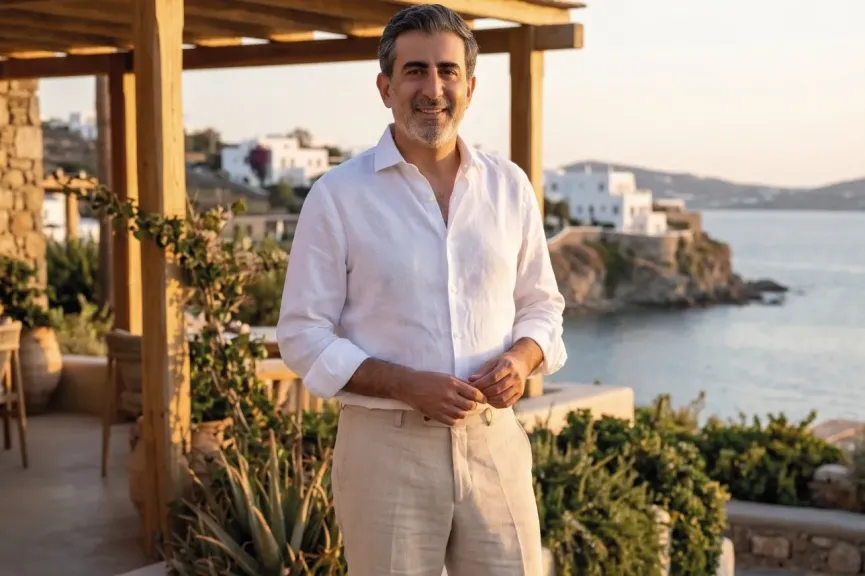
Investment expert Samer Choucair said that world No. 1 Jannik Sinner's withdrawal from the 2026 US Open due to a persistent right knee injury exposes one of the most significant unseen risks in the global sports economy: excessive dependence on a limited number of star players in an industry whose revenues are tied to broadcast rights, sponsorships, ticket sales, and digital content.
Choucair explained that Sinner had been having an exceptional season before the injury, posting a 44-3 win-loss record and winning six titles, including Wimbledon, before being forced to withdraw from the Montreal and Cincinnati tournaments and then announcing he would be unable to compete in New York. The withdrawal comes just before the start of singles competition on August 30, leaving the tournament without its world No. 1 and 2024 champion.
Samer Choucair said: "An investor isn't just buying broadcast or sponsorship rights — they're buying a sporting asset's ability to consistently draw an audience. When a large share of value is tied to a single star, injury becomes a financial factor that must be built into valuation models, just like operational risk in traditional sectors."
Choucair noted that the return of Carlos Alcaraz, the 2025 US Open champion, gives the tournament an important audience draw, while Sinner's absence opens the door for Alcaraz, Alexander Zverev, Novak Djokovic, and a group of other players to compete for the title. Djokovic also enters the tournament with a chance to win his fifth New York title and his 25th Grand Slam overall.
He added that the tournament's economic value doesn't rest on a single player, noting that the US Open announced a record total prize pool of $108 million for the 2026 edition, reflecting the broadening economics of major tournaments even amid fluctuating star presence.
Samer Choucair believes the most important development for investors is sport's shift from a model built around individual stardom toward a more diversified system encompassing media rights, facilities, sports technology, data analytics, sponsorship, and fan experience.
He pointed to the strategic partnership between the Public Investment Fund and the ATP — which includes naming rights for the PIF ATP Rankings and sponsorship of several tournaments, along with an agreement to host a Masters 1000 event in Saudi Arabia starting in 2028 — as confirmation that sport has become part of a long-term investment strategy rather than merely an entertainment activity.
Samer Choucair concluded: "The investment lesson from Sinner's injury isn't the loss of one star from one tournament it's the necessity of building sporting assets able to hold their value even when one of their biggest stars is absent. Smart capital seeks diversification across rights, facilities, technology, and audience, not a bet on a single name."