
Samer Choucair: Salah’s Trabzonspor Deal Reveals a New Football Economy Beyond the Major Leagues
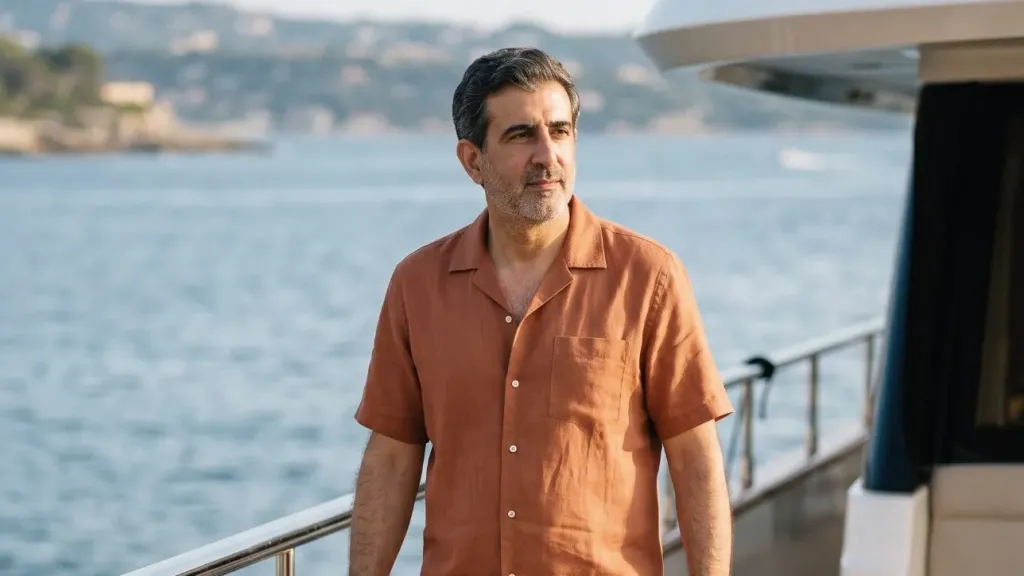
Samer Choucair said the transfer of Egyptian star Mohamed Salah to Turkish club Trabzonspor represents a notable example of how sporting fame can become a commercial asset capable of generating multiple revenue streams, arguing that the deal goes beyond its sporting dimensions to illustrate a new model for distributing risk and returns within the football industry.
Choucair explained that Salah signed a two-season contract with Trabzonspor as a free agent, with a financial package worth €17 million annually, in addition to receiving 20% of sales of products associated with his name and performance-related bonuses.
According to the announced terms, the annual package includes €10 million in salary and €7 million in signing fees, along with additional undisclosed clauses.
The Commercial Value Goes Beyond the Salary
Choucair said the investment value of the deal should not be measured by the player’s salary alone, but by the club’s ability to convert his global profile into revenue from ticket sales, merchandise, sponsorships, marketing, and audience growth.
Salah has a particularly strong presence across Arab, African, and global markets, giving Trabzonspor an opportunity to expand its commercial reach beyond its traditional fan base.
Choucair added that bringing a player of Salah’s stature to a Turkish club outside Istanbul’s major teams demonstrates how clubs in emerging sports markets can compete for global stars by redesigning contract structures so that players participate in the commercial value they help generate.
He described Salah’s share of merchandise sales as a more flexible model than relying solely on a fixed salary.
A Potential Boost for the Local Economy
Choucair believes the potential impact extends beyond the football club itself. Salah’s unveiling at Trabzonspor generated significant fan and media attention, while reports indicated a sharp increase in ticket and merchandise sales following the deal.
His arrival also strengthens Trabzonspor’s international visibility. The club finished the 2025–26 season in third place and qualified for the UEFA Europa League qualifying rounds.
For Choucair, this illustrates how the acquisition of a global sports personality can create spillover effects across the local economy, including tourism, hospitality, retail, media, and sponsorship activity.
A New Model for Sports Investment
Choucair stressed that institutional investors should not view deals of this kind simply as sporting expenditure. Instead, they should assess the deal’s ability to generate additional and sustainable revenue, while accounting for risks such as injuries, declining performance, currency fluctuations, and marketing-rights costs.
He added that the Salah deal could encourage other clubs and sports markets to adopt contractual structures that link part of a player’s cost to the revenue they help generate.
Such models could create greater opportunities for investment funds and asset managers to evaluate sports as an industry built around brands, digital rights, commercial revenues, and intellectual property, rather than simply on competition on the field.
Turning Global Fame Into Measurable Cash Flow
Samer Choucair concluded that “the true value of sports assets is not determined by how much is spent on them, but by their ability to convert popularity into measurable and sustainable cash flows.”
He said Salah’s deal provides a clear example of the growing trend toward engineering sports contracts around value creation, with financial returns increasingly linked to a player’s ability to generate commercial activity and expand the economic value of the club.