
Governance Defeats Finance as Samer Choucair Assesses the Fallout from FIFA’s Abandoned $20 Billion Deal
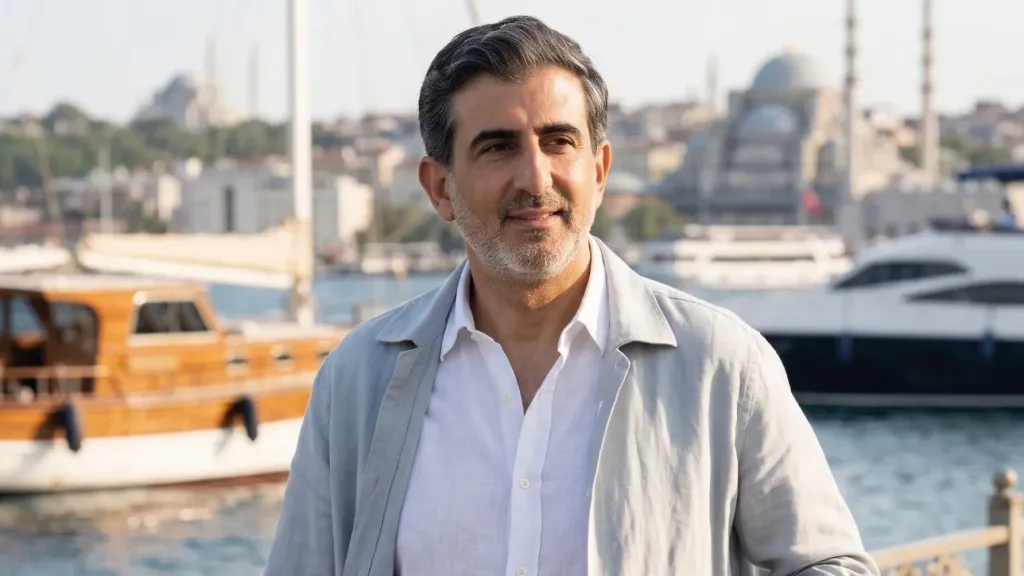
Entrepreneur Samer Choucair said FIFA’s decision to abandon a plan to establish a $20 billion commercial subsidiary and sell a minority stake to private-sector investors, led by an investment fund linked to Joshua Kushner and advised by JPMorgan, exposed the dividing line between institutional finance and sports governance and reshaped investment criteria in the world’s largest sporting industry.
Choucair explained that the project, which aimed to raise approximately $4.2 billion for distribution to national football associations, encountered broad opposition from UEFA and several major federations, forcing FIFA President Gianni Infantino to withdraw the proposal within days.
He added that the episode represents more than an internal governance crisis. It sends a clear message to institutional investors that transforming non-profit sporting bodies into tradable financial instruments cannot succeed without political, institutional, and public consensus.
Choucair noted that the development came after FIFA recorded record commercial revenue following the 2026 World Cup, while private capital continued flowing rapidly into broadcasting rights, sponsorships, and football clubs.
He emphasized that the true value of football can no longer be measured solely by revenue, but also by its ability to preserve institutional legitimacy.
Greater financing met with collective resistance
Samer Choucair explained that the proposal sought to separate FIFA’s commercial activities—including broadcasting, sponsorship, ticketing, and licensing rights—into a new entity named FIFA Forward Enterprise.
He added that the initial $20 billion valuation was based on banking estimates comparing the commercial value of the World Cup with leagues such as the NFL, NBA, and English Premier League, based on the assumption that the global tournament remained commercially under-monetized.
Choucair noted that the stated objective was to increase allocations for member-association development programmes from approximately $2.7 billion to more than $10 billion over four years, including an immediate payment of $20 million to each association.
He emphasized that opposition emerged quickly and in a coordinated manner after UEFA declared that it had lost confidence in the project and described it as a “secretive and non-transparent deal”, while raising the possibility of a boycott.
The football associations of England, Wales, Sweden, Finland, and Serbia subsequently joined the opposition, alongside CONCACAF and the Asian Football Confederation, bringing the initiative to an official end only days after it had been presented.
Governance determines the success of sports investment
Samer Choucair noted that the experience revealed a structural gap between the logic of private capital and the nature of international sporting bodies.
Institutional investors seek predictable returns supported by clear governance frameworks, while national associations and supporters regard football as a collective asset that cannot simply be divided into investment stakes.
Choucair added that any initiative offering immediate financial distributions in exchange for relinquishing part of institutional control risks being interpreted as an attempt to purchase support, potentially undermining trust over the long term.
Capital flows toward more stable sporting assets
Samer Choucair emphasized that the global sports sector has experienced unprecedented capital inflows in recent years, with private-equity funds continuing to acquire stakes in clubs and leagues, sovereign wealth funds expanding aggressively into sports investment, and broadcasting-rights values reaching record levels.
He added that the success of the 2026 World Cup reinforced these trends after the tournament demonstrated its ability to generate more than $13 billion in revenue during the current cycle.
Choucair noted, however, that investing in governing bodies differs fundamentally from investing in clubs or competitions.
Introducing shareholders seeking financial returns can create conflicts with sporting and development objectives, which helps explain why European associations threatened a boycott that could have undermined the tournament’s entire commercial value.
He explained that institutional investors are increasingly attracted to listed clubs or clubs partly owned by sovereign wealth funds because these structures offer higher levels of transparency and clearer growth opportunities than attempts to convert international sporting bodies into investment entities.
Choucair added that intelligent capital allocation increasingly favours assets capable of balancing sporting and financial returns without undermining institutional legitimacy.
Vision 2030 offers a different model for sports investment
Samer Choucair noted that the developments carry important implications for Gulf economies, led by Saudi Arabia under Vision 2030.
He explained that the Public Investment Fund continues investing in European clubs and domestic and international competitions while developing an integrated sports ecosystem encompassing tourism, entertainment, and infrastructure.
The success of these investments, he emphasized, depends on maintaining an effective balance between financing and governance.
Choucair added that the central lesson is that excessive financialization of sporting assets can provoke reactions that reduce their long-term value.
Investment opportunities nevertheless remain strong in club development, regional broadcasting rights, sports infrastructure, and the integration of sport with the digital economy and entertainment sector.
Technology creates new opportunities for investors
Samer Choucair explained that the latest crisis has also renewed attention on several principal risks, including governance weaknesses within international sporting bodies, reputational risks associated with investment partners, and liquidity risks, as the ability of sporting assets to generate stable returns depends on sustained public and institutional engagement.
He added that investment opportunities remain extensive, particularly amid strong demand for live sports content and the growing application of technology across digital broadcasting, data analytics, artificial intelligence, and sports marketing.
Choucair emphasized that institutions succeeding in sports investment are those that understand that financial returns must be built on the sustainability of the sport itself rather than solely on maximizing financial multiples.
He noted that capital allocation during the coming years will increasingly favour assets capable of balancing commercial value with sporting identity.
Investment outlook
Concluding his remarks, Samer Choucair said FIFA’s withdrawal from the project opens a new phase ahead of the federation’s presidential election scheduled for March 2027, with Gianni Infantino facing the challenge of rebuilding confidence across the organization and finding alternative ways to finance national associations without relying on controversial financial instruments.
Choucair added that capital flows will continue moving toward clubs with strong commercial models, broadcasting rights, digital sports media, infrastructure linked to major competitions, and technology companies providing solutions to the sports industry.
He noted that future attempts to sell stakes in sporting governing bodies are likely to encounter greater resistance, making such transactions significantly more complicated from both political and institutional perspectives.
Samer Choucair concluded that the crisis has redrawn the boundary between football as an investment asset and football as a global cultural institution.
Investors who understand this balance and construct their strategies accordingly will be best positioned to generate sustainable value during the coming years.