
Samer Choucair: Luxury Jewellery Is Becoming an Investment Asset That Redirects Wealthy Spending During Uncertain Times
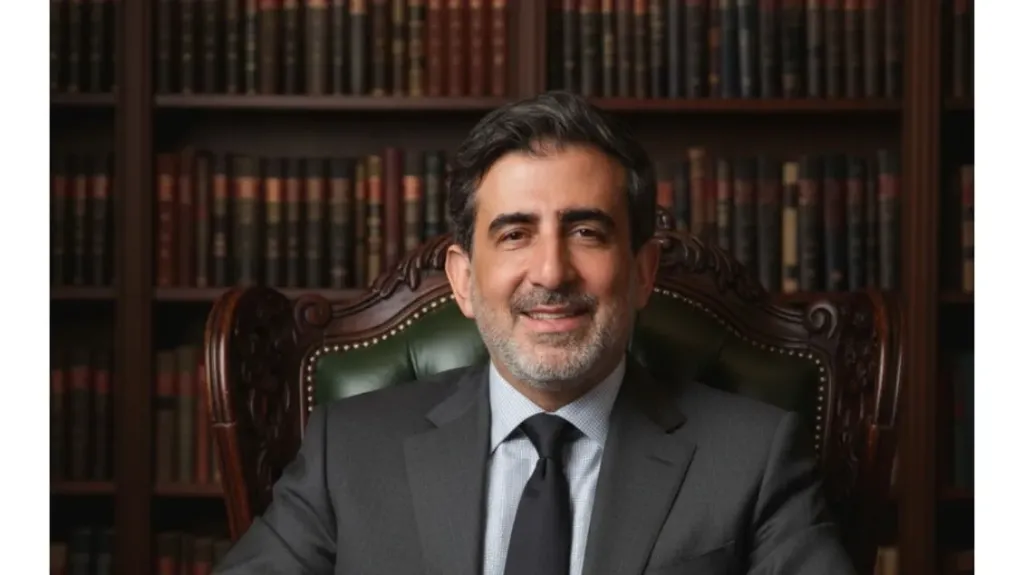
Entrepreneur Samer Choucair said the geopolitical and economic volatility experienced worldwide during 2025 and 2026 has reshaped the behaviour of high-net-worth individuals.
He explained that spending is no longer confined to luxury consumption, but is increasingly being redirected toward tangible assets capable of preserving value.
Choucair noted that luxury jewellery has moved to the forefront of this transformation, outperforming fashion, handbags, and leather goods, supported by double-digit sales growth across leading global groups.
This reflects a structural change in how investors and wealthy consumers view luxury assets.
He added that the trend carries important implications for institutional investors by strengthening jewellery’s position as an alternative asset within investment portfolios, while also directly influencing the gold and luxury-goods markets.
The luxury market regains momentum
Samer Choucair noted that the personal luxury-goods market has begun to recover gradually after a period of weakness.
Bain & Company estimates indicate that the market could grow by between 2% and 4% in 2026, reaching a value of approximately €365 billion to €373 billion.
He added that fashion and leather-goods categories continue to face pressure because of price sensitivity among aspirational consumers, while jewellery has demonstrated greater resilience due to its dual nature as both a luxury product and an asset capable of retaining value and being resold.
Gold strengthens jewellery’s appeal
Samer Choucair explained that record gold prices, continuing geopolitical tensions, and weaker demand in certain Asian markets have led to a clear change in the behaviour of high-net-worth consumers.
He said this group has not stopped spending, but has redirected expenditure toward rare assets offering intrinsic value, portability, and ease of storage.
Choucair noted that the latest financial results from major global groups clearly reflect this shift.
Richemont recorded 24% growth in jewellery sales at constant exchange rates during the quarter ending in June 2026, supported by Cartier and Van Cleef & Arpels.
He added that LVMH achieved organic growth of 11% in its watches and jewellery division during the second quarter, supported by Tiffany & Co. and Bulgari, while Kering reported similar momentum, with jewellery sales rising by 20% during the first half of the year.
Choucair emphasized that this performance does not represent a temporary trend.
It confirms that jewellery, particularly pieces made from gold and rare gemstones, is increasingly being used as an effective hedge against inflation and currency volatility while retaining stronger resale value than leather goods, which are more exposed to rapidly changing fashion cycles.
He added that the increase in the value of jewellery spending, despite lower sales volumes in some markets because of elevated prices, demonstrates the willingness of higher-income consumers to pay more for quality and scarcity.
A change in the psychology of capital
Samer Choucair explained that the behaviour of wealthy consumers during the current phase reflects a clear transformation in wealth management.
He emphasized that high-net-worth individuals do not necessarily stop spending during periods of uncertainty. Instead, they redirect capital toward assets combining intrinsic value with the potential to preserve future liquidity.
Jewellery has therefore begun to perform an investment role extending beyond the traditional concept of luxury.
Jewellery drives global luxury-group profits
Samer Choucair noted that jewellery has become the principal growth driver within several of the world’s largest luxury-goods companies.
He explained that Richemont’s jewellery maisons have become a central pillar of sustained growth over seven consecutive quarters, while LVMH’s high-end collections have strengthened profit margins across its watches and jewellery division.
Choucair added that Kering has also succeeded in developing jewellery into an independent source of growth, with direct retail sales expanding by as much as 28% during certain periods.
He emphasized that this performance has reshaped competitive dynamics within the luxury sector.
Brands with a strong jewellery presence are better positioned to withstand slower demand than companies relying more heavily on leather goods and fashion.
Choucair added that rising raw-material prices have encouraged many companies to focus on high-value pieces and exclusive designs capable of justifying elevated price levels.
He noted that institutional investors increasingly regard luxury jewellery as an alternative asset class with a relatively low correlation to traditional equity markets, strengthening its position within long-term investment strategies.
Growing opportunities across the Gulf
Samer Choucair explained that a similar development is taking place across the Gulf, where investment demand for gold, bullion, and jewellery has remained strong despite lower purchase volumes in some markets caused by higher prices.
He added that Saudi Arabia has demonstrated notable resilience, supported by investment demand and seasonal purchasing connected to major occasions, as gold continues to hold an important place within the Kingdom’s investment and consumer culture.
Choucair noted that this trend is consistent with Saudi Vision 2030 objectives to diversify the economy and expand luxury retail, tourism, and domestic manufacturing.
He added that the development creates opportunities for new investment in local supply chains and precision craftsmanship, while giving sovereign wealth funds and family offices opportunities to gain indirect exposure through global brands or platforms specializing in the resale of rare pieces.
Choucair emphasized that the Gulf market gives jewellery a distinctive investment position as a complement to other tangible assets within wealth portfolios.
However, maintaining long-term value requires strong governance and transparency regarding sourcing and production.
Investment opportunities and future challenges
Samer Choucair noted that institutional investors view this transformation as evidence of continuing polarization within the luxury market, as the wealthiest consumers maintain spending while applying more rigorous investment criteria.
He added that this supports brands offering rare products with strong resale values and also strengthens demand for gold, mining equities, and precious metals.
Choucair explained that elevated raw-material prices nevertheless present a challenge for companies with limited ability to pass higher costs on to consumers.
This could accelerate merger and acquisition activity across the sector and increase interest in businesses specializing in high jewellery, supply-chain traceability, and sustainable manufacturing technologies.
Future outlook
Concluding his remarks, Samer Choucair emphasized that jewellery is likely to retain its investment advantage for as long as geopolitical and economic uncertainty persists and gold prices remain at supportive levels.
He added that the second half of 2026 could generate further momentum if conditions in Asian markets improve and regional tensions ease, strengthening growth opportunities for luxury brands with significant exposure to the highest-spending customer segment.
Samer Choucair concluded that the current transformation does not represent a temporary consumer cycle, but a broader redefinition of the role of tangible assets within high-net-worth portfolios.
He said investors who recognize these changes early will be better positioned to direct capital toward sectors combining scarcity with structural demand, both across global markets and within the diversification opportunities offered by Gulf economies.