
FIFA’s New Entity Attracts Global Capital: Samer Choucair Assesses the Future of Investment in Sports Assets
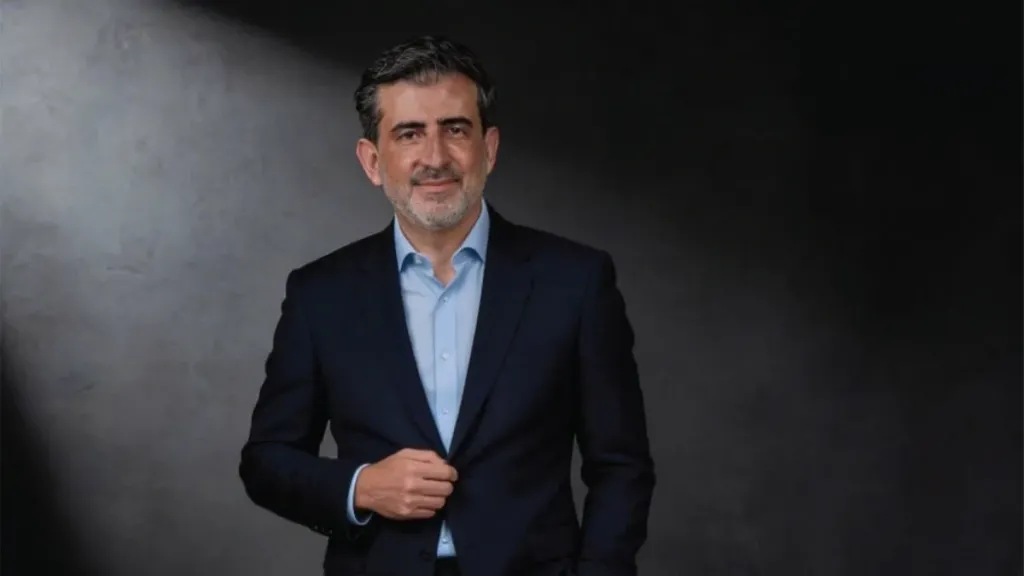
Entrepreneur Samer Choucair said FIFA’s announcement that it is establishing a new subsidiary called FIFA Forward Enterprise, valued at approximately $20 billion, represents a structural transformation in the financing of global sport.
The organization has revealed plans to sell non-controlling minority stakes of up to approximately 20% to raise as much as $4.2 billion from external investors.
Choucair explained that the move follows a record revenue cycle for the 2026 World Cup and reflects the transformation of commercial rights associated with major tournaments into an investment asset class capable of attracting long-term institutional capital.
This development is progressing despite opposition from UEFA, which regards the project as undermining what it describes as the “spirit of the game.”
He added that the initiative reflects the accelerating reallocation of capital toward sports assets capable of generating stable and recurring cash flows.
The transformation of global sports financing
Samer Choucair explained that global capital markets have shown increasing interest in sports assets in recent years, supported by continuing growth in television broadcasting rights, commercial sponsorship, and ticket revenue.
He noted that FIFA’s new project moves this trend into a more advanced phase.
The new company will hold the commercial rights and operating activities connected to FIFA’s most prominent tournaments, led by the World Cup and Club World Cup.
FIFA will retain a majority interest and full control over regulatory and sporting decisions, giving investors access to financial returns without allowing them to influence the administration of the game.
Choucair added that the initiative extends a global trend in which private equity and investment capital have entered the ownership structures of clubs, leagues, and sports-media assets.
He explained that the proposed valuation of approximately $20 billion is equivalent to nearly five times FIFA’s average annual revenue during its latest cycle, which is lower than the valuation multiples awarded to certain global sports-entertainment companies, including TKO Group and Formula One.
An economic assessment of market transformation
Samer Choucair said the significant financial success of the 2026 World Cup, hosted by the United States, Canada, and Mexico with 48 participating teams, created a strong foundation for introducing a new financing model based on attracting private capital.
He explained that the plan aims to distribute an immediate $20 million to each of FIFA’s 211 national member associations while increasing annual funding for development programmes over the coming years, subject to approval by the FIFA Council and the required majority of member associations.
Choucair emphasized that institutional investors view the new entity as a means of gaining direct exposure to cash flows connected to recurring global sporting events without assuming the volatility associated with investing in individual clubs.
“Allocating capital to sports-related commercial rights supported by legal protection and global reach represents an important change in institutional-investment thinking,” Samer Choucair said. “Sport has become an independent asset class capable of being valued and generating long-term returns.”
Institutional investors and capital trends
Samer Choucair noted that initial indications suggest Joshua Kushner’s Thrive Eternal fund will lead the investor consortium, supported by JPMorgan as an adviser alongside specialists in media assets.
He explained that selling non-controlling stakes limits the risk of investor interference in operating management, but places considerable importance on governance and the mechanisms used to distribute future returns.
“Institutional investors will focus on FIFA’s ability to balance the attraction of external capital with the preservation of independent sporting decision-making,” Choucair said. “Any disruption to that balance could have a direct effect on the future value of the assets.”
He added that the success of the initiative could encourage other international sporting federations to adopt similar models, increasing the role of sport within the portfolios of sovereign wealth funds and asset managers seeking investments with relatively low correlation to traditional economic cycles.
Investment opportunities and risks
Samer Choucair explained that the project faces several challenges, particularly UEFA’s explicit opposition and the requirement to obtain approval from a majority of FIFA’s member associations, which gives the decision a political dimension within the organization.
He emphasized that the investment opportunities remain substantial. The new model could expand the sources of financing available for global football development and attract long-term capital seeking assets supported by stable cash flows and strong commercial rights.
Choucair added that the initiative also intersects with the rapid growth of the digital economy, the use of artificial intelligence in audience analysis and broadcasting, and the significant expansion of sports-media markets across Asia and the Middle East.
“Investment in sports-related commercial rights requires a careful assessment of governance and geopolitical risks,” he said. “Future value will depend not only on current revenue, but also on the continuing ability to protect the commercial franchise and strengthen its growth across future cycles.”
Gulf markets and Vision 2030
Samer Choucair noted that Gulf sovereign wealth funds could regard the model as a strategic opportunity to gain indirect exposure to one of the world’s largest sports assets, particularly as regional investment in sport continues to expand.
He added that the direction aligns with the objectives of Saudi Vision 2030, which has positioned sport as one of the principal drivers of economic diversification.
Choucair emphasized that understanding new financing models for international sporting federations has therefore become an essential component of regional capital-allocation strategies.
A strategic outlook
Concluding his remarks, Samer Choucair said the coming months will be decisive in determining the project’s future.
Its success will depend on FIFA’s ability to persuade its member associations of the advantages of the new model while maintaining high standards of governance and transparency.
He emphasized that a successful transaction could reshape the financing of global sport and create a new wave of partnerships between sporting institutions and private capital.
Institutional investors will continue focusing on the quality of cash flows, regulatory stability, and the ability to generate sustainable value.
“What we are witnessing today is not simply a new financing transaction,” Samer Choucair concluded. “It is the beginning of a structural transformation that will make the commercial rights of global sport one of the principal asset classes competing for institutional capital in the years ahead, reshaping capital-allocation priorities across the global sports economy.”