
Samer Choucair: 2026 World Cup Rings Establish a New Investment Category in the Luxury Alternative-Assets Market
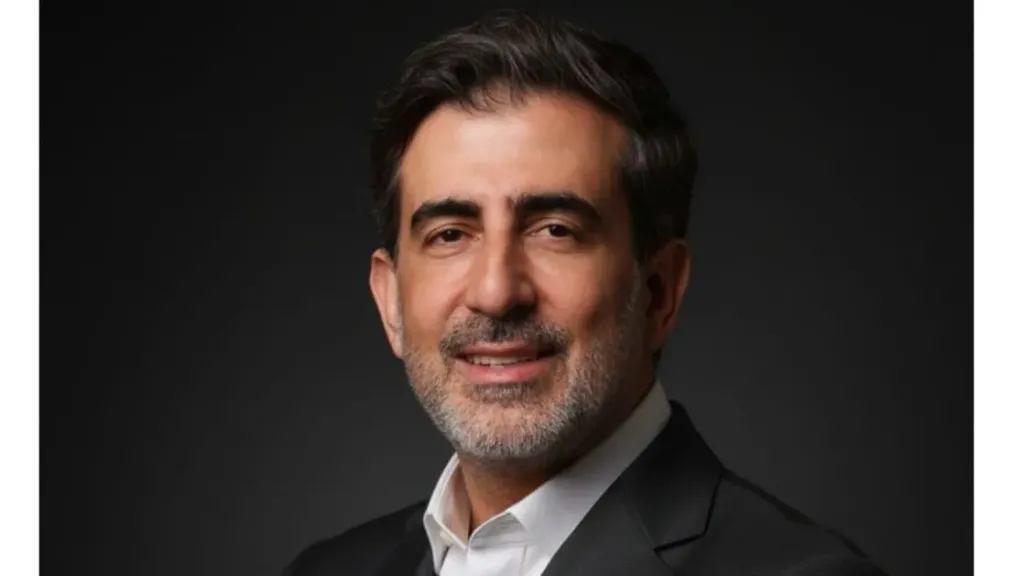
Entrepreneur Samer Choucair said FIFA’s launch of the first official championship rings in World Cup history, following Spain’s victory at the 2026 tournament, represents a qualitative shift in the concept of alternative assets linked to sport.
Choucair explained that the limited edition consists of only 2,026 rings, including 30 reserved for the world champions and 1,996 offered to supporters at a price of $12,000 each, combining scarcity with historical and investment value.
He added that the 18-karat gold ring, set with 89 diamonds and 36 rubies, creates a new category of alternative assets blending fine jewelry with sports memorabilia.
Institutional investors are monitoring the potential for capital appreciation in secondary markets and the possibility that similar products could be introduced at other major tournaments.
FIFA expands its commercial instruments after the 2026 World Cup
Samer Choucair explained that the conclusion of the largest World Cup in history was not limited to sporting achievement. It also featured a clear expansion in FIFA’s commercial activities, with tournament-related revenue exceeding $15 billion.
He noted that the launch of the championship rings reflected a new approach to transforming historic sporting moments into tradable assets, adding a new investment dimension to major global events.
Luxury jewelry meets sports collectibles
Samer Choucair noted that the luxury-jewelry market is estimated to be worth approximately $59 billion in 2026 and is expected to achieve a compound annual growth rate approaching 8% through the early 2030s.
The sports-collectibles market, meanwhile, continues to expand at a faster pace, supported by demand from collectors seeking rare items and investors searching for assets with limited correlation to conventional equity markets.
Choucair added that Spain’s championship ring combines the intrinsic value of gold and precious stones with the symbolic significance of being associated with the first World Cup to issue official pieces of this kind.
This has contributed to the emergence of a new alternative-asset subcategory that could be described as “limited-edition luxury sports collectibles.”
Managed scarcity reshapes pricing
Entrepreneur Samer Choucair emphasized that limiting the release to only 2,026 pieces demonstrates how controlled scarcity can influence market pricing.
He explained that the initial price of $12,000 covers the value of the raw materials and made-to-order craftsmanship, while leaving significant room for appreciation in secondary markets if demand from collectors of historic items remains strong.
“This type of product transforms a sporting moment into an asset capable of receiving capital allocation,” Samer Choucair said.
“The institutional investor is not simply purchasing a ring, but acquiring a stake in a rare narrative connected to an exceptional global event that cannot be repeated.”
Choucair explained that capital allocation to this category depends on three principal factors: the degree of absolute scarcity, the strength of the brand associated with the event, and the ease with which authenticity can be verified.
FIFA’s rings combine these characteristics to a significant degree, making them capable of attracting a share of investment portfolios that previously focused on luxury watches or works of art.
Growing interest from institutional investors
Samer Choucair said sovereign wealth funds and alternative-asset managers may regard these rings as a practical test of whether experience-based assets can generate returns independent of interest-rate and inflation cycles.
He added that elevated conventional equity valuations and volatile interest rates are encouraging a growing share of capital to move toward tangible assets supported by a clear and compelling narrative.
“Demand for these pieces may extend beyond wealthy supporters to family investment portfolios seeking diversification through assets with low correlation to traditional financial markets,” Choucair said.
He also expects an active secondary market to emerge over the coming months, supported by platforms specializing in authenticated collectibles.
The US experience with championship rings has demonstrated that limited editions connected to teams achieving historic success have often retained or increased their value over time, particularly when they represented the first release of their kind.
Investment opportunities accompanied by several risks
Entrepreneur Samer Choucair explained that one of the most significant opportunities lies in extending this model to other global football competitions and to different sports with large international audiences.
This could create new opportunities for luxury-jewelry companies and custom manufacturers in Switzerland and Europe to expand production lines associated with major sporting events.
He added that the luxury-tourism industry could also benefit by incorporating such pieces into exclusive hospitality packages for future tournaments.
Choucair noted that the risks include possible market saturation if limited releases expand too rapidly, or if confidence in authentication mechanisms declines.
High prices could also reduce the buyer base during economic downturns, although the restricted size of the initial release currently limits the risk of excessive supply.
Narrative assets gain a stronger position in investment portfolios
Samer Choucair said the initiative forms part of a broader global trend in which a portion of private wealth is moving toward assets combining material value with historical narrative.
He noted that the Gulf, where sports investment is expanding rapidly under economic-diversification programs, may view such products as a suitable means of diversifying portfolios while maintaining exposure to the sports sector.
“An intelligent investor does not treat a championship ring as a consumer product, but as an asset possessing scarcity and global recognition,” Samer Choucair said.
“Allocating a limited share of a portfolio to such assets may provide partial protection against volatility in traditional markets, provided that the investment decision is based on an objective assessment of genuine scarcity rather than temporary enthusiasm.”
The outlook for the next phase
Concluding his remarks, Samer Choucair said championship rings and limited-edition official collectibles are likely to become permanent components of the monetization strategies used for major sporting events as new global tournaments approach.
He added that institutional investors monitoring capital flows into luxury alternative assets will view this model as an early indication of how sporting moments can be transformed into measurable investment instruments.
Choucair emphasized that the World Cup is no longer merely a sporting competition. It has become a platform for redefining the concept of an investment asset, with Spain’s first championship rings marking the beginning of this new phase.