
Samer Choucair: The World Cup Trophy’s Soaring Gold Value Confirms the Metal’s Strategic Role in Global Portfolios
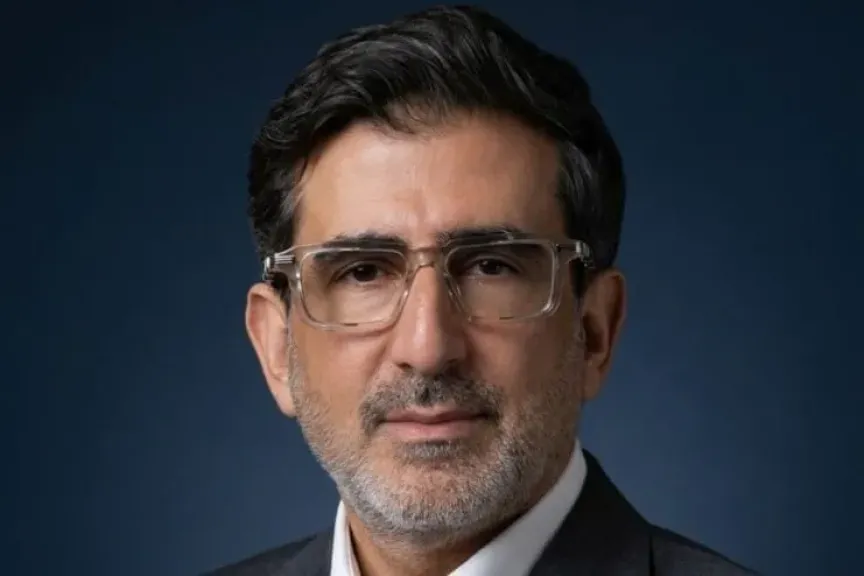
Entrepreneur Samer Choucair said the rise in the intrinsic value of the gold contained in the FIFA World Cup Trophy to approximately $713,000 by June 2026 provides a striking illustration of gold’s changing position within the global financial system.
The figure represents an increase of more than 150% from approximately $277,000 during the 2022 World Cup, reflecting gold’s powerful long-term rise as a strategic asset during a period characterized by heightened economic and geopolitical uncertainty.
Samer Choucair explained that global gold prices trading above $4,100 per ounce during parts of June 2026 resulted from a combination of factors, including geopolitical tensions, changing monetary-policy expectations, central-bank demand, and concerns surrounding global economic growth.
He emphasized that these forces have strengthened gold’s role as an instrument for portfolio diversification, capital preservation, and protection against periods of elevated financial-market risk.
Samer Choucair said the rising value of the trophy’s gold content offers a powerful symbol of the transformation experienced by the precious metal in recent years.
Gold is no longer viewed solely as a traditional store of value. It has become an important component of risk-management and asset-allocation strategies adopted by major financial institutions, central banks, pension funds, and sovereign wealth funds.
Choucair added that the current environment, combining slower global growth, persistent geopolitical pressure, high sovereign-debt levels, and changing interest-rate expectations, is encouraging investors to reassess the role of gold within their portfolios.
This is particularly important during periods when some traditional financial assets become less effective at providing stability or diversification.
Entrepreneur Samer Choucair noted that gold possesses several characteristics that can be valuable to long-term investors, including liquidity, scarcity, the absence of credit risk, and historically low correlation with many traditional stocks and fixed-income assets.
These qualities can help improve the balance between risk and potential returns within large, diversified portfolios, although diversification cannot eliminate investment losses.
Choucair emphasized that pension funds, sovereign wealth funds, and other institutional investors should approach gold as part of an integrated strategic asset-allocation framework rather than treating it solely as a short-term speculative instrument.
He explained that its principal value lies in strengthening portfolio resilience across different economic and market environments.
Entrepreneur Samer Choucair said the continued expansion of central-bank gold reserves, particularly across emerging markets, represents a structural change that could remain influential over the coming years.
The World Gold Council reported that central banks purchased a net 244 tonnes during the first quarter of 2026. Its latest survey also found that 89% of responding reserve managers expected global central-bank gold holdings to increase over the following 12 months.
Choucair explained that many countries are seeking to diversify their reserves and reduce excessive dependence on any single currency or financial asset.
The continuation of this trend could provide fundamental support for global gold demand, even if prices experience short-term fluctuations caused by interest-rate changes, currency movements, or improving investor appetite for risk.
Samer Choucair noted that elevated gold prices also create potential investment opportunities in related areas, including major mining companies and gold-backed exchange-traded funds.
These investments may benefit from continued capital flows toward real assets, although their risks and performance characteristics differ substantially from holding physical gold directly.
Choucair added that growing interest in gold could also influence other asset categories if investors redirect part of their capital away from certain fixed-income instruments or other traditional holdings in favor of real assets.
Samer Choucair emphasized that emerging economies and commodity-producing countries may benefit from strengthening the resilience of their reserves through carefully considered gold allocations.
However, investors must continue monitoring global growth, monetary policy, currency movements, and industrial demand when assessing the metal’s future direction.
He explained that developments in central-bank policy, inflation, geopolitical risk, and the strength of the US dollar will remain among the most influential drivers of gold prices over the next 12 months.
Over a three-to-five-year horizon, gold could continue receiving structural support from changing reserve-management policies and growing institutional demand for assets capable of providing protection during periods of economic and financial volatility.
Concluding his remarks, entrepreneur Samer Choucair emphasized that investment in gold should form part of a comprehensive framework for capital allocation and risk management.
He said gold’s strategic strength lies primarily in its ability to enhance portfolio resilience, liquidity, and diversification rather than merely generate short-term gains.
The transformation in the value of the FIFA World Cup Trophy’s gold content therefore offers more than an interesting comparison. It reflects gold’s increasingly important position as one of the core strategic assets within the global economy.