
Samer Choucair: Premium Growth and Vision 2030 Are Drawing Funds Toward Saudi Insurance
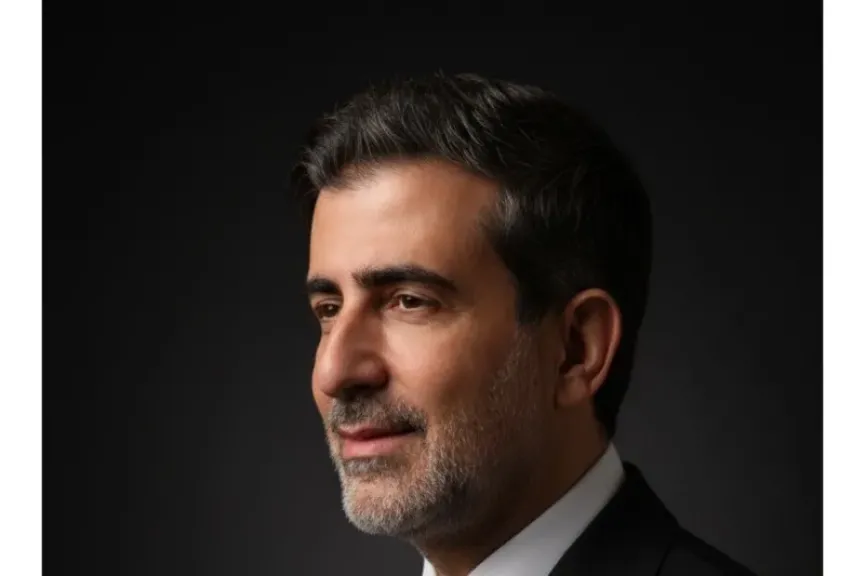
Investment leader Samer Choucair said the structure of domestic equity funds at the end of the first half of 2026 showed clear concentration within Saudi Arabia’s insurance sector, with 52 funds invested in Tawuniya compared with 13 funds in its closest competitor, while Al Rajhi Capital recorded the highest investment value in the sector at SAR 447.8 million.
Samer Choucair explained that the gap between the number of funds and the value of investments was not simply a statistical detail. It reflected the transformation of insurance into an institutional asset linked to labor market growth, mandatory coverage, and the national insurance strategy rather than a short term trading cycle.
Market Growth and Vision 2030
Samer Choucair noted that gross written premiums reached approximately SAR 84.3 billion in 2025, up 10.7% from 2024.
Growth was driven by health insurance, which reached SAR 47.8 billion and increased by 13%, while general insurance stood at SAR 28.4 billion. Health and motor insurance together accounted for around 89% of premium growth, while insurance spending per capita increased to SAR 2,367.
Choucair added that the National Insurance Strategy, linked to the Financial Sector Development Program, aims to increase the sector’s contribution to non oil GDP to 3.6% by 2030, expand health insurance coverage to 23 million beneficiaries, and raise the number of insured vehicles to 16 million within a market expected to exceed SAR 140 billion.
Samer Choucair said funds were not buying a broad insurance narrative. They were betting on the ability of individual companies to convert premium growth into measurable cash flows while benefiting from an expanding labor market, urban activity, and supply chains.
Tawuniya Leads the Market
Samer Choucair said Tawuniya led the market in 2025 with gross written premiums of SAR 23.8 billion, followed by Bupa Arabia at approximately SAR 20.5 billion and Al Rajhi Takaful at around SAR 10.6 billion.
He added that Tawuniya’s results for the first half of 2026 showed premiums rising by 21.5% to SAR 14.5 billion, insurance revenue increasing by 15.9% to approximately SAR 12 billion, and the investment portfolio expanding by 11.1% to SAR 13.5 billion.
Net investment results reached SAR 416.1 million, up 12.9%, while net profit fell by 16.4% to SAR 609.8 million due to claims pressure in general insurance, seasonality in health insurance, and earlier assumptions used in motor policy pricing.
By contrast, combined profits across listed Saudi insurers rose to SAR 1.69 billion, an increase of 23%.
Moody’s estimated revenues for listed insurers at SAR 38.5 billion, up 14%, with profits rising by around 13%. Tawuniya and Bupa Arabia accounted for approximately 59% of sector revenues.
Consensus and Risk
Samer Choucair said the figures of 52 funds and 13 funds reveal how narrow the list of companies is that meet institutional requirements for liquidity, governance, ownership limits, and exit costs.
He said: “The number measures consensus, while the value measures conviction.”
Choucair added that Al Rajhi Capital’s SAR 447.8 million investment reflected a deeper institutional allocation toward the sector.
Samer Choucair also warned that concentration can become a source of risk when too many funds hold the same stock. In that case, any unexpected development involving claims, pricing, or reinsurance can become a portfolio problem rather than simply an operating issue.
Opportunities and Outlook
Samer Choucair said opportunities in the sector include higher insurance penetration, expansion in property and casualty products, protection and savings products, and credit insurance.
He also pointed to the potential restructuring of the market through mergers, solvency requirements, and the transition toward risk based capital.
Choucair added that insurers’ investment portfolios have become increasingly important, with Tawuniya’s portfolio alone exceeding SAR 13 billion.
The main risks remain higher claims, pricing pressure, weaker investment income, and the costs associated with technological and regulatory transformation.
Samer Choucair concluded that assets held by private investment funds in Saudi Arabia exceeded SAR 700 billion by the end of the first quarter of 2026, with equities accounting for more than 30% of the total.
He said this has increased demand for sectors with recurring cash flows and governance standards that can be independently assessed.
Samer Choucair added that the real test for the insurance sector is no longer how many funds buy the stocks. It is whether insurance companies can convert the Vision 2030 strategy into sustainable margins and growth that can be financed over the long term.