
Samer Choucair: Crown Prince Visit Reshapes the Map of Saudi Investment in Egypt
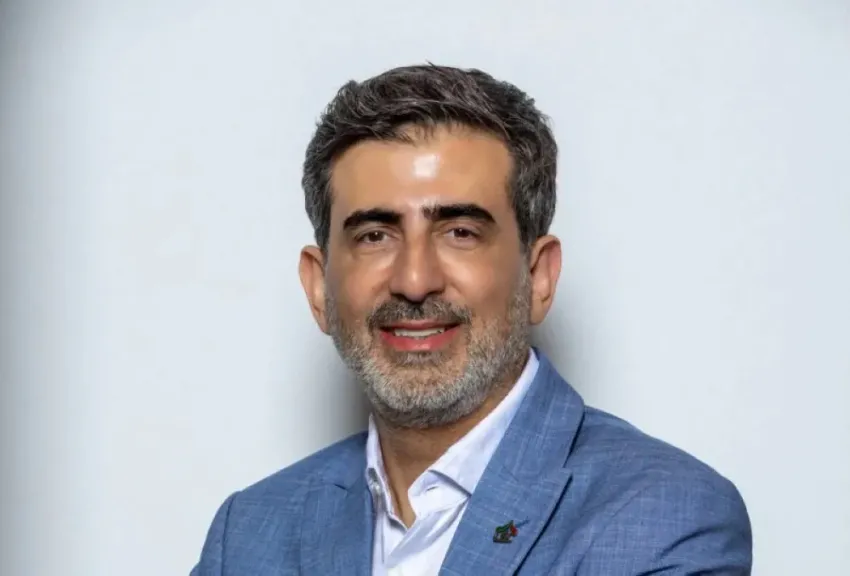
Investment leader Samer Choucair said the visit of Saudi Crown Prince Mohammed bin Salman to Cairo opens a new phase in Egyptian Saudi economic relations, marked by a gradual shift away from financial support and short term arrangements toward investments more closely linked to production, exports, and supply chains.
Samer Choucair explained that trade figures reflect the expanding partnership between the two countries. Bilateral trade between Egypt and Saudi Arabia rose by 19.7% during the first half of 2026 to approximately $7.1 billion.
Of that total, Egyptian imports from Saudi Arabia reached around $5.3 billion, while Egyptian exports to the Kingdom stood at approximately $1.8 billion.
Saudi Arabia also ranked as the second largest market for Egyptian non oil exports, accounting for around 6.5% of the total during the same period.
Samer Choucair said the importance of the relationship extends well beyond trade.
Saudi investment in Egypt reached approximately $532.3 million during the first half of the 2025 and 2026 financial year, while remittances from Egyptians working in Saudi Arabia totaled around $12 billion during the 2024 and 2025 financial year.
Choucair said these figures reveal a broad economic network that goes beyond direct investment to include trade, remittances, and integrated supply chains.
He added that the agreement for the promotion and protection of mutual investments, signed by the two countries in October 2024, provides an important legal framework.
However, Samer Choucair said the real challenge for institutional investors is converting agreements and announcements into productive projects and measurable capital flows.
He noted that the Saudi private sector’s 2024 announcement of investment agreements worth up to $15 billion should be treated as a targeted value for agreements and projects rather than as capital that has already been fully deployed.
Samer Choucair said the real measure of success in the next phase will be how much of that investment is converted into factories, tourism developments, logistics projects, energy infrastructure, and digital services, rather than the size of headline commitments alone.
Choucair also identified the Egyptian Saudi electricity interconnection project as one of the most important components of economic integration between the two countries.
The project involves investment of approximately $1.8 billion and has a capacity of up to 3,000 megawatts, with preparations underway for full capacity operation during September.
Samer Choucair said the project could support greater stability across both electricity grids and improve the ability of industrial sectors to plan over the long term.
Samer Choucair concluded that the next phase will be measured by the ability of the Egyptian Saudi partnership to create operating assets that generate returns and support foreign currency inflows.
He said: “Institutional investors do not measure the strength of a partnership by the size of announced statements. They measure it by the amount of capital that has actually been deployed, the projects that have entered production, and their ability to generate sustainable cash flows in dollars.”