
Samer Choucair: Tadawul Outage Puts Saudi Market’s Digital Infrastructure to the Test
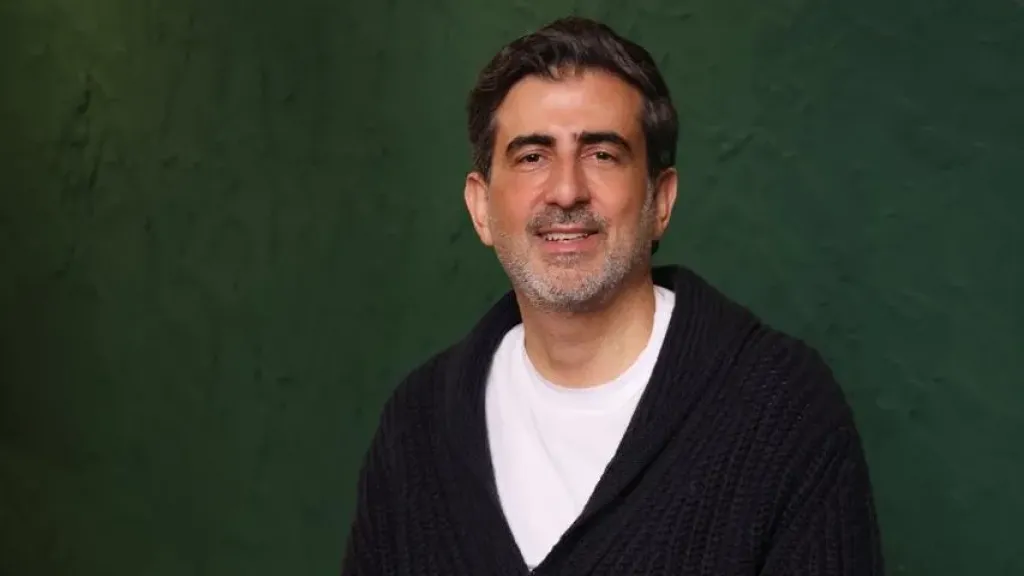
Investment leader Samer Choucair said the technical disruption that temporarily suspended trading on the Saudi Exchange, or Tadawul, on the morning of August 19, 2026, represents an important test of the reliability and resilience of Saudi Arabia’s capital-market infrastructure, even though the incident ultimately had no significant impact on the direction of prices by the end of the session.
The Saudi Exchange confirmed that trading resumed on the same day, with the opening auction beginning at 10:15 a.m. and continuous trading starting at 10:30 a.m. The exchange said market activity had returned to normal and that its systems and operational processes were functioning properly.
The benchmark Tadawul All Share Index (TASI) ended the session at 10,925.69 points, gaining 14.11 points, or 0.13%. Total trading value reached approximately SAR 3.7 billion, while around 201 million shares changed hands. Those figures suggest that the operational disruption did not translate into a broader pricing shock during the session.
For Samer Choucair, however, the significance of the incident lies less in what happened to the index during a single trading day and more in what the episode says about business continuity, operational resilience, and risk management for institutional investors.
“Modern financial markets should not be judged solely by the absence of technical failures,” Choucair said. “They should also be judged by their ability to detect a disruption, contain it, restore trading, and communicate clearly and rapidly with market participants.”
As the Saudi capital market expands and becomes increasingly integrated with global institutional investment, Choucair said continuous investment in trading systems, telecommunications infrastructure, backup architecture, stress testing, and business-continuity planning becomes progressively more important.
The greater the volume of transactions and the more sophisticated the financial products traded through the market, the more infrastructure resilience itself becomes part of the exchange’s competitive position.
Samer Choucair stressed that investors should distinguish between an isolated operational incident and a recurring pattern of disruption.
A single technical event can generally be treated within the normal framework of operational risk. Repeated outages, however, or insufficient transparency surrounding such incidents could eventually lead institutional investors to reassess execution risk, liquidity conditions, and the reliability of market access.
This distinction is particularly important as Saudi Arabia continues developing its capital markets and attracting increasingly sophisticated domestic and international investors. For institutional capital, the quality of a market is determined not only by the assets available for investment, but also by the infrastructure through which those assets are priced, traded, cleared, and settled.
Choucair said the August 19 incident therefore offers a broader lesson about the evolution of Saudi financial markets. A technically sophisticated exchange must be evaluated not simply by whether its systems experience disruptions, but by how effectively its operational architecture responds when unexpected pressure occurs.
Samer Choucair concluded that investing in Saudi Arabia is no longer solely a question of evaluating the earnings, valuations, and growth prospects of listed companies. It increasingly requires investors to assess the efficiency and resilience of the broader market ecosystem that enables those securities to be priced, traded, and settled.
“Investor confidence is not truly tested when a platform is operating normally,” Samer Choucair said. “It is tested when the platform comes under unexpected pressure and demonstrates that it can restore operations quickly, transparently, and effectively.”