
Samer Choucair: $16.5 Billion in Demand for Saudi Sukuk Signals Strong Investor Confidence
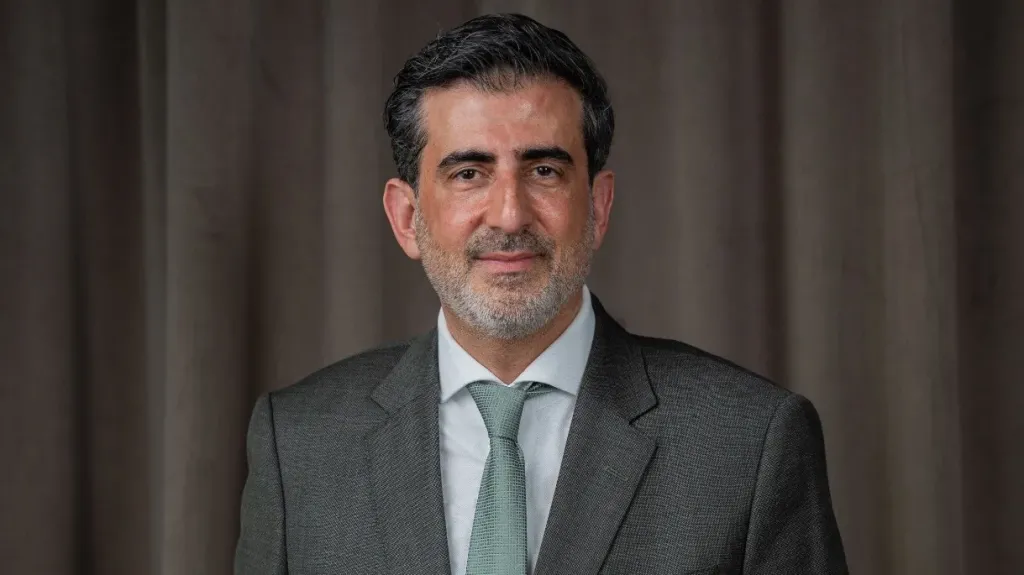
Investment leader Samer Choucair said the recent selloff across global bond markets has pushed financing costs higher worldwide, but it has not prevented institutional investors from seeking high-quality Gulf credit.
Saudi Arabia’s $3.25 billion sovereign sukuk issuance attracted approximately $16.5 billion in orders, representing demand of more than five times the amount offered. That strong order book allowed the Kingdom to tighten spreads by roughly 30 basis points, with the two tranches ultimately priced at approximately 70 and 80 basis points above comparable U.S. Treasuries.
For Choucair, the transaction illustrates an important change in global capital allocation. Investment decisions are no longer driven primarily by the direction of interest rates. Balance-sheet quality, market depth, liquidity, and an economy’s ability to absorb external shocks are becoming increasingly important determinants of where institutional capital is willing to accept risk.
Saudi Arabia Benefits From Credit Differentiation
Samer Choucair said Saudi Arabia entered 2026 with financing requirements estimated at approximately SAR 217 billion to cover the expected fiscal deficit and refinance maturing obligations, following increased spending in a geopolitically challenging environment during the first quarter.
The Kingdom’s ability to return to international markets with substantial oversubscription and tighter pricing than initial guidance demonstrated continued investor confidence in Saudi sovereign debt.
That confidence is particularly significant given that Saudi Arabia had already completed a substantial portion of its financing requirements earlier in the year, while the Public Investment Fund had also raised significant financing from international markets.
“What happened was not a rejection of risk; it was a reclassification of risk,” Samer Choucair said. “The cost of money has increased for everyone, but markets are no longer pricing Gulf credit, Egypt, and high-yield instruments in the same basket. Investors accept a lower premium when they see an issuer with repeated market access, stable domestic demand, and clearly defined spending priorities.”
The distinction matters because periods of global bond-market volatility tend to expose differences between borrowers that merely require capital and those capable of accessing it repeatedly across market cycles.
Sukuk Are Becoming a Core Fixed-Income Asset
Choucair said demand for Saudi sukuk was particularly significant because the issuance came during a difficult period for global fixed-income markets, characterized by higher sovereign yields, energy-related inflation concerns, and the repricing of expectations surrounding U.S. monetary policy.
Despite those conditions, Saudi debt continued to attract strong demand.
Samer Choucair attributed that resilience partly to the relative scarcity of large and liquid Gulf sovereign instruments, continued interest from Asian and European investors and sovereign wealth funds, and the growing importance of sukuk within both Islamic and conventional fixed-income portfolios.
Sukuk are therefore evolving beyond their traditional role as instruments primarily targeting Islamic investors. For global portfolio managers, sufficiently liquid Saudi sovereign sukuk can increasingly function as part of a broader emerging-market and investment-grade credit allocation.
At the same time, capital recycling across the Gulf is connecting sovereign issuance, sovereign wealth fund financing, and Vision 2030 projects.
Choucair said the region is gradually moving from a phase dominated by accelerating expenditure toward a more selective approach centered on returns on invested capital.
That transition could ultimately strengthen the credit story if financing is increasingly directed toward projects capable of producing measurable economic returns rather than expansion for its own sake.
Egypt: The Carry Trade Versus Operating Investment
Samer Choucair said Egypt presents a substantially different capital-allocation equation.
Weighted average yields on Egyptian Treasury bills at auctions in early September exceeded 25% across short- and medium-term maturities, while benchmark interest rates stood at approximately 19% for deposits and 20% for lending, with headline inflation near 15%.
Those yields keep the carry trade attractive in nominal terms.
But high yields do not exist independently of risk. They also increase the market’s sensitivity to changes in foreign investor positioning, particularly when the Egyptian pound is trading around EGP 51 to the U.S. dollar and non-resident holdings of local debt remain substantial.
Egypt’s foreign-exchange reserves had reached record levels in previous months, supported by remittances, services revenues, and portfolio inflows.
However, Choucair said the combination of the trade deficit and reliance on shorter-duration foreign capital means the more important test is not simply how much capital enters the country, but how expensive that capital is to roll over and how effectively the economy can generate dollars independently.
For institutional investors, that creates a clear distinction between yield and durability.
A Treasury instrument can offer an exceptionally attractive nominal return, but its ultimate investment outcome remains connected to currency performance, liquidity, and the investor’s ability to exit.
Direct Investment Is Redefining the Opportunity
Choucair said the movement of capital toward export-oriented Egyptian companies represents an important alternative investment model.
Avanz Capital’s plans to establish Manara 2 with EGP 3 billion in investment capital to support export-oriented businesses illustrate that shift.
The strategy follows Manara’s exit from Egyptian logistics company Bosta, a transaction that reportedly generated approximately 4.1 times invested capital and an internal rate of return of around 92% over roughly two years, with capital originally invested in Egyptian pounds and the exit realized in dollars.
“When the cost of shocks increases, investors move from searching for nominal yield toward searching for convertibility into hard currency,” Samer Choucair said. “Investment in exports and tradable services transforms the risk premium from exposure to a domestic financial instrument into ownership of an operating asset.”
That distinction is particularly important in economies where currency risk remains one of the principal variables determining investment returns.
A company capable of generating dollar revenues through exports, logistics, tourism, or internationally tradable services possesses a natural hedge that a purely domestic asset may lack.
Where Are Institutional Portfolios Moving?
Choucair said institutional investors are increasingly combining Gulf sovereign fixed income with selective direct investment opportunities in Egypt, particularly in businesses capable of generating foreign-currency revenues.
Within the Gulf, opportunities remain attractive across medium-duration sovereign debt and financing associated with Saudi Arabia’s economic diversification.
In Egypt, Samer Choucair sees stronger structural opportunities among mid-sized companies operating in exports, supply chains, logistics, tourism, and other sectors capable of accessing external demand.
But both markets remain exposed to global monetary conditions.
Higher U.S. Treasury yields increase financing costs even for strong issuers, while persistent inflation in Egypt could constrain the pace of domestic monetary easing and leave the exchange rate particularly sensitive to foreign withdrawals from local debt instruments.
Institutional investors therefore face a different question in 2026 than they did during the era of exceptionally cheap global liquidity.
The objective is no longer simply to identify the highest yield. It is to determine whether the underlying asset can generate sufficient cash flow to compensate for the higher cost of capital throughout the investment cycle.
Capital Is Dividing, Not Retreating
Samer Choucair said the investment outlook through the end of 2026 does not point toward capital abandoning the region. Instead, capital is becoming more segmented according to each market’s ability to manage risk.
The Gulf retains substantial access to international financing because of its scale, liquidity, credit quality, institutional infrastructure, and increasingly deep capital markets.
Egypt faces a different challenge: replacing part of its dependence on reversible short-term portfolio flows with private capital linked more directly to production, exports, and hard-currency generation.
For Choucair, the real investment test is therefore not identifying which market offers the highest yield in any given week.
It is identifying where capital can be recycled without sacrificing liquidity, exit flexibility, or the ability to withstand external shocks.
“The Gulf is refinancing itself in a volatile global market, while Egypt is attempting to build less volatile sources of financing,” Samer Choucair said. “The winner will be the investor who treats the higher cost of money as a tool for discipline in asset allocation, rather than as a signal to withdraw from the region.”
In that environment, the $16.5 billion order book for Saudi Arabia’s $3.25 billion sukuk issuance becomes more than a headline about oversubscription. It is evidence of how global investors are increasingly differentiating between emerging-market risks and how credit quality, liquidity, institutional depth, and the ability to recycle capital are becoming as important as yield itself.