
Samer Choucair: Opening Airport Management to the Private Sector Is Changing Egypt’s Capital-Allocation Equation
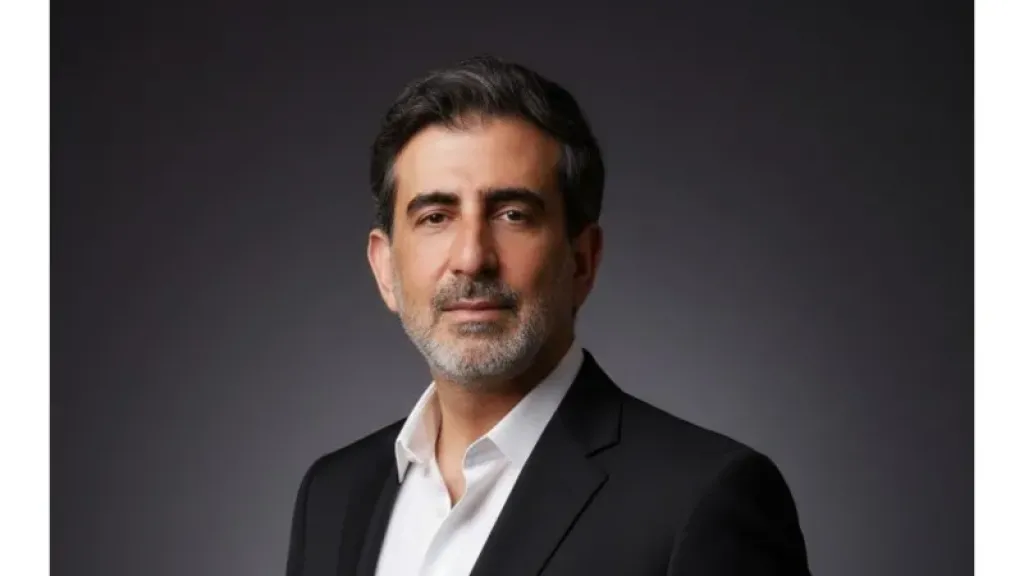
Investment leader Samer Choucair said Egypt’s move to involve the private sector in the management and operation of a network of tourism airports, while retaining sovereign ownership of the underlying assets, represents a meaningful shift in how tourism infrastructure is managed and monetized.
Samer Choucair explained that the program, overseen by the International Finance Corporation under a public-private partnership framework, is not simply about improving the passenger experience. It could also open the door to long-term capital flows from institutional investors and global operating consortia. In his view, the real value is not in owning the runway itself, but in controlling the gateway into the tourism economy and the services built around it.
Hurghada as the Gateway to a New Model
Choucair said the model is being tested initially at Hurghada International Airport, with the intention of potentially extending it across a broader portfolio of tourism and regional airports as part of a wider effort to monetize public assets and improve their productivity without relinquishing ownership.
He noted that the International Finance Corporation has been appointed as transaction adviser for a program covering 11 airports, with Hurghada serving as an important test case because it is one of Egypt’s busiest airports and a major entry point for European tourism to the Red Sea.
According to Choucair, the government would retain ownership while the private-sector partner assumes responsibility for development, maintenance, and operations under measurable performance indicators. He sees this separation between ownership and operation as particularly attractive to infrastructure funds seeking contractual returns without becoming involved in politically sensitive debates over the sale of sovereign assets.
Thirty Million Tourists and the Infrastructure Test
Samer Choucair said Egypt’s ambition to increase tourist arrivals to around 30 million over the medium term, after welcoming approximately 15.7 million visitors in 2024, puts airport infrastructure at the center of the country’s tourism-growth strategy.
He argued that airports are increasingly becoming a potential bottleneck to that objective. Expanding hotel capacity alone will not be sufficient if the arrival experience, immigration procedures, baggage handling, and ground transportation remain below the standards offered by competing destinations in the Mediterranean and Gulf.
Choucair said the airport program serves three objectives simultaneously: reducing the capital-investment burden on the state budget, improving service quality in a way that supports foreign-currency tourism revenues, and demonstrating a commitment to reform to debt markets and international investors.
Global Consortia Could Reshape Competition
Choucair said Orascom Investment Holding, led by Naguib Sawiris, has expressed interest in competing for the management of tourism airports through an international consortium, with previous attention focused on Hurghada and potential interest extending to Luxor and Sohag.
He said the group’s interest reflects a broader redirection of capital toward tourism, cultural services, and entertainment, from the Giza Pyramids experience to hospitality and restaurants. That makes tourism-operating assets a potential complement to conventional real-estate development.
Competition, however, is unlikely to be limited to a single domestic player. Choucair pointed to prospective combinations involving European airport operators, regional investors, construction companies, and financing partners, including names such as Groupe ADP and TAV.
In his view, the intensity of competition itself could lower the state’s cost of capital while simultaneously raising the performance standards demanded from the winning operator.
Gulf Capital Is Looking for Cash Flow
Samer Choucair said Gulf investment funds have become more selective following the latest interest-rate cycle. They are no longer looking simply for a broad Egypt growth story. Instead, they increasingly demand clearly structured operating contracts, strong governance, and defined exit mechanisms capable of protecting cash flows.
A consortium combining an international operator with a local investor that understands the Egyptian tourism market could therefore be more aligned with the requirements of institutional Gulf capital than a conventional real-estate project.
Choucair said this could redirect investment toward ground-handling companies, smart baggage systems, digital visa and immigration solutions, and airport-linked hospitality services rather than continued concentration in residential assets along already heavily developed coastal markets.
Sawiris: Operations Versus Construction
Choucair stressed the importance of distinguishing between Orascom Investment Holding and Orascom Construction.
The latter is moving toward an Abu Dhabi-based infrastructure and investment platform through a merger pathway involving OCI Global, while Orascom Investment Holding, which is listed on the Egyptian Exchange, has been repositioning itself from its historical telecommunications roots toward a more diversified portfolio.
Choucair said an airport-management contract should be valued as an operating concession, whereas a construction platform is valued largely on the basis of its order book, margins, and execution pipeline. Confusing the two models, he warned, could lead to inaccurate capital-allocation decisions.
The Risks Behind the Concession Model
Samer Choucair cautioned that the opportunity is not without significant risks.
Foreign-exchange volatility remains one of the most important variables because it affects the cost of imported equipment and maintenance as well as dollar-denominated returns. Higher interest rates can also increase the cost of capital-intensive upgrades.
Regulatory stability is another critical factor. Choucair said that if performance requirements or renewal terms are materially altered after only a few years, the economic value of the concession could be undermined.
Execution risk also matters, particularly the potential gap between international operating standards and the ability of administrative, customs, and border-control systems to keep pace with digitalization. Tourism demand itself remains exposed to regional geopolitical developments and to changes in the cost of European travel.
Airports as Integrated Investment Platforms
Choucair said improving airport efficiency can reduce waiting times and lost-baggage rates while enabling low-cost airlines to increase frequencies. Greater conversion of passenger traffic into commercial spending inside terminals could also improve asset profitability without requiring immediate and expensive capacity expansion.
The larger opportunity, however, emerges when airports are connected with hospitality, transportation, restaurants, and cultural entertainment.
Choucair said the kind of integration available to Orascom Investment could create a vertically integrated tourism exposure that a pure real-estate developer may find difficult to replicate. At the same time, such a structure concentrates exposure within a single tourism cycle and therefore requires careful risk management.
Cairo Is Betting on a Much Larger Expansion
Samer Choucair said the significance of the program extends beyond tourism airports.
Plans to expand Cairo International Airport through a fourth terminal, at a cost of at least $3.5 billion, are intended to raise capacity toward approximately 70 million passengers.
That scale of expansion could significantly increase demand for airport operating technology, including baggage systems, control centers, and artificial-intelligence applications for passenger-flow management.
It could also reprice commercial space inside airports and create opportunities for both conventional and Islamic financing structures backed by predictable infrastructure cash flows.
Egypt and Saudi Arabia in a Shared Tourism Market
Choucair said the story may appear Egyptian on the surface, but much of the potential capital behind it is likely to come from the Gulf, where sovereign and institutional investors have accumulated substantial experience in airports, tourism cities, ports, and large-scale infrastructure.
Saudi Vision 2030, meanwhile, is repositioning the Kingdom as a major tourism destination. This creates competition for European and Asian visitors, but it also opens opportunities for regional integration through airlines, scheduling, hospitality, and cross-border tourism investments.
Choucair said the UAE-Egypt Ras El Hekma project has already demonstrated that Gulf capital is prepared to finance long-duration tourism platforms when credible governance and strong operating partners are present.
Three Scenarios for Investors
Samer Choucair sees a base-case scenario in which the first operating concession is completed under transparent terms and then extended across a wider group of tourism airports. That would gradually reduce operational uncertainty and make the assets easier to finance.
A delay scenario could emerge if qualification procedures stall or if the parties fail to agree on revenue-sharing mechanisms and performance indicators.
The upside scenario would involve private airport operation being combined with digital visas, more efficient immigration systems, and stronger integration of regional airports into broader airline networks. That could raise spending per visitor rather than simply increasing passenger numbers.
A Test of State Governance
Choucair said institutional investors need to distinguish between three separate investment propositions.
The first is a sovereign bet on reform and Egypt’s ability to generate additional hard-currency revenues through tourism. The second is an operating bet on the company capable of converting passenger volumes into sustainable margins. The third is a portfolio bet on businesses that connect airports directly with the tourism destination.
“A strong airport concession is not simply an operating prize,” Samer Choucair said. “It is a test of the state’s governance and its ability to involve the private sector without giving up ownership of the underlying asset.”
He added that the most successful institutions will likely be those entering through consortia that combine global operating expertise with local market knowledge and price the entire tourism cycle rather than only peak demand.
Samer Choucair concluded that the management of Egyptian airports could evolve from a technical infrastructure issue into a mechanism for repricing the broader tourism economy and a measure of Egypt’s readiness to absorb institutional investment in assets historically managed under a predominantly sovereign model.
The eventual winner, he said, may not necessarily be the bidder offering the highest headline financial value. It could instead be the operator capable of turning the country’s aviation gateways into sustainable platforms for cash flow, service quality, and operating discipline.