
Samer Choucair: Concentration in Global Equity Market Capitalization Is Forcing Sovereign Wealth Funds to Rethink Strategy
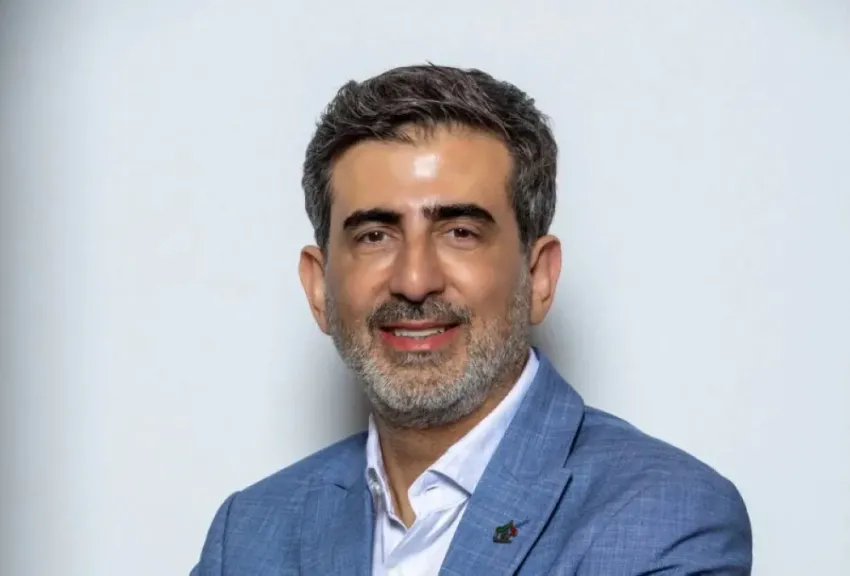
Investment leader Samer Choucair said the growing concentration of global equity market capitalization is forcing sovereign wealth funds and asset managers to reconsider capital-allocation strategies in 2026. He explained that tracking market-cap-weighted global indices can result in significantly greater exposure to the United States and the technology sector rather than delivering the geographic diversification institutional portfolios are designed to achieve.
Samer Choucair noted that global equity market capitalization reached approximately $157.8 trillion by the end of 2025, increasing by more than $25 trillion in a single year. The United States accounted for roughly $68.9 trillion, representing close to 44% of the total, while China and the European Union each stood at around $15.5 trillion. During the summer of 2026, global market capitalization moved into a range of approximately $166 trillion to $170 trillion, with the U.S. market retaining its strength amid elevated valuations in artificial intelligence and technology companies.
“Markets no longer allocate capital according to the size of GDP,” Samer Choucair said. “They allocate it according to the ability to convert growth into cash flows that can be priced, traded, and protected by strong legal frameworks.”
Choucair added that U.S. market dominance reflects the cumulative effect of innovation, deep capital markets, and the reinvestment of earnings by companies capable of generating high returns on capital over extended periods.
He explained that the increase in the U.S. share of global equity capitalization to around 44%, compared with roughly one-third more than a decade ago, has fundamentally altered the nature of global index investing. An investor purchasing an index such as the MSCI ACWI is, in practice, taking substantial exposure to the U.S. market and to a relatively small group of technology, communications, and software companies.
“The risk is not in owning U.S. equities,” Choucair said. “The risk is believing that a global index is diversifying risk when it is actually reproducing concentration.”
According to Choucair, the question for institutional investors is therefore no longer whether they should increase exposure to the United States. The more relevant question is which segment of the U.S. market they own and what opportunity cost that exposure carries compared with markets that continue to trade at structural discounts.
Asia, Choucair said, presents a different set of opportunities. India’s equity market capitalization stood at approximately $10.6 trillion by the end of 2025, while Japan reached roughly $7.6 trillion and Hong Kong around $6.1 trillion. China, meanwhile, retains significant economic weight even though its equity market capitalization does not fully reflect its role in global trade and manufacturing.
Samer Choucair said corporate-governance reforms in Japan and the expansion of the domestic investor base in India create selective opportunities, but he cautioned against treating Asia as a single investment basket. Institutional investors, he argued, increasingly need to distinguish between individual markets, regulatory systems, capital structures, and valuation regimes.
In the Gulf, Choucair pointed to Saudi Arabia’s Tadawul market capitalization, which approached SAR 9.6 trillion during the summer of 2026, equivalent to approximately $2.5 trillion. Foreign ownership rose to roughly $121 billion, representing close to 4.8% of issued market capitalization.
He said the gap between the size of Saudi Arabia’s economy and the capitalization of its listed equity market should not automatically be interpreted as a weakness. Instead, it can represent substantial room for expansion as investment continues across manufacturing, tourism, energy, logistics, and the digital economy.
“Investment in Saudi Arabia will not be measured only by Tadawul’s weighting in global indices,” Choucair said. “It will be measured by the market’s ability to price the economic transformation itself: manufacturing, tourism, artificial intelligence, transitional energy, and family-owned businesses moving toward institutional models.”
Choucair added that Gulf sovereign wealth funds possess an important structural advantage because of their experience in private markets, infrastructure, venture capital, and private credit, all of which are only partially reflected in public-market capitalization figures.
Samer Choucair said artificial intelligence is likely to remain the most important driver of U.S. market capitalization, benefiting semiconductor companies, digital platforms, software providers, energy infrastructure, power generation, data centers, and equipment suppliers.
For Gulf investors, however, Choucair argued that the opportunity does not necessarily lie in chasing the valuation multiples of U.S. technology companies. Instead, it may lie in investing in the infrastructure that supports the transformation, including energy, digital infrastructure, logistics, healthcare, financial services, and industrial development.
He warned that an increase of more than $25 trillion in global equity capitalization within a single year raises portfolio sensitivity to earnings shocks and interest-rate changes. It also amplifies geographic concentration, sector concentration, and the illusion of diversification that can arise from market-cap-weighted indices.
Choucair said this matters particularly for sovereign wealth funds and institutional investors because passive exposure to a global benchmark can create a portfolio that appears diversified by geography while remaining heavily dependent on the earnings expectations, valuation multiples, and capital-market conditions of a limited number of U.S. mega-cap companies.
For institutional allocators, the challenge is therefore not to reject U.S. market leadership, but to understand how much of that leadership is already embedded in benchmark valuations and where alternative sources of return may still be underrepresented.
Samer Choucair concluded that the next investment cycle will not reward investors for denying the structural weight of the United States. Instead, opportunities are likely to emerge from assets and markets that have not yet entered the core of global indices to the same extent.
“The opportunities in the next cycle will not come from denying America’s weight,” Choucair said. “They will come from pricing what has not yet entered the core of the global index to the same degree: corporate reform in Japan, deeper capital markets in India, the listing of transformation assets in Saudi Arabia and the Gulf, and discipline in how much investors are willing to pay for the artificial-intelligence premium.”
He added that managing this concentration will become one of the most important responsibilities facing asset managers and sovereign wealth funds as the end of the decade approaches.