
Samer Choucair: Crypto and Artificial Intelligence Are Redistributing the Influence of Capital
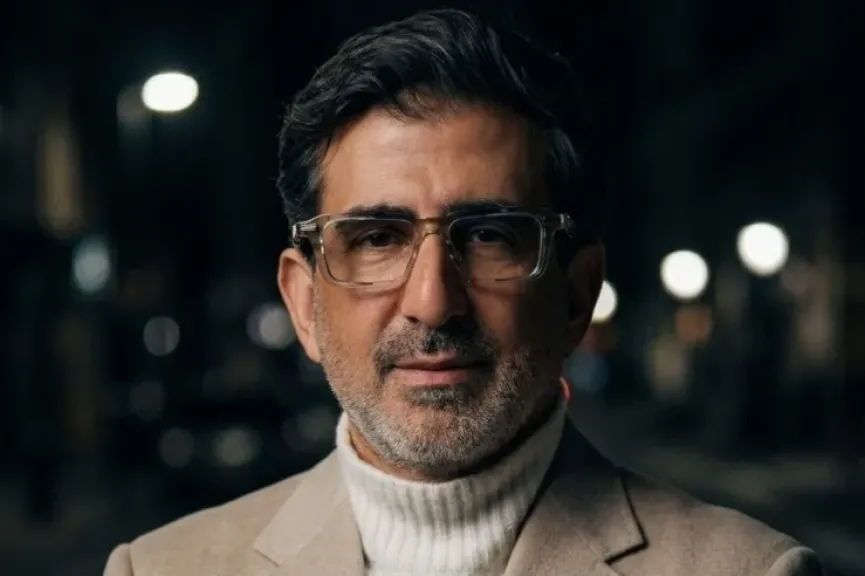
Investment leader Samer Choucair said the 2026 U.S. midterm elections are revealing a structural shift in the relationship between capital and politics, as cryptocurrency, artificial intelligence, and sports betting emerge among the industries directing significant financial resources toward electoral races in an effort to influence the regulatory frameworks that will shape their future.
Samer Choucair said disclosed institutional spending across House and Senate races has exceeded $500 million during the early months of the election cycle, surpassing levels recorded during the previous cycle, with cryptocurrency, artificial intelligence, and online betting accounting for a substantial share of that funding.
“What we are seeing resembles regulatory capital expenditure,” Samer Choucair said. “Industries worth hundreds of billions of dollars are beginning to treat regulatory clarity as a strategic asset, investing in the policy environment with the same urgency that they invest in chips, data centers, and infrastructure.”
Choucair said the cryptocurrency industry has become one of the most significant new political forces in Washington after companies and organizations across the sector sharply increased their election-related spending compared with previous cycles. Much of that activity has focused on supporting candidates perceived as more open to digital assets, stablecoins, and broader participation by financial institutions in crypto markets.
For institutional investors, Choucair argued, legislation must increasingly be treated as a direct economic variable because new rules can influence compliance costs, institutional market access, and the development of custody, settlement, payments, and tokenized-asset services.
“Institutional investors make a mistake when they treat political spending as seasonal election noise,” Choucair said. “When regulation can change a company’s license to operate, profit margins, and compliance costs, politics has effectively entered the valuation model.”
Artificial Intelligence Enters the Regulatory Contest
Samer Choucair said artificial intelligence presents an even more complicated case because the industry has yet to reach a settled view on the regulatory framework most compatible with continued growth.
One camp favors relatively flexible rules that allow models and infrastructure to develop rapidly, while another is pushing for tighter standards around safety, data, energy consumption, and legal liability.
“Artificial intelligence is not facing only the question of how large the market can become,” Choucair said. “It is also facing the question of what kind of market will emerge from regulation. Investors therefore need to price energy costs, compliance requirements, and chip-export restrictions into their forecasts rather than looking at revenue growth in isolation from the political environment.”
Choucair added that sports betting and prediction markets represent a third regulatory pathway because the ability of operators to expand often depends on state-level licensing and legislation. Political spending can therefore become part of a broader strategy to defend market access and protect market share.
An Investment Opportunity for the Gulf
Samer Choucair said the implications of this shift extend to Saudi Arabia and the wider Gulf as regional investment accelerates across artificial intelligence, data centers, energy, fintech, and digital infrastructure.
He cautioned that Gulf economies should not assume that regulatory disruption in the United States automatically creates an investment opportunity. The more durable advantage, he argued, will come from building jurisdictions capable of attracting capital through regulatory clarity, strong infrastructure, reliable energy availability, and credible governance.
“The advantage does not come from an American regulatory vacuum,” Choucair said. “It comes from the ability to offer genuine regulatory certainty. Saudi Arabia, as it builds artificial-intelligence capacity, develops its digital markets, and expands its infrastructure, can attract a portion of global investment if it can offer investors a better cost of certainty than competing jurisdictions.”
For international capital, the value of that certainty can become significant when companies are deciding where to locate data centers, financial-technology platforms, digital-asset infrastructure, and other capital-intensive technology operations.
Repricing Capital
Samer Choucair said the 2026 elections should therefore not be interpreted simply as a partisan contest. For investors, they also serve as an indicator of which regulatory frameworks could determine the cost of capital across emerging technology industries.
“Long-term investing in 2026 does not begin with the question of who is financing a campaign,” Choucair said. “It begins with the question of which rule will survive after industries have spent hundreds of millions of dollars trying to shape it. Investors who understand that early can reposition their portfolios before markets price the outcome rather than after.”
Choucair said the next stage of the investment cycle is likely to reward companies capable of combining growth with compliance and adapting quickly as legislation evolves. Regulation, in his view, has become an investment variable comparable in importance to revenue, cash flow, and competitive advantage.
For Gulf investors, Samer Choucair sees opportunities in data centers, energy infrastructure, digital infrastructure, and financial technology, while maintaining sufficient geographic diversification to avoid excessive dependence on any single political cycle.
The broader opportunity, he argued, is to transform regulatory clarity itself into a competitive advantage capable of attracting global institutional capital at a time when some of the world’s fastest-growing industries are discovering that politics, regulation, and valuation can no longer be separated.