
Samer Choucair: Reduced U.S. Military Exercises in Korea Are Repricing Geopolitical Risk in Asia
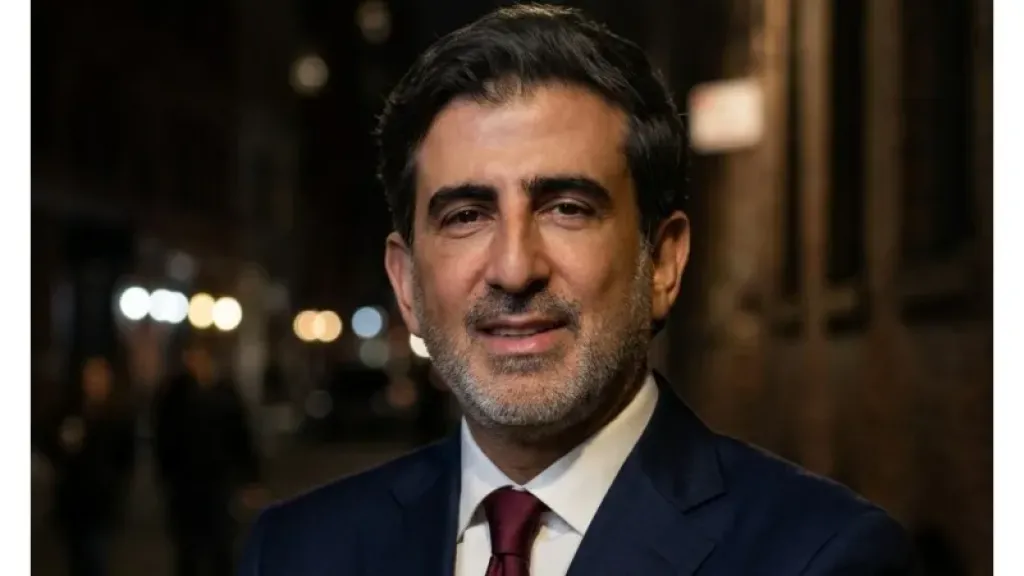
Investment strategist Samer Choucair believes that U.S. President Donald Trump’s decision to direct the Department of Defense to scale back joint military exercises with South Korea goes beyond defense calculations related to the Korean Peninsula. In his view, it represents a development that could reprice geopolitical risk across Asia at a time when South Korea has become a critical hub in global semiconductor and artificial-intelligence supply chains, as well as an increasingly important destination for global industrial investment.
Samer Choucair said markets may be entering a phase in which geopolitics becomes a direct component of capital-allocation models rather than merely a contingency factor used in extreme-risk scenarios.
He noted that institutional investors will not look only at the probability of military confrontation, but also at the reliability of alliances, the cost of capital, supply-chain resilience, and the locations where new industrial capacity is being built.
Choucair pointed to an economic paradox: security risks are rising at the same time that hundreds of billions of dollars are flowing into semiconductor, AI infrastructure, and advanced manufacturing projects in South Korea and the United States.
For institutional investors, he said, the key question is not whether military confrontation is imminent, but whether the cost of capital required to invest in Northeast Asia should change, and how shifts in the U.S. security umbrella could affect valuations across technology, defense, industrial, energy, and supply-chain companies.
From Security Risk to Capital Costs
Choucair explained that the U.S.–South Korea alliance has been one of the key pillars of security and stability in Northeast Asia for decades. Consequently, any reassessment of the level of U.S. military engagement could have implications extending well beyond defense budgets.
He believes these developments make Korean geopolitical risk more directly relevant to global technology portfolios than in previous investment cycles.
Choucair added that a sustained increase in the geopolitical risk premium may not directly reduce demand for semiconductors, but it could affect discount rates, capital-expenditure decisions, insurance costs, inventory allocation, backup-power plans, and the location of new production capacity—all of which ultimately feed into valuations.
Samer Choucair said:
> “The mistake an investor could make is reducing the development to a binary military scenario based on a single question: war or no war. What matters most from an investment perspective is what happens between those two possibilities.”
According to Choucair, greater uncertainty surrounding alliance commitments can raise the cost of capital long before any actual disruption to economic activity occurs.
This raises a key question for investment funds: What additional return should investors demand for holding assets whose value is indirectly dependent on a security umbrella that has become increasingly intertwined with trade and financial negotiations?
South Korea’s Strategic Transformation
Choucair noted that two decades ago, South Korea was largely viewed as an export-oriented economy highly sensitive to the global economic cycle. The AI boom, however, has fundamentally changed its position in the global economy.
He emphasized that the current cycle is not simply a traditional industrial expansion. Rather, it represents one of the largest global rebuilds of production capacity associated with AI, requiring long-term investment in electricity, water, infrastructure, materials, and specialized equipment.
Choucair believes that an additional geopolitical risk premium could prompt an investment response that does not necessarily involve leaving South Korea, but instead increasing the geographic diversification of new production capacity.
That distinction, he said, is crucial to understanding the next phase of global investment.
The dynamic is already visible in the expansion of South Korean investment in the United States. These investments are no longer limited to automobiles and batteries, but increasingly include semiconductors, shipbuilding, heavy industry, and supply chains.
Choucair cited Hanwha, for example, as planning to invest $5 billion in a shipyard in Philadelphia, as part of a broader effort to strengthen the U.S. industrial base and connect foreign investment with domestic supplier networks.
He describes this dynamic as the “geopolitical premium” of industrial investment.
Countries, he explained, are no longer competing for capital solely through taxes and labor costs. They are also competing through security, energy availability, and supply-chain resilience.
In some cases, companies are willing to accept higher operating costs in exchange for greater regulatory and security stability and reliable market access.
Infrastructure Behind the Factories
For private equity and infrastructure funds, Choucair believes this means greater importance for sectors supporting major industrial facilities, including:
Electricity
Data centers
Transportation networks
Industrial water
Storage
Cybersecurity
Ports
Specialized suppliers
Samer Choucair believes that reducing military exercises does not necessarily mean lower defense spending in Asia. In fact, the opposite could occur.
However, he cautioned that the sector is not immune to risk. Valuations that rise rapidly on expectations of a prolonged defense-spending cycle could come under sharp pressure if government policies change or budgets are delayed.
For this reason, he believes security selection will remain more important than broad sector-level exposure.
Reading the Korean Market
Choucair noted that the complexity of the environment is amplified by the structure of the Korean stock market itself, making it more difficult to separate geopolitical risks from technical market factors.
Stocks may fall following a political development without the market necessarily pricing in a military confrontation. Conversely, equities can rise despite increasing geopolitical risks if AI-related earnings and cash flows are stronger.
Institutional investors, he believes, will therefore need to monitor more precise indicators than the headline index, including:
Credit spreads
The Korean won
Hedging contracts
Foreign-investor flows
Defense stocks versus semiconductor stocks
The cost of insuring sovereign debt
Choucair emphasized that movement across these indicators simultaneously would provide stronger evidence of a structural repricing of geopolitical risk.
The Fixed-Income Dilemma
Choucair believes the issue also extends to fixed-income markets.
Investors should not necessarily expect the traditional relationship between geopolitical risk and falling yields to hold.
If geopolitical tensions push energy prices higher, increase defense spending, or accelerate industrial reshoring into higher-cost economies, the medium-term result could be inflationary.
The consequence could therefore be a double impact: higher political risk combined with higher financing costs.
Investing in the Bottlenecks
Samer Choucair said:
> “The best investment opportunities during a period of global economic restructuring may not be in the sectors making the headlines, but in the bottlenecks that emerge behind them.”
He explained that more semiconductor factories mean greater demand for electricity, water, and equipment.
Higher defense spending means increased demand for electronics, components, and software.
Industrial reshoring creates demand for ports, warehouses, and transportation networks.
And AI expansion requires data centers, energy, cooling systems, and semiconductors.
Institutional investors can therefore reduce timing risk by investing in infrastructure required under multiple economic scenarios, rather than betting on a single political outcome.
Choucair believes this approach is particularly relevant for sovereign wealth funds and family offices, which are capable of investing across longer cycles.
Geopolitics as a Capital-Allocation Variable
Samer Choucair’s broader investment thesis can be summarized in one principle:
> “Geopolitics should not be viewed as a reason to step away from investment, but as a factor that determines where capital should be directed, at what price, and under what risk structure.”
He added that the U.S. decision regarding military exercises could change or be reinterpreted in the coming weeks, but the broader trend is difficult to ignore: geopolitical considerations are increasingly becoming a structural component of global capital allocation.