
Samer Choucair: Crypto Losses Are Redrawing the Capital Allocation Map
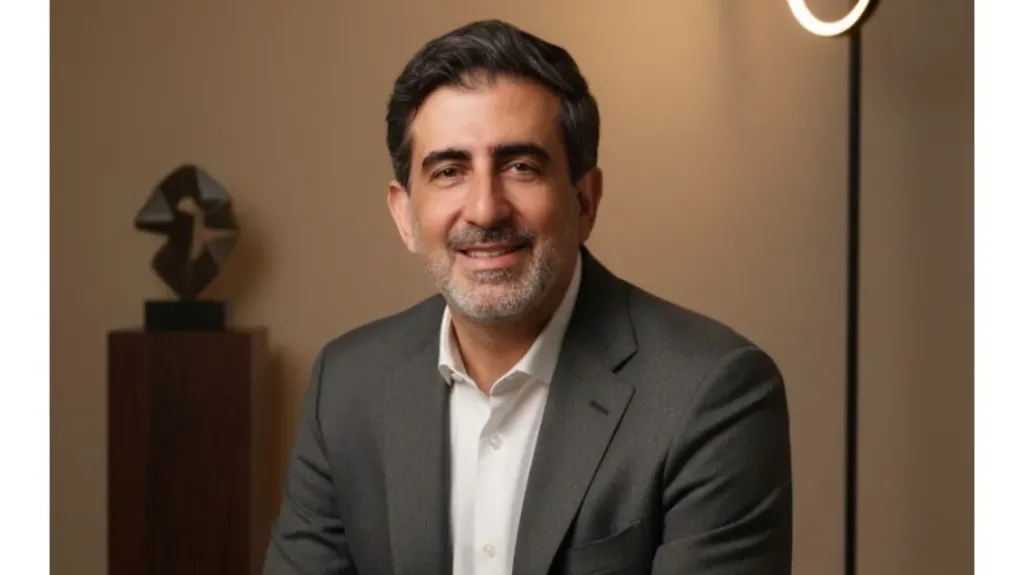
Investment leader Samer Choucair said that the digital-asset market has entered an extended correction that has redefined the boundaries of institutional investing, after the market lost around $1 trillion in value since the beginning of 2026, following record market capitalization levels in October 2025, according to CoinMarketCap data.
Choucair explained that Bitcoin has fallen approximately 28% since the beginning of the year, while losses in Solana, Dogecoin, and ADA have approached 50%, and an index of smaller cryptocurrencies has declined by more than 40%.
He noted that these developments were not simply a temporary volatility cycle, but reflected a shift in capital behavior, with retail investors pulling back from highly speculative products and trading volumes and liquidity declining. He added that Bitcoin-linked exchange-traded funds recorded approximately $4.7 billion in outflows since the beginning of the year, compared with around $1.5 billion from Ether funds, according to data compiled by Bloomberg, while some speculative capital moved into other sectors, including artificial intelligence.
Increasing Pressure on Asset Managers
Samer Choucair said that the withdrawal of retail investors from highly volatile assets, without sustained compensating institutional inflows, has turned specialized funds from growth instruments into sources of pressure on asset managers’ balance sheets.
He stressed that capital allocation now requires greater focus on assets more clearly connected to the real economy or supported by stable fee revenues.
Choucair pointed out that Grayscale Investments recently withdrew plans to launch exchange-traded funds linked to Cardano’s ADA, Polkadot’s DOT, and Hedera’s HBAR. He noted that the decisions were not the result of direct regulatory rejection, but rather a commercial assessment of the products’ viability amid weak demand and liquidity.
He added that Bitwise Asset Management closed two specialized funds, while REX Advisers and Direxion halted similar products. Trump Media & Technology Group also canceled plans for a joint Bitcoin-and-Ether fund.
Institutions Prefer Quality
Samer Choucair explained that these closures revealed structural pressure on the business model of funds that rely on attracting daily retail investors through broad exposure to alternative cryptocurrencies.
The 2025 boom demonstrated that sustainability requires sufficient liquidity and trading volumes to support management fees, he said.
Choucair said institutional investors are now evaluating digital assets not only according to their upside potential, but also according to their ability to fit into diversified portfolios without amplifying systemic risk.
He added that capital fleeing smaller cryptocurrencies has once again highlighted governance and liquidity as two fundamental criteria for long-term allocation.
According to Choucair, this trend is consistent with broader preferences for assets that can be incorporated into traditional risk-management frameworks, while capital is also moving toward sectors whose growth is supported by genuine capital expenditure, such as AI infrastructure and the digital economy.
The Gulf and Vision 2030
In the Gulf, Samer Choucair said the shift has gained additional significance as Saudi Vision 2030 advances, with Saudi Arabia focusing on economic diversification and strategic investments in technology, renewable energy, and artificial intelligence.
Choucair explained that sovereign wealth funds and asset managers in the region are increasingly evaluating digital assets based on their contribution to building a sustainable digital economy rather than their short-term speculative potential.
This, he said, could create opportunities for selective investments in blockchain infrastructure and applications with genuine real-world use cases.
Opportunities and Risks
Samer Choucair warned that liquidity pressures on alternative cryptocurrencies could persist, alongside further closures and consolidation among smaller asset managers. He also cautioned that the decline could deepen if global monetary conditions become tighter.
At the same time, he viewed the repricing as an opportunity for long-term investors to build positions in more established assets while shifting toward business models based on actual fee generation rather than the distribution of speculative tokens.
Choucair expects the coming months to bring greater concentration around products linked to major digital assets and a decline in broad funds targeting retail investors.
This could accelerate consolidation across the digital-asset management industry, leaving firms that provide genuine value through governance, transparency, and connections to the real economy in a stronger position.
Strategy for the Next Phase
Samer Choucair emphasized that the central question facing institutions is now how to integrate digital assets into long-term capital allocation.
The answer, he said, lies in selectivity, risk management, quality, liquidity, and governance.
> “Success will not belong to those who chase the highest potential returns, but to those who build portfolios capable of withstanding volatility cycles and flexibly redirecting capital toward structural growth in the digital economy, artificial intelligence, and infrastructure linked to Vision 2030.”
Choucair added that sovereign wealth funds, private-equity firms, and asset managers have an opportunity to reassess the relative weighting of digital assets, as the trends of 2026 have demonstrated that capital is increasingly moving toward assets with real cash flows and clearer links to economic growth.
He concluded that this criterion is likely to play a defining role in shaping institutional investment in digital assets over the coming years.