
Samer Choucair: The Prolonged Ukraine Conflict Is Increasing the Appeal of Gulf Economies to Global Capital
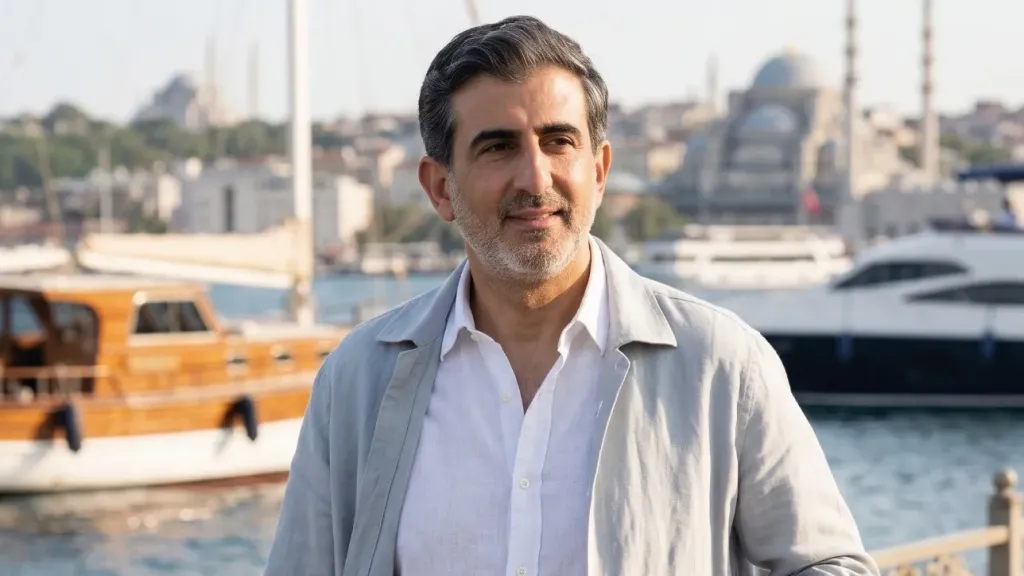
Investment leader Samer Choucair said that a year after the U.S.-Russia summit in Alaska in August 2025, the conflict in Ukraine has yet to produce a near-term breakthrough, forcing institutional investors to reassess risks surrounding energy, sovereign debt and global supply chains.
Choucair explained that the prolonged tensions have become a macroeconomic factor directly affecting oil and gas prices, sovereign financing costs and investment trends in infrastructure and renewable energy. Global markets, he said, remain exposed to energy-price volatility and capital flows seeking more stable destinations.
He added that this environment is prompting institutions to restructure portfolios toward assets capable of absorbing geopolitical shocks while generating stable long-term returns.
Growing Pressure on the Russian Economy
Samer Choucair noted that expectations of a rapid move toward a comprehensive agreement following the Alaska summit have not materialized. Russian analysts, he said, have argued that Moscow has not achieved a decisive breakthrough on the ground, while Kyiv and its European partners have continued providing military and financial support.
Choucair pointed to Ukrainian strikes on Russian energy infrastructure as another source of pressure, contributing to lower refined-petroleum output and higher domestic fuel prices. He said declining oil and gas revenues during the first quarters of 2026, combined with the federal budget deficit exceeding its annual target earlier than expected, have placed additional pressure on Russia’s fiscal position.
He added that the decline in liquid sovereign-fund reserves relative to GDP has made Russia’s ability to finance its military effort increasingly dependent on commodity prices and export revenues, amid continued Western sanctions and efforts to restrict the shadow fleet.
At the same time, energy-market disruptions linked to developments in the Middle East have kept oil and gas prices highly volatile, increasing energy costs in Europe and influencing inflation and central-bank decisions.
Capital Seeks Resilience
According to Choucair, the prolonged conflict has encouraged institutional investors to redirect capital toward sectors less directly exposed to geopolitical risks, including renewable energy, alternative supply chains, defense, cybersecurity and logistics.
He said investors are also paying greater attention to emerging markets with strong fiscal fundamentals and clearly defined development programs.
The key lesson for investors in 2026, Choucair argued, is that geopolitical risk is no longer a temporary event but a structural component of asset pricing. Building portfolios on the assumption of a rapid return to normal conditions can expose investors to losses in real value, whereas geographic and sector diversification, combined with greater exposure to productive assets, can provide greater resilience.
He added that investors should focus on economies capable of turning external pressures into domestic growth engines through economic diversification, infrastructure investment and artificial intelligence, rather than trying to predict the precise timing of the end of any particular conflict.
The Gulf Moves to the Center of Capital Flows
Samer Choucair said Saudi Arabia and the wider Gulf have emerged as increasingly attractive destinations in this environment, supported by Vision 2030, the Public Investment Fund and the region’s transformation across manufacturing, tourism, renewable energy and technology.
He noted that foreign direct investment, privatization programs and financial-market development—including the role of the Saudi Exchange and the Capital Market Authority—are strengthening transparency and governance, two factors that are increasingly important in institutional investment decisions.
Gulf energy producers could also benefit from global demand for stable supplies, both conventional and lower-carbon, while projects such as NEOM and logistics zones are creating opportunities in infrastructure and commercial real estate connected to international trade.
By contrast, Choucair warned that European companies heavily dependent on imported energy could face pressure on margins, potentially encouraging the relocation of production and the development of partnerships in regions with more secure supply chains.
He emphasized that overlooking the Gulf in 2026 capital-allocation strategies could mean missing one of the most significant structural growth stories, as economies combining political stability, strong public finances and ambitious development programs are likely to attract an increasing share of global capital seeking risk-adjusted returns.
Opportunities in Energy, Defense and Technology
Choucair identified renewable energy and hydrogen as key opportunities, driven by the growing importance of energy security. He also highlighted defense and cybersecurity amid higher government spending, advanced manufacturing and logistics as supply chains are rebuilt, and technology and AI as tools for improving productivity and reducing reliance on labor in unstable environments.
In debt markets, he expects sovereign bonds issued by countries with strong fiscal positions to attract greater demand, while debt tied to economies more directly exposed to conflict is likely to remain under pressure.
Scenarios for the Next Phase
If current trends continue without a political breakthrough, Choucair expects energy markets to remain volatile and pressure on the Russian economy to persist, while diversified investment destinations such as the Gulf become increasingly attractive.
If meaningful progress toward a settlement emerges, energy prices could correct and geopolitical risk premiums could decline, potentially supporting cyclical assets in Europe and related emerging markets.
But Choucair stressed that a successful investment strategy should not depend on accurately predicting when a settlement will occur. Instead, investors should build resilient portfolios focused on assets capable of creating value amid uncertainty, whether through stable cash flows or the ability to expand during the next growth cycle.
Recalibrating Portfolios in 2026
Samer Choucair concluded that 2026 represents an opportunity for sovereign wealth funds, asset managers and private-equity firms to recalibrate portfolios around structural themes such as energy security, economic diversification in stable emerging markets and digital transformation.
He said the Saudi economy, supported by Vision 2030 and the Public Investment Fund, remains particularly well positioned to attract a share of these capital flows.
Smart institutional investing in 2026, Choucair emphasized, will not depend on waiting for the conflict to end. Instead, it will focus on the opportunities created by prolonged geopolitical tension and the resulting reshaping of global value chains—giving investors who identify these shifts early a stronger chance of achieving sustainable, risk-adjusted returns over the medium and long term.