
Samer Choucair: Rising Debt to Finance AI Raises the Risk of a Market Correction
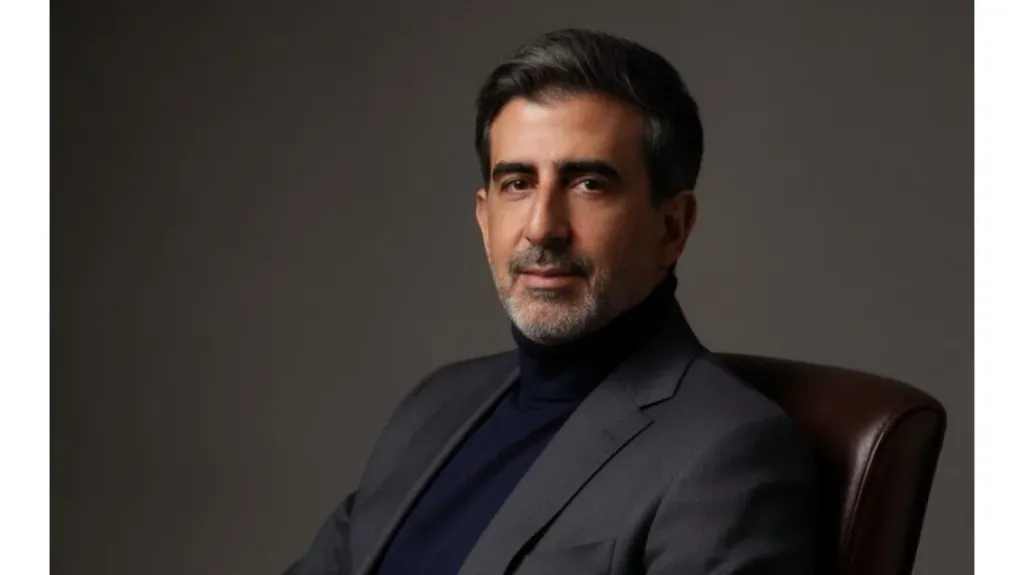
Investment strategist Samer Choucair said that the current artificial intelligence boom has placed global equity markets before a real test of growth sustainability, amid unprecedented capital spending on AI-related infrastructure, rising borrowing, and stock valuations approaching levels seen during the dot-com bubble.
Choucair explained that the main challenge for institutional investors is no longer determining how much growth artificial intelligence can generate, but rather allocating capital efficiently and distinguishing between long-term structural growth and near-term risks arising from excessive expectations.
He noted that investment exceeding $1 trillion by the largest cloud-computing companies during 2025 and 2026, combined with increasing reliance on debt, could turn the current boom into a prolonged correction whose effects spread from equity markets to credit markets.
Artificial Intelligence Drives a Global Investment Cycle
Samer Choucair said the global economy is entering a critical phase of the technology investment cycle, as massive spending on data centers, semiconductors, and cloud-computing facilities has become one of the key drivers of growth.
He added that these investments have simultaneously supported U.S. GDP growth and pushed valuations of AI-related stocks to record levels, making the relationship between technology investment, equity markets, and debt an increasingly important focus for institutional investors and sovereign wealth funds.
Choucair said this dynamic bears some similarities to previous investment cycles, particularly in terms of the speed of capital flows and the scale of expectations surrounding future growth. However, he noted that the current cycle differs in the nature of its leading companies and in the sources of financing being used to fund expansion.
1.4 Percentage Points of U.S. Growth
Samer Choucair pointed out that AI investment directly supported U.S. economic growth during the first quarter of 2026, adding approximately 1.4 percentage points to GDP growth through capital spending in the information technology sector.
At the same time, U.S. corporate bond issuance increased by 26% during the first half of the year, driven largely by financing linked to artificial intelligence.
Choucair explained that companies including Amazon, Alphabet, Nvidia, Meta, Oracle, and SpaceX collectively issued approximately $182 billion in investment-grade bonds, saying these figures clearly demonstrated that the AI investment cycle is no longer dependent solely on companies’ operating cash flows. Debt and credit markets have become an important component of expansion financing.
$700 Billion from Four Companies
Samer Choucair noted that expected capital expenditures by four major companies—Alphabet, Amazon, Meta, and Microsoft—will reach approximately $700 billion this year, an increase of more than 75% compared with the previous year.
He added that the five largest hyperscalers are expected to spend more than $1 trillion on AI-related infrastructure during 2025–2026.
Choucair explained that this level of spending exceeds free cash flow at some companies, prompting them to increase their reliance on debt markets and private credit to finance expansion.
He said the widening gap between capital expenditures and free cash flow is one of the most important indicators institutional investors should monitor when assessing the sustainability of the AI investment cycle.
BIS Warns of Excessive AI Infrastructure Spending
Samer Choucair pointed out that the Bank for International Settlements warned in its annual economic report issued in June 2026 about the risks of excessive spending on AI infrastructure amid intense competition among companies for market share.
He explained that the BIS warned that the sector could become more vulnerable if returns fall short of expectations. It also raised the possibility that the current boom could turn into a “prolonged investment slump” affecting global financial conditions.
Choucair added that the BIS compared the current pace of investment with historical episodes, including the nineteenth-century railway boom and the dot-com bubble of the late 1990s, noting that the scale and speed of the current cycle exceed those historical precedents.
Fitch Places an AI Correction Among Credit Risks
Samer Choucair said Fitch Ratings has likewise identified a correction in the AI market as one of the major near-term global credit risks in its third-quarter 2026 report.
He noted that the agency indicated that the cyclically adjusted price-to-earnings ratio of the S&P 500 had approached levels recorded during the dot-com bubble.
Choucair added that the growing interconnection between capital markets, the broader economy, and artificial intelligence has created a clear credit vulnerability, particularly as companies increasingly rely on debt instruments to finance massive capital expenditures.
The AI Race Raises Capital-Allocation Risks
In his assessment of market developments, Samer Choucair said that “the race for AI dominance” has pushed companies toward spending levels that could exceed commercially achievable returns over the medium term.
He explained that this situation has forced institutional investors to reassess capital-allocation criteria rather than focusing solely on nominal growth.
Choucair added that increasing flows into private-credit instruments and off-balance-sheet financing could accelerate any potential correction compared with traditional banking crises, because these channels are less transparent and more interconnected.
He noted that estimates indicate approximately 30% of capital expenditures by major companies in the sector are currently financed through new debt, a proportion that has doubled in recent years. Some bond issues have also begun to experience wider spreads, reflecting growing caution among fixed-income investors.
The AI Cycle Differs from the Dot-Com Bubble
Samer Choucair said the current cycle differs from the dot-com bubble in one fundamental respect: leading AI companies are generating actual profits and strong cash flows, giving them a more solid financial foundation than many of the companies that led the dot-com boom.
He noted that the current cycle shares certain similarities with the subprime mortgage crisis in terms of increasing leverage and the use of complex credit instruments to finance long-term assets whose returns remain uncertain.
Choucair explained that if future revenues fail to keep pace with the scale of investment, capital expenditures could decline sharply, with potential repercussions extending across supply chains, employment, and aggregate demand.
Successive Bubbles Along the Value Chain
Samer Choucair said a moderate scenario could involve the emergence of what might be described as “successive bubbles” within the value chain, with investor attention gradually shifting away from large language models toward applications and infrastructure.
He said this shift could allow capital to be gradually reallocated within the AI sector rather than triggering a sudden, broad-based correction.
In a more severe scenario, Choucair noted that the impact could spread to global equity markets because of the large weight of U.S. stocks in international indices. It could also spill over into credit markets through higher financing costs for companies linked to the sector.
The Gulf Has an Opportunity to Build AI Capabilities
At the level of the Saudi and Gulf economies, Samer Choucair said current developments represent an opportunity to redirect investment toward building domestic capabilities in artificial intelligence and the digital economy within the framework of Vision 2030.
He explained that Gulf countries are capable of attracting foreign direct investment into digital infrastructure and data centers without falling into the excessive leverage trap seen in Western markets, provided they focus on strategic partnerships and sound governance.
Choucair added that the region’s advantage is not limited to its ability to attract capital. It also lies in its ability to deploy financial resources, energy, and infrastructure to build a long-term digital ecosystem.
Gulf Opportunities Extend Beyond U.S. Technology Stocks
Samer Choucair said institutional investors in the region should distinguish between direct exposure to highly valued U.S. technology stocks and opportunities across supply chains, applied solutions, and the energy required to operate data centers.
He emphasized that Gulf countries possess a clear competitive advantage in these areas, allowing regional investors to benefit from AI growth without taking on the same risks associated with purchasing the most highly valued assets in U.S. markets.
He said sovereign and regional investment funds can play a balancing role by allocating capital toward long-term projects linked to the digital transformation while maintaining sufficient flexibility to manage global market volatility.
Corporate Earnings and Capital Spending Will Determine the Market’s Direction
In the near term, Samer Choucair expects equity markets to remain vulnerable to sharp volatility linked to earnings results, capital-spending announcements, and developments in interest rates.
He explained that investors will continue monitoring companies’ ability to convert massive spending into actual revenue, earnings, and cash flow. This will be the most important factor in determining whether current valuations are sustainable.
Choucair added that the medium term will be even more decisive, as companies’ ability to turn massive investments into genuine productivity gains will determine whether the AI boom produces sustainable growth or develops into a broader correction cycle.
Risk Management Takes Priority Over Chasing Momentum
Samer Choucair emphasized that the priority for institutional investors should be risk management through diversification across different stages of the value chain, while closely monitoring credit and leverage indicators.
He highlighted the importance of focusing on companies with strong cash flows and the ability to finance their own expansion rather than relying excessively on debt markets or private credit.
Choucair said this approach allows investors to participate in the structural growth offered by artificial intelligence while limiting the risks associated with excessive valuations or debt-funded expansion.
Real Value Lies in Resilience Through the Repricing
Samer Choucair concluded that the real value in the AI cycle will not necessarily accrue to those chasing maximum momentum, but rather to investors who build positions capable of withstanding the inevitable repricing of expectations.
He emphasized that the challenge for institutional investors is not to avoid artificial intelligence, but to identify investment positions that can benefit from its structural growth over the next decade without becoming exposed to excessive valuations and financial leverage.
Choucair said the success of investment strategies in the next phase will depend on the ability to balance participation in the profound technological transformation driven by artificial intelligence with capital discipline and the flexibility required to withstand any correction in equity or credit markets.