
Samer Choucair: The Ability to Absorb Future Demand Will Be the Principal Driver of Market Value in the AI Sector
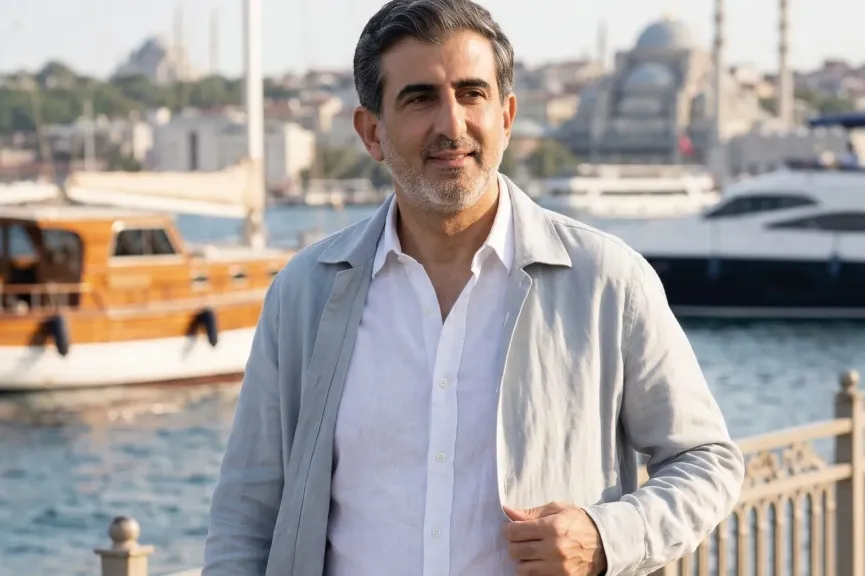
Entrepreneur Samer Choucair said the temporary outage affecting Anthropic’s Claude platform in late July 2026 provides a clear indication of how the risk landscape in the artificial-intelligence sector is changing.
He noted that the reliability of computing infrastructure has become a central factor in institutional investment decisions alongside model quality and technical capabilities.
Samer Choucair explained that the disruption, which resulted from elevated error rates across several models and constraints on computing capacity, brought renewed attention to the widening gap between rapidly growing global demand for large language models and the pace at which the infrastructure required to operate them is expanding.
This imbalance is encouraging investors to reassess capital-allocation strategies across the artificial-intelligence sector.
He noted that institutions are becoming increasingly dependent on AI tools for software development and business operations, making the stability of advanced cloud services a critical consideration when evaluating companies operating in this market.
Capital has become more sensitive to capacity risk, while service outages reinforce the importance of portfolio diversification and avoiding excessive dependence on a single provider.
Choucair added that the generative-AI sector is placing growing pressure on its underlying infrastructure as institutional adoption accelerates.
Repeated outages can no longer be regarded merely as temporary technical failures, but increasingly reflect structural challenges associated with rapidly expanding demand for advanced digital services.
He explained that computing-capacity constraints are now affecting the valuations of start-ups and major companies alike.
This is prompting sovereign wealth funds and asset managers to reconsider their risk-and-return criteria, while operational governance becomes increasingly important as an indicator of long-term sustainability.
Samer Choucair noted that incidents across the sector during 2026, including recurring model errors and overload messages such as “529 Overloaded,” indicate that demand has outpaced the expansion of computing capacity at some leading companies.
This has been linked to the rapid adoption of tools such as Claude Code within enterprise-development environments, alongside continuing growth in consumer use.
He added that despite Anthropic’s partnerships with cloud-service providers including Amazon and Google to expand its operating capacity, transitional periods remain a source of concern for investors whose digital value chains depend on service stability.
Choucair emphasized that these developments also reflect broader economic challenges involving global semiconductor and energy supply chains.
Operating advanced artificial-intelligence models requires substantial investment in data centres and electrical infrastructure.
He explained that persistent constraints could affect the productivity of companies that have integrated AI tools into essential operations, particularly across software and financial services.
Meanwhile, a portion of global institutional capital is moving toward cloud-infrastructure providers and semiconductor companies as a hedge against the risks of relying on a single model.
“The shift toward investing in companies that exercise greater control over the computing value chain, whether through strategic partnerships or direct infrastructure investment, is a logical response to current market conditions,” Samer Choucair said.
He added that institutional investors increasingly treat operational outages as an important indicator when evaluating artificial-intelligence companies.
Their focus is no longer limited to model performance, as uptime metrics and the ability to scale rapidly have become essential components of valuation models.
Choucair also expects private equity and venture-capital funds to direct a greater share of investment toward solutions enabling diversification across different model providers, reducing outage risk and supporting business continuity.
Samer Choucair explained that repeated incidents of this kind could place pressure on the valuations of companies heavily dependent on a single model, particularly during the pre-IPO stage.
Major cloud-computing companies and semiconductor manufacturers, by contrast, could benefit from increasing capital flows because investors perceive them as comparatively stable assets.
He noted that this trend is consistent with the economic-diversification plans of Gulf countries, led by Saudi Arabia.
Investment in digital infrastructure could support the objectives of Vision 2030 by strengthening domestic artificial-intelligence capabilities and reducing dependence on external providers.
Choucair emphasized that current developments are creating new investment opportunities across complementary sectors, including performance-monitoring and service-recovery tools, as well as hybrid solutions combining locally deployed models with cloud services.
Global equity markets may also show increasing interest in companies maintaining greater margins of safety within their computing capacity.
He warned that a continuing supply-and-demand gap in infrastructure could slow the adoption of artificial-intelligence solutions among small and medium-sized enterprises, potentially affecting productivity growth across the digital economy.
“Long-term investors should focus on companies that invest proactively in expanding capacity, because the ability to absorb future demand will be the principal determinant of market value during the coming years,” Samer Choucair said.
He added that directing capital toward digital-infrastructure projects in emerging markets, including the Gulf Cooperation Council countries, presents promising investment opportunities supported by continuing growth in government and institutional demand for secure and reliable artificial-intelligence solutions.
Concluding his remarks, Samer Choucair emphasized that the coming phase is likely to bring an acceleration in mergers and acquisitions across the AI-infrastructure sector, together with higher capital expenditure by major companies.
He explained that sovereign wealth funds and asset managers are moving toward balanced portfolios combining investment in leading artificial-intelligence models with supporting assets such as data centres and energy infrastructure.
Choucair concluded that operational governance and the ability to scale rapidly will remain the two most influential factors in determining the sector’s long-term winners, while developments during 2026 are expected to reshape investment priorities across the regional and global digital economy.