
Samer Choucair: Saudi Education Reform Is Turning the Sector into a New Destination for Institutional Capital
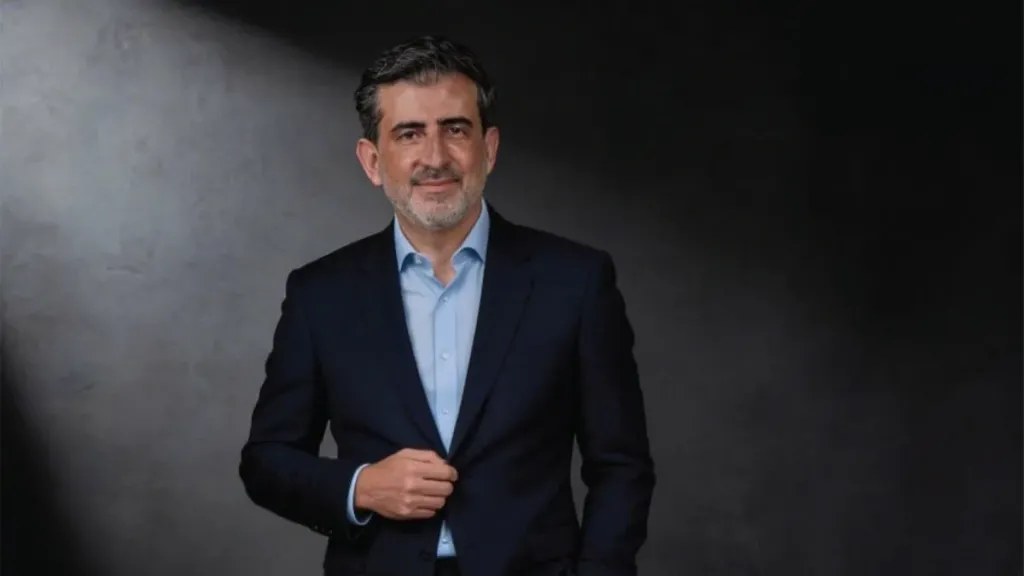
Entrepreneur Samer Choucair said Saudi Arabia’s approval of a new General Education Law by royal decree represents the most significant legislative reform of education-sector governance in decades and reflects a strategic transformation in the relationship between the state and the private sector, strengthening the sector’s appeal to institutional investors.
Choucair explained that the law unifies regulatory frameworks, establishes a General Education Affairs Council, and opens the door to broader participation by the private sector, non-profit organizations, and foreign investors in the management and operation of educational institutions and the investment of their assets.
He noted that these measures align with the objectives of Saudi Vision 2030, which seek to increase the private sector’s contribution to approximately 25%.
Samer Choucair added that the reforms create new investment opportunities across educational infrastructure, education services, and related technologies, while providing investment institutions with a clearer environment for long-term capital allocation.
However, he emphasized that execution quality and the alignment of education with labour-market requirements will remain among the most important determinants of success during this phase.
Legislative reform restructures the education sector
Samer Choucair noted that the new General Education Law extends beyond the modernization of regulations. It represents a structural transformation redefining the relationship between the state and the private sector in one of the Kingdom’s largest areas of public expenditure, with annual allocations exceeding SAR 200 billion.
He explained that the law creates a unified regulatory framework connecting the authorities responsible for education, investment, and the labour market, helping reduce the number of approvals required and accelerate decision-making procedures.
Choucair added that this transformation gives institutional investors a clearer model for assessing risk and return than the previous system, which was characterized by the involvement of multiple regulatory bodies.
Education is a pillar of economic diversification
Samer Choucair explained that human-capital development is one of the principal foundations of Saudi Vision 2030 because of its importance to economic diversification and productivity growth.
He noted that Saudi students scored 387 points in the 2022 Programme for International Student Assessment, or PISA, while the Kingdom aims to improve this performance substantially before the end of the decade.
Choucair added that the new law directly connects educational pathways with labour-market requirements through greater emphasis on programming, science, and technology.
It also grants the Ministry of Education the authority to assign the management of certain educational institutions or assets to private-sector operators, including foreign investors.
He emphasized that these powers represent an important transformation in Saudi Arabia’s education-investment environment.
Investors begin increasing their commitments
Samer Choucair said the new openness is no longer merely a legislative direction, but is already beginning to influence investor decisions.
He explained that regional investment bank EFG Hermes’ announcement that it intends to invest more than $150 million in Saudi Arabia’s education sector over the next two years, following an earlier investment of $125 million in six schools, reflects growing confidence in the new regulatory environment.
Choucair added that the expansion includes the Hayah Schools network, alongside the consideration of further acquisitions and entry into the nursery sector, confirming that investors increasingly regard education as a stable, long-term industry.
He noted that the new legislative framework reduces the risk of sudden regulatory changes and provides stronger protection for invested capital.
Education becomes an institutional asset class
Samer Choucair explained that the current reforms are transforming education from a government-expenditure category into an asset class capable of attracting institutional investment.
He added that unified governance and the ability to assign the operation of educational assets to the private sector will help reduce what he described as “regulatory fragmentation risk,” which previously increased the cost of capital.
Choucair emphasized that these changes strengthen the sector’s appeal to private equity funds, sovereign wealth funds, and investment institutions seeking stable returns supported by population growth and rising demand for higher-quality education.
Three pillars driving investment opportunities
Samer Choucair said current investment opportunities within the education sector are concentrated across three principal areas.
The first is the development and operation of private schools. Private-school enrolment remains at approximately 17%, which is still considerably below national targets.
Choucair added that population growth and increasing demand for high-quality schools offering international and national curricula will create a need for hundreds of thousands of additional places by 2030.
The second area involves public-private partnership models for managing government schools, allowing investors to enter the market without having to develop entirely new assets.
The third includes investment in education technology, digital platforms, and early-years education, supported by the expansion of digital-skills programmes and increasing attention to early childhood development.
Institutional investors rebalance their portfolios
Samer Choucair said institutional investors are increasingly favouring operators with strong performance records and the ability to expand across major cities, particularly Riyadh, Jeddah, and the Eastern Province.
He added that the market is also likely to experience a wave of merger and acquisition activity as regional and international investors seek to build large education platforms capable of achieving economies of scale.
Choucair noted that smaller operators may face increasing competitive pressure as investment institutions with greater capital resources and operating expertise enter the market.
He emphasized that investment success will depend not only on the legal framework, but also on operating quality, the ability to recruit qualified education professionals, and curriculum development aligned with labour-market requirements.
“An investor who focuses only on educational real estate without investing in operating quality may experience declining profit margins over the medium term,” Choucair said.
Education supports economic growth
Samer Choucair explained that education reform is directly connected to Saudi Arabia’s efforts to increase productivity and reduce dependence on government employment.
He added that improving the quality of education outcomes has become a fundamental requirement for sustaining non-oil growth, particularly as the Kingdom’s young workforce continues to expand.
Choucair noted that the new law is also expected to increase foreign direct investment in the services sector by providing greater clarity regarding licensing, accreditation, and fee structures.
Opportunities and risks for investors
Samer Choucair identified structural growth in demand for private education, expanding public-private partnerships, and greater adoption of education technology as the sector’s principal opportunities.
However, he noted that several challenges remain, including possible delays in issuing implementing regulations, variations in the quality of execution across different regions, and the need to balance investment attraction with the preservation of educational quality and national standards.
Choucair added that an economic slowdown could also weaken demand for private education and affect occupancy rates at newly developed projects.
A future outlook
Concluding his remarks, Samer Choucair emphasized that the new General Education Law opens the door to a new phase of capital allocation within Saudi Arabia’s education sector, which investment institutions increasingly regard as a defensive industry supported by long-term structural demand.
He added that private equity funds, sovereign wealth funds, and family offices will find opportunities in Saudi education to diversify their portfolios away from sectors that are more exposed to economic cycles.
Choucair noted that investors combining operating expertise with access to long-term financing will be best positioned to benefit from these developments.
He emphasized that the next phase will bring a repricing of risk and return across the sector. Institutions capable of building integrated education platforms combining infrastructure, content, and modern technologies will be best placed to attract institutional capital during the coming years.
“The new General Education Law is not merely a legislative reform,” Samer Choucair concluded. “It reflects an economic transformation intended to convert one of the largest areas of public expenditure into a driver of growth and investment, strengthening the competitiveness of the Saudi economy in the post-oil era.”