
Samer Choucair: Michael Burry’s Bets Against AI Stocks Highlight the Need to Reassess Portfolio Risk
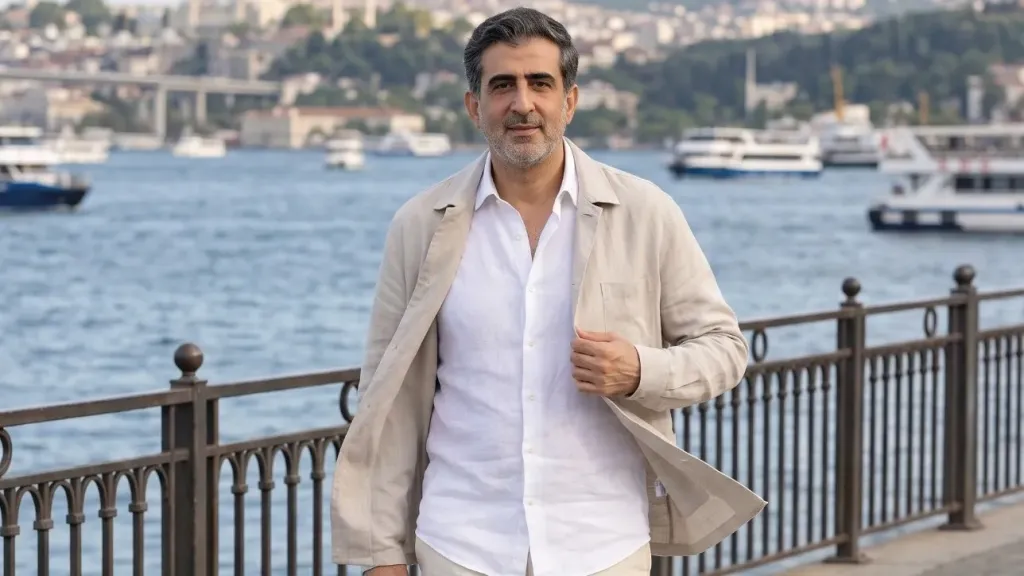
Entrepreneur Samer Choucair said US investor Michael Burry’s decision to increase his bearish positions in NVIDIA and Micron Technology should not be viewed merely as an individual wager on falling share prices.
Burry, the founder of Scion Asset Management who became widely known for anticipating the 2008 mortgage crisis, is sending a signal that deserves closer examination as questions grow over the sustainability of elevated valuations across the artificial intelligence and semiconductor sectors.
Choucair explained that Burry had expanded his negative positions in recent weeks through his Substack platform, targeting Micron shares at levels close to $934 and NVIDIA at around $210.
He also increased his bearish exposure to the iShares Semiconductor ETF, SOXX, and several other companies connected to the artificial intelligence cycle after explicitly warning that “the end is near” for the AI trade.
Burry based his view partly on what he considers the circular nature of financing-driven demand and the growing use of off-balance-sheet funding arrangements.
Samer Choucair added that the investment significance of these moves does not depend solely on whether Burry’s forecasts prove correct.
They may also indicate that the semiconductor sector is entering a transitional phase in which historically high valuations are colliding with growing questions over the sustainability of revenue growth.
The semiconductor cycle enters a more sensitive phase
Samer Choucair noted that the semiconductor sector achieved exceptional growth during the previous two years, driven by rising demand from data centres for graphics processing units and high-bandwidth memory.
This trend was clearly reflected in the performance of companies such as Micron, while NVIDIA maintained its dominant position in the market for artificial intelligence processors.
Choucair added that this rapid growth was accompanied by a substantial expansion in valuation multiples, with certain indicators reaching levels previously observed during the dot-com bubble at the beginning of the century.
He emphasized that institutional investors treating the artificial intelligence cycle as a linear trend risk overlooking the historically cyclical nature of the memory and processor industries.
Capital allocation during the current phase therefore requires a clear distinction between the long-term structural growth of artificial intelligence and the shorter-term cyclical excesses that markets may experience.
Financing-driven demand raises questions about growth quality
Samer Choucair explained that one of Michael Burry’s principal arguments is his belief that a significant part of current and future demand for artificial intelligence technology is not being generated directly by end users.
Instead, he believes it depends on circular financing arrangements and off-balance-sheet structures, referring to observations contained in 2026 reports by the Bank for International Settlements.
Choucair added that this argument raises questions regarding the quality of future revenue and companies’ ability to preserve their profit margins if capital expenditure by major technology companies begins to slow.
He noted that these developments are occurring while markets continue to absorb the effects of the previous monetary-tightening cycle, with expectations for the direction of interest rates remaining divided.
This makes it increasingly important for investors to distinguish between structural growth and cyclical overvaluation when making capital-allocation decisions.
How institutional investors interpret these moves
Samer Choucair said Michael Burry’s positions represent a genuine test for sovereign wealth funds and global asset managers regarding the level of concentration within their semiconductor holdings.
He explained that although real demand for artificial intelligence infrastructure remains strong, current valuations leave only a limited margin of safety in the event of a cyclical correction.
This is encouraging major institutions to reassess their exposure to the sector.
“Institutions that built substantial positions in artificial intelligence companies during the past three years must now review concentration levels within their portfolios,” Samer Choucair said.
“This does not mean withdrawing completely from the sector. It means managing risk through geographic and sector diversification while focusing on companies capable of generating strong and sustainable free cash flow.”
A different equation for Saudi Arabia and the Gulf
Samer Choucair noted that the debate is particularly important for Saudi Arabia and the Gulf as investment in the digital economy accelerates under the objectives of Saudi Vision 2030.
He explained that building an artificial intelligence-based economy does not necessarily require increasing exposure to highly valued US technology shares.
It also requires investment in domestic capability development, stronger strategic partnerships, and the localization of parts of the semiconductor and advanced-technology value chains.
Choucair added that regional institutional investment is increasingly directed toward digital infrastructure and the knowledge economy rather than depending entirely on the performance cycle of global technology companies.
Balancing risks and opportunities
Samer Choucair emphasized that the current phase presents both opportunities and risks for investors.
He identified the possibility of a cyclical correction in memory and processor prices as one of the principal risks if production capacity exceeds demand during 2027 and 2028 following the sector’s substantial investment expansion.
Current valuations are also highly sensitive to any slowdown in capital expenditure by major technology companies.
In addition, circular financing arrangements could expose weaknesses in the quality of demand if markets experience liquidity pressure.
Choucair noted that opportunities remain for companies with strong balance sheets, high profit margins, and the ability to generate free cash flow even in a more moderate growth environment.
Any correction in share prices could also create more attractive entry points for long-term investors.
He added that risk management during the current phase does not require abandoning technology.
It requires repricing the risks associated with the sector.
The intelligent institutional investor seeks a balance between benefiting from innovation and protecting against cyclical volatility, whether through hedging instruments or increased exposure to sectors less sensitive to economic cycles, including digital infrastructure and services connected to the real economy.
A strategic outlook
Concluding his remarks, Samer Choucair emphasized that the future of the artificial intelligence cycle will depend on companies’ ability to convert current growth into sustainable cash flows rather than merely higher market valuations.
He explained that if genuine demand for artificial intelligence applications continues alongside stable interest rates, markets could experience a limited correction followed by a resumption of growth.
However, if profit margins come under pressure or excess production capacity emerges, the correction could be considerably deeper and lead to a restructuring of sector allocations within investment portfolios.
Choucair added that the priority for regional investors is to build diversified portfolios combining selective exposure to global technology companies with investment in sectors linked to Saudi Vision 2030, including infrastructure, renewable energy, and the domestic digital economy.
This would reduce dependence on the US semiconductor cycle alone.
“Markets reward growth, but they punish excessive valuations,” Samer Choucair concluded. “Investors who successfully distinguish between long-term structural trends and short-term economic cycles will be best positioned to protect capital and generate sustainable returns throughout different market conditions.”