
Samer Choucair: Artificial Intelligence Is Reshaping Saudi Capital Allocation in a Transformation Comparable to Aramco
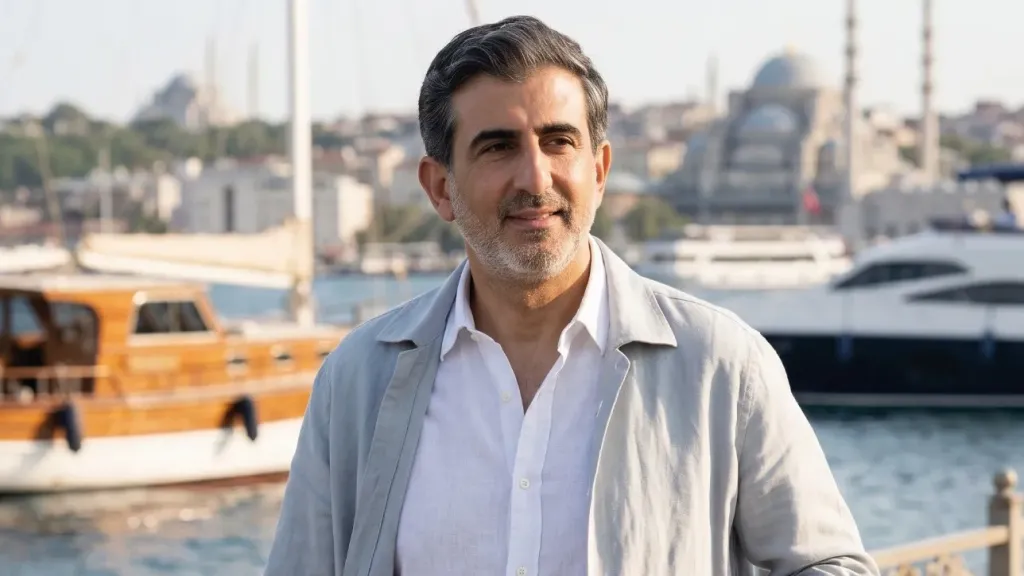
Entrepreneur Samer Choucair said recent comments by the chief executive of HUMAIN, who stated that artificial intelligence would shape Saudi Arabia’s future in the same way Aramco established the Kingdom’s energy sector, reflect a structural transformation in domestic capital allocation.
He emphasized that artificial intelligence is no longer merely a technology sector, but has become a strategic economic asset within the objectives of Saudi Vision 2030.
Choucair explained that this transformation creates long-term investment opportunities across digital infrastructure, energy, and high-performance computing as institutional investors show growing interest in sectors combining sovereign support with expanding global demand.
He added that Saudi Arabia possesses a distinctive combination of abundant energy, available land, and sovereign financing.
This gives the Kingdom a competitive advantage at a time when the world is facing shortages in computing capacity and continuously rising data-centre operating costs, encouraging institutional capital to redirect investment toward assets linked to the digital economy.
Saudi Arabia strengthens its position in the artificial intelligence economy
Samer Choucair noted that global markets are facing increasing pressure across energy and semiconductor supply chains while generative artificial intelligence models require vast amounts of electricity and computing capacity.
He explained that Saudi Arabia can provide competitively priced energy through a combination of conventional and renewable sources.
According to executive estimates, this could reduce the total cost of owning and operating artificial intelligence infrastructure by between 20% and 30%.
Choucair added that this advantage explains the Public Investment Fund’s increasing focus on developing an integrated ecosystem comprising data centres, cloud computing, language models, and advanced applications, strengthening Saudi Arabia’s position in the global digital economy.
HUMAIN leads investment in future computing
Samer Choucair explained that HUMAIN, which is owned by the Public Investment Fund and chaired by His Royal Highness Crown Prince Mohammed bin Salman, aims to develop approximately 1.9 gigawatts of computing capacity by 2030, with an ambition to reach 6.6 gigawatts by 2034.
He noted that these targets represent more than operating plans. They imply investment of tens of billions of dollars during the initial phase and illustrate the scale of Saudi Arabia’s commitment to the sector.
Choucair added that partnerships with global companies including NVIDIA, AMD, Cisco, Amazon, and xAI confirm that the Kingdom is not limiting its ambitions to developing domestic capabilities.
It is also seeking deeper integration into global artificial intelligence value chains.
How institutional investors assess the transformation
Samer Choucair said institutional investors are evaluating these developments from a long-term capital-allocation perspective.
The shift from reliance on oil toward investment in artificial intelligence as a strategic asset reflects a more advanced approach to deploying Saudi Arabia’s competitive advantages.
He added that institutional capital is increasingly directed toward assets combining sovereign support with structural global demand, making Saudi artificial intelligence infrastructure a leading candidate for investment by sovereign wealth funds and private equity firms.
Choucair noted that markets are currently repricing risks associated with energy and computing.
Countries with constrained electricity grids face rising operating costs, while Saudi Arabia benefits from abundant energy resources.
This creates opportunities to finance data-centre projects offering stable returns supported by long-term contracts with global operators.
Capital markets could benefit from the transformation
Samer Choucair explained that this trend could also affect equity and fixed-income markets through increased demand for debt instruments linked to digital infrastructure.
He added that HUMAIN’s successful implementation of its plans, together with the possibility of a dual listing on Tadawul and Nasdaq within the next four years, as announced by the company’s chief executive, could provide additional liquidity and give international investors direct exposure to the growth of Saudi Arabia’s artificial intelligence sector.
Investment opportunities extend across multiple sectors
Samer Choucair emphasized that the impact of the transformation will not be limited to technology, but will extend across a wide range of economic sectors.
He explained that the energy industry will benefit from growing demand for reliable and competitively priced electricity, supporting investment in conventional generation, renewable energy, and storage technologies.
Choucair added that manufacturing and logistics will gain significant opportunities to improve productivity and reduce costs through artificial intelligence applications, particularly as the Kingdom continues to localize advanced industries.
The financial sector is also expanding its use of artificial intelligence in risk management, compliance, and analytics, creating additional opportunities for financial-technology companies across Saudi Arabia and the wider region.
Risks requiring attention
Samer Choucair noted that these substantial opportunities are accompanied by several risks that must be carefully considered.
He identified possible delays in obtaining regulatory approvals for advanced semiconductors, global energy-price volatility, and intensifying competition from data centres in regional and international markets among the principal challenges.
Choucair added that the successful development of Arabic-language models will depend heavily on data quality, governance standards, and continuing investment in Saudi talent capable of leading the sector.
A strategic outlook
Concluding his remarks, Samer Choucair said investors building positions in artificial intelligence-related assets in Saudi Arabia are effectively investing in a long-term structural transformation comparable in economic impact to the role Aramco played in developing the energy sector decades ago.
He explained that the real value lies in combining energy advantages, digital sovereignty, and global partnerships.
This combination raises barriers to entry for competitors and strengthens the potential to generate sustainable value.
Choucair added that if current growth in global demand for artificial intelligence applications continues, Saudi Arabia is likely to experience increasing capital flows into data-centre and computing projects, supported by the Public Investment Fund and infrastructure funds.
However, if global demand slows or costs rise substantially, investment may become concentrated in applications capable of generating faster returns, including language models and enterprise services.
“Artificial intelligence is not merely another technology cycle, but a long-term economic transformation reshaping capital-allocation priorities,” Samer Choucair said.
He concluded that institutions investing early in the development of this ecosystem, while maintaining a strong focus on governance, liquidity, and risk-adjusted returns, will be best positioned to benefit from the digital economy in the years ahead.