
Samer Choucair: Egypt Has an Opportunity to Convert Structural Reforms into Long-Term Investment
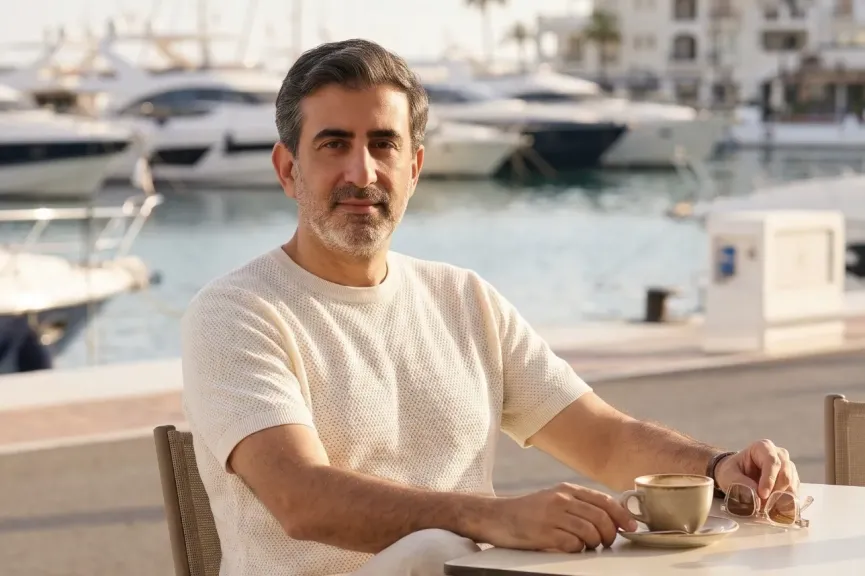
Entrepreneur Samer Choucair said Egypt’s plan to complete the final listing of four state-owned companies on the Egyptian Exchange before the end of the year represents a strategic step capable of reshaping capital allocation across emerging markets.
He noted that the move reflects the transition of the government’s privatization programme from preparation to practical implementation, strengthening the Egyptian market’s ability to attract long-term institutional investment.
Samer Choucair explained that the measure comes as the EGX30 index approaches 53,000 points, supported by annual gains exceeding 50% by certain measures.
This creates favourable conditions for attracting domestic and regional investment flows and presents the Egyptian market with a genuine test of its ability to convert structural reforms into sustainable investment opportunities.
Choucair noted that the announcement by Hashem El-Sayed, assistant to the prime minister and chief executive of the State-Owned Enterprises Unit, regarding the transition from the temporary registration of 20 companies to the final listing and active trading of at least four before December represents a decisive phase in the government offering programme.
This development comes alongside the Financial Regulatory Authority’s commitment to launch market-making activities and implement a specialized training programme for the executive and financial leadership of the companies targeted for listing.
Samer Choucair added that these measures are not intended solely to increase the number of shares available for trading.
They also contribute to restructuring liquidity and governance across Egypt’s capital market, improving market efficiency and increasing its capacity to absorb institutional investment.
He emphasized that the developments form part of the updated State Ownership Policy Document and the economic-reform programme agreed with the International Monetary Fund, which focuses on reducing the state’s role in commercial activity and strengthening competitive neutrality.
Choucair noted that the State-Owned Enterprises Unit had already completed the temporary registration of 20 companies, including 17 affiliated with the public business sector and three petroleum-sector companies: Engineering for the Petroleum and Process Industries, Egyptian Linear Alkyl Benzene, and Petroleum Marine Services.
The list also includes El Maamoura Company for Construction and Tourism Development.
The combined capital of the three petroleum companies amounts to approximately $687 million, illustrating the scale of the assets included in the programme.
Samer Choucair explained that the expected final listings will move these companies from regulatory preparation into active trading, allowing stakes typically ranging between 10% and 20% to be offered and opening the market to broader investor participation.
Regarding the textile industry, Choucair said the restructuring of Misr Spinning and Weaving Company in El-Mahalla into two entities represents a clear example of restructuring assets to create a more competitive and investable company.
One of the new entities will contain the modernized industrial assets, including what has been described as the world’s largest spinning mill by the number of spindles housed under a single roof.
This structure could strengthen the company’s ability to compete, export, attract strategic investors, or pursue a public listing.
“This model reflects one of the most important principles of capital allocation in emerging markets,” Samer Choucair said. “Separating activities with future return potential from historical liabilities enables fairer asset valuations and increases their appeal to investors seeking structural growth rather than short-term gains.”
Choucair noted that the Financial Regulatory Authority has launched the country’s first national training programme dedicated to preparing state-owned companies for final listing and public offerings.
The programme covers seven principal areas, including the legislative framework, financial and accounting readiness, governance, sustainability, disclosure, and prospectus preparation.
He explained that the initiative targets the 20 temporarily registered companies, alongside other businesses operating in petroleum, mining, pharmaceuticals, tourism, construction, and industry.
Choucair added that the authority is also preparing to introduce market-making activity, increase the number of brokers licensed to trade futures contracts, and complete the derivatives-market framework.
These measures could address one of the Egyptian market’s most persistent challenges: limited liquidity across a large number of listed shares.
Samer Choucair emphasized that an effective market maker fundamentally changes the risk equation in markets with limited depth.
It gives asset managers greater capacity to build larger and more stable positions while providing risk-management tools through financial derivatives.
This could elevate the Egyptian Exchange within the capital-allocation priorities of Gulf sovereign wealth funds and pension funds.
Choucair explained that institutional investors are assessing these developments from two principal perspectives: the quality of the assets being offered and the sustainability of the regulatory environment.
Petroleum companies and related service providers offer exposure to the energy and chemicals value chain.
El Maamoura provides an investment opportunity in tourism and real estate, while the entity created through the restructuring of Misr Spinning and Weaving Company in El-Mahalla offers significant export-manufacturing potential following substantial investment in its factories over recent years.
Choucair noted that active offerings are expected to begin during the final quarter of the year, with the period from December likely to be the most active after the summer season, when investment banks generally prefer to avoid executing major listings.
Work is also continuing to prepare additional companies, including an entity specializing in construction.
Samer Choucair stressed that the success of the offering programme will not be measured solely by the amount of capital raised.
It will also depend on the market’s ability to absorb the offerings without significant pricing pressure and on the listed companies’ continued compliance with disclosure and governance standards.
He emphasized that successful experiences in emerging markets demonstrate that government offerings have the greatest impact when they become a starting point for improving the quality of listed companies and increasing the efficiency of the market as a whole.
Choucair explained that the principal opportunity lies in diversifying the ownership base and increasing market capitalization, thereby strengthening the appeal of Egyptian indices to both passive and active investment funds.
The introduction of market-making and financial derivatives could also support more advanced portfolio-management strategies, including hedging and return optimization.
He noted that the principal risks include the pace of implementation, the timing of offerings amid global interest-rate and oil-price volatility, and the ability of companies to present convincing growth strategies after listing.
Inflationary pressures or delays in structural reforms could also affect asset valuations.
Samer Choucair said long-term investors capable of assessing Egypt’s industrial, energy, and tourism assets may find a rare investment opportunity during the current phase.
Valuations still reflect an emerging-market discount before the market-deepening cycle is completed and valuation multiples begin to rise gradually.
Concluding his remarks, Samer Choucair emphasized that accelerating the final listing of state-owned companies and introducing new liquidity instruments will provide a genuine test of Egypt’s ability to transform the offering programme from a reform-related obligation into a domestic driver of capital-market development.
Strong institutional participation in the first four listings could open the way for additional investment flows into the remaining temporarily registered companies and future private-sector offerings.
“Egypt possesses one of the region’s largest population and industrial bases, which means that any structural development in its financial market can have a broad regional impact,” Samer Choucair said.
He emphasized that the real challenge is to translate regulatory reforms into sustainable improvements in the quality of listed companies and the market’s ability to retain capital after offerings rather than merely attract it during subscriptions.
“The next phase will not be measured only by the number of government offerings,” Choucair concluded. “It will be assessed by their success in redefining the Egyptian Exchange as a platform capable of absorbing institutional capital seeking long-term structural growth in emerging markets despite continuing uncertainty across the global economic cycle.”