
From Trade to Investment: Samer Choucair Explains How US Tariffs Are Redirecting Capital Flows
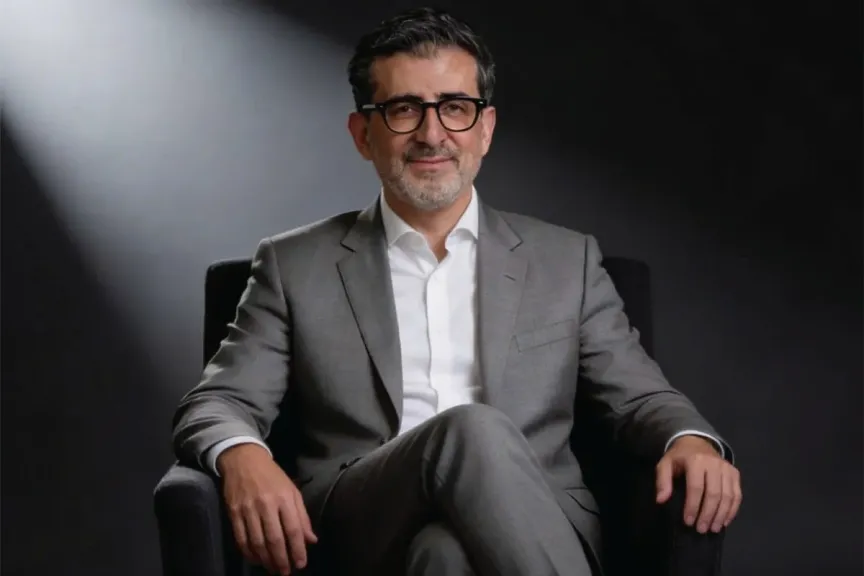
Entrepreneur Samer Choucair said the new tariffs imposed by US President Donald Trump’s administration on July 24, 2026, represent a structural transformation in American trade policy.
The measures introduced tariffs ranging from 10% to 12.5% on imports from 60 trading partners, covering approximately 99.4% of total US imports. They were based on investigations under Section 301 of the Trade Act of 1974 concerning what Washington described as these economies’ failure to impose and enforce effective bans on goods produced using forced labour.
Choucair explained that the new measures replaced the temporary 10% tariff that expired on the same date. That temporary tariff had been introduced following a US Supreme Court ruling in February that invalidated the administration’s previous reciprocal tariffs.
He added that the decision is not merely an adjustment to trade policy. It creates a more legally robust tariff structure with direct implications for global trade flows, import costs, and the repricing of supply-chain risks.
Samer Choucair noted that the message for institutional investors, sovereign wealth funds, and asset managers is increasingly clear: the era of low trade tariffs is gradually receding and being replaced by an environment in which most goods entering the world’s largest consumer market face additional costs.
Strategic exemptions nevertheless remain for energy, fertilizers, certain food products, and goods already subject to other tariffs.
The legal and economic transformation of US trade policy
Samer Choucair said the US administration based its decision on the claim that the United States has been the only country to enforce an effective ban on imports produced using forced labour for nearly a century.
The administration argued that the absence of comparable policies among trading partners distorts competition and harms American workers.
Choucair explained that a 10% tariff was applied to economies that had taken steps, or committed to introducing measures, to prohibit imports associated with forced labour. These included Canada, Mexico, India, Indonesia, the United Kingdom, and several other countries.
The remaining economies among the 60 trading partners, including China, Vietnam, Australia, Japan, South Korea, and most Gulf countries, were subjected to a 12.5% tariff.
He added that Section 301 provides a stronger legal foundation than the previous instruments invalidated by the Supreme Court, reducing the likelihood that the new tariffs will be overturned quickly through judicial action.
Samer Choucair noted that the administration exempted oil, gas, fertilizers, and certain food products, as well as goods already subject to Section 232 tariffs, including automobiles, steel, and aluminium.
These exemptions reduce pressure on sensitive industries and limit the immediate effect on US inflation.
He emphasized that the decision reflects a structural shift in the use of trade policy as an instrument for reshaping comparative advantages among economies.
Institutional investors increasingly treat tariffs as a permanent component of valuation models rather than as a temporary shock.
Reshaping global supply chains
Samer Choucair explained that imposing baseline tariffs of between 10% and 12.5% on most US imports raises the marginal cost of imported goods and will encourage American and multinational companies to reassess their sourcing strategies.
He added that this environment is likely to accelerate nearshoring and friendshoring toward markets benefiting from preferential trade arrangements, lower tariff rates, or, where feasible, domestic US manufacturing.
Global companies that depend heavily on imports from countries facing higher tariffs may experience pressure on profit margins, particularly in consumer electronics, textiles, and durable consumer goods.
Choucair said domestic US producers and certain suppliers in countries benefiting from lower tariffs or exemptions could gain a competitive advantage.
Fixed-income markets, meanwhile, will monitor any inflationary consequences for interest-rate expectations, although exemptions for energy and essential commodities should limit the immediate impact.
He added that commodity markets will remain relatively insulated in the energy sector because of the exemptions, while processed goods, petrochemicals, and industrial products may face additional costs when entering the US market.
Samer Choucair emphasized that these developments are changing investment priorities across logistics, ports, and storage facilities.
The ability to demonstrate that supply chains are free from forced labour has become a genuine competitive advantage rather than merely a regulatory requirement.
He noted that institutional capital is increasingly moving toward companies capable of proving the resilience of their supply chains and their ability either to absorb higher costs or pass them on to consumers.
Capital allocation in this environment should focus more heavily on structural adaptability than on short-term cyclical growth.
Implications for Saudi Arabia and the Gulf economy
Samer Choucair said Saudi Arabia, the United Arab Emirates, Qatar, Kuwait, Bahrain, and Oman were among the countries subjected to the 12.5% tariff on non-exempt goods.
However, exemptions for oil and gas provide essential protection for Gulf energy exports to the United States, preserving the region’s principal trade flows without significant disruption.
He explained that exports of industrial products, petrochemicals, and manufactured goods may face additional pressure, directly affecting economic-diversification programs under Saudi Vision 2030.
Choucair added that the new environment may encourage Gulf governments and companies to strengthen labour-related regulation and supply-chain transparency, both to improve their negotiating position and to attract foreign investment seeking production bases that comply with US standards.
He noted that the changes create opportunities for the Public Investment Fund and Saudi investors in advanced manufacturing, logistics, and infrastructure associated with alternative supply chains.
Pressure on traditional Asian suppliers could enhance the Gulf’s appeal as a regional centre for assembly and re-export activity, particularly amid continued investment in ports and special economic zones.
Samer Choucair emphasized that Saudi Arabia has a strategic opportunity to transform global trade pressures into a catalyst for accelerating the development of an industrial and logistics base capable of serving Western markets under higher compliance standards.
This would support Vision 2030 objectives to attract foreign direct investment and improve the competitiveness of non-oil exports.
How institutional investors interpret the new phase
Samer Choucair explained that institutional investors regard the new tariffs as a structural factor that raises working-capital costs for import-dependent companies while increasing the importance of governance, social responsibility, and supply-chain transparency.
Equity portfolios are increasingly favouring companies with sufficient pricing power to pass on higher costs, as well as businesses benefiting from the reshoring of production.
Choucair noted that private equity and venture capital markets may experience greater interest in companies developing supply-chain tracking technologies, compliance solutions, and artificial intelligence systems used to manage suppliers.
In fixed-income and sovereign-debt markets, emerging economies with the greatest exposure to the new tariffs will remain under investor scrutiny as markets assess the potential impact on current-account balances and economic growth.
He added that capital flows will increasingly favour economies offering a combination of competitive costs, regulatory compliance, and preferential access to the US market, as well as US assets connected to manufacturing, energy, and infrastructure.
Samer Choucair said successful capital allocation in the coming years will not depend on predicting every new tariff decision.
Instead, it will require investors to incorporate geopolitical and trade risks into long-term valuation models.
Investment opportunities and future risks
Samer Choucair said the new trade environment creates investment opportunities in manufacturing within the United States and the Gulf, alongside technologies that improve supply-chain transparency and industries benefiting from exemptions covering energy, fertilizers, and essential commodities.
He added that the tariffs may encourage some countries to accelerate labour-market and trade-policy reforms in an effort to secure lower tariff rates or preferential agreements with the United States.
Risks nevertheless remain, including escalating reciprocal trade disputes, higher input costs across several industries, and the possibility of accumulating inflationary pressure if tariffs are expanded or increased.
Choucair explained that continued regulatory uncertainty may also encourage some global companies to postpone capital expenditure and investment decisions.
A strategic perspective for investors
Concluding his remarks, Samer Choucair said the new US tariffs, introduced under the framework of combating forced labour, confirm that trade policy has become a permanent instrument for reshaping global competitive advantages rather than a temporary response to economic conditions.
He added that institutional investors in the region and around the world must build portfolios capable of adapting to a higher-cost trade environment while benefiting from the rapid movement of supply chains toward markets offering greater resilience and stronger regulatory compliance.
Samer Choucair emphasized that Saudi Arabia and the broader Gulf economy have an opportunity to transform these external pressures into domestic engines of growth by strengthening manufacturing, logistics, and economic diversification.
He concluded that successful capital allocation during the next phase will depend on adopting a long-term perspective that incorporates trade and geopolitical risks into investment analysis and seeks value in adaptability rather than relying on unrestricted growth.