
Samer Choucair: Regulating Advertising Space on Saudi Pro League Kits Moves Clubs into the Era of Building Commercial Assets
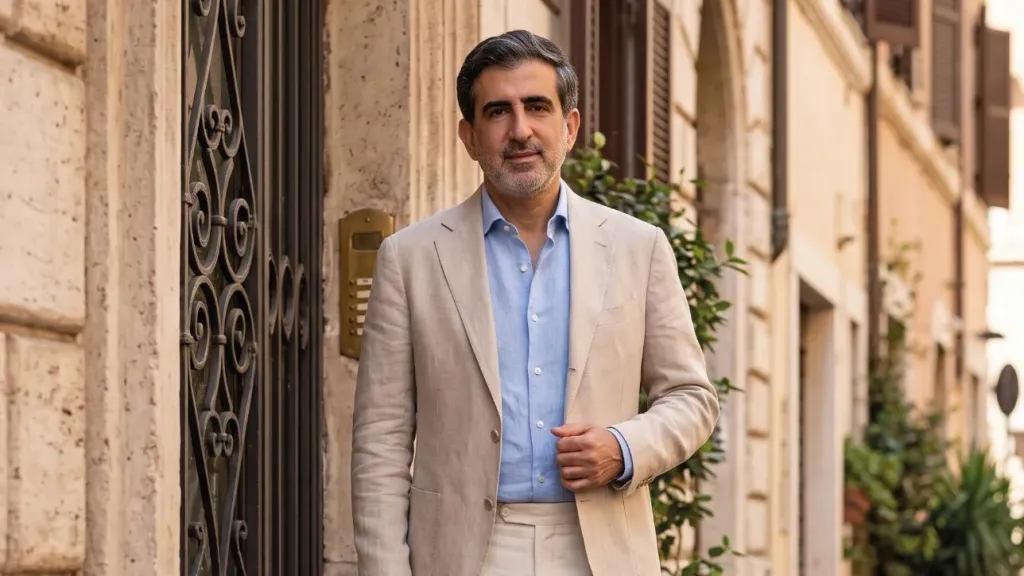
Entrepreneur Samer Choucair said regulating advertising space on Saudi Pro League club kits represents a strategic step in the transformation of Saudi Arabia’s sports economy.
He explained that the measure reflects the transition of clubs from a model based primarily on support and financing toward a more mature commercial model founded on sustainable revenue and assets that can be measured and valued.
Samer Choucair noted that the updated regulatory guide governing advertisements and logos on Saudi Pro League kits, which will permit eight structured advertising spaces during the coming season, is not merely a measure concerning shirt design.
Instead, it reflects a more advanced approach to managing the commercial value of clubs, as advertising inventory becomes part of an asset portfolio that can be priced, developed, and marketed to investors.
“Institutional investors do not view sports clubs solely as organizations dependent on star players or results on the pitch,” Samer Choucair said.
“They focus on a club’s ability to generate recurring cash flows from sponsorship rights, advertising, broadcasting, and merchandise.”
He added that a clearly defined advertising structure and transparent allocation of sponsorship space reduce commercial uncertainty and make club valuations more closely aligned with modern investment-asset standards.
This transformation comes as Saudi Arabia’s sports sector undergoes extensive restructuring under Vision 2030, which seeks to build a sports industry capable of making a sustainable economic contribution.
The strategy also aims to raise the commercial revenue of the Saudi Pro League to new levels by 2030 through the development of broadcasting rights, sponsorships, ticket sales, and sports merchandise.
Samer Choucair noted that the growth of commercial revenue among Saudi clubs in recent years reflects a fundamental change in the nature of the domestic sports market.
Sponsorship contracts across the league’s 18 clubs have reached increasingly significant levels, although a clear gap remains between the largest clubs and the rest of the competition.
He emphasized that the next phase will require clubs to develop more professional commercial strategies to increase the value of their brands and narrow the gap between teams in their ability to attract sponsors and investment.
Choucair added that organizing clubs’ advertising inventory gives investors a clearer view of the scale of available commercial opportunities, particularly as the Kingdom seeks to expand private-sector participation in sport and increase the appeal of sports assets to domestic and international investors.
Samer Choucair said the restructuring of club ownership and the gradual transition of certain sports assets toward more open investment models reinforce the need for transparent standards for assessing commercial value.
Clubs that successfully manage their brands, strengthen sponsor relationships, and convert supporter engagement into stable revenue streams will be best positioned to attract institutional capital in the years ahead.
He emphasized that the entry of new investors into Saudi football requires a shift away from focusing solely on sporting expenditure toward building integrated business models covering marketing, digital data, supporter experience, and intellectual-property rights.
Regulating advertising spaces supports this transition by creating a more transparent and measurable commercial environment.
Samer Choucair explained that institutional investors seek the ability to convert supporter attention into recurring economic value rather than relying only on short-term sporting success.
Defining the number of advertising spaces and regulating their use gives brands a clearer operating environment and makes sports sponsorship resemble a long-term commercial investment rather than a purely promotional activity.
Choucair noted that the range of sectors benefiting from this development could expand during the coming period to include technology, financial services, insurance, and telecommunications, alongside more traditional industries such as real estate, construction, and apparel.
This potential is supported by the growing international profile of the Saudi league and the expansion of its global audience.
Addressing the opportunities available to mid-sized clubs, Samer Choucair explained that the new regulations could help them rebuild their commercial models, provided they strengthen internal marketing capabilities and invest in developing distinctive local brands rather than relying solely on player recruitment or external support.
He added that execution quality will be the principal challenge during the next phase.
Clubs will need to manage their commercial rights efficiently, ensure that sponsorship agreements are aligned with their identities and target audiences, and avoid excessive dependence on individual economic sectors that may be vulnerable to cyclical downturns.
Samer Choucair emphasized that Saudi Arabia’s sports economy is entering a new stage in which a club is regarded as a measurable economic asset rather than merely a sporting institution.
Institutional capital will continue to favour clubs with transparent operating models, strong governance, and the ability to generate stable long-term revenue.
Concluding his remarks, Samer Choucair said regulating advertising space on Saudi Pro League kits represents an important step in transforming Saudi sport into a fully integrated economic sector.
He explained that the true value of the measure lies not simply in the number of spaces made available, but in its ability to establish the principles of sustainable sports investment and support clubs’ transition from receiving financing to actively generating returns.