
Samer Choucair: Section 301 Is Reshaping Global Trade and Driving Institutional Investors to Reallocate Capital
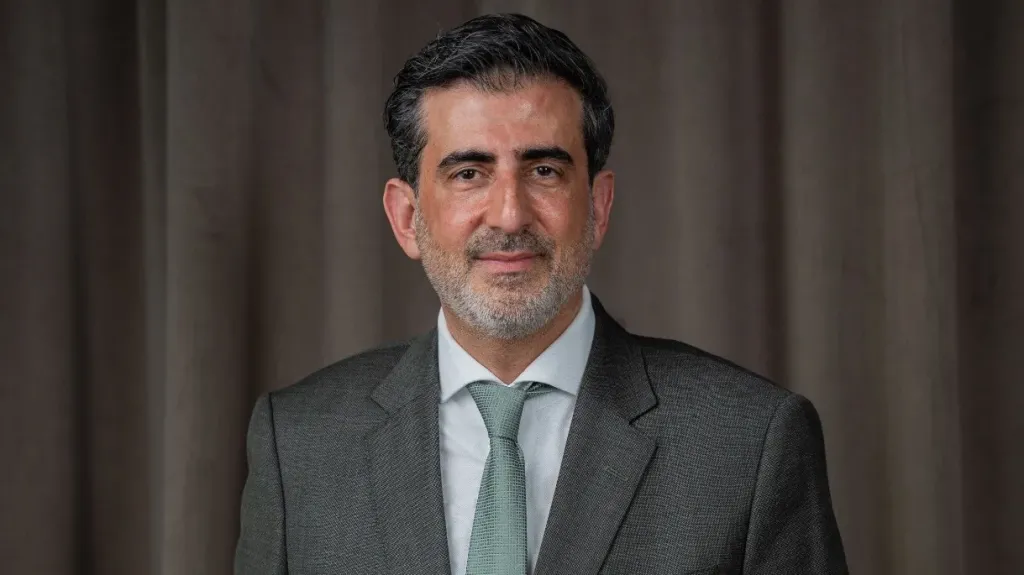
The Trump administration’s renewed reliance on Section 301 of the Trade Act of 1974 represents a turning point in US trade policy, as it seeks to transform tariffs from temporary measures into a long-term legal framework.
This direction is repricing global trade risks, increasing supply-chain costs, and redirecting investment toward economies and sectors with lower exposure to tariffs.
Entrepreneur Samer Choucair said these developments represent more than a change in trade policy. They mark the beginning of a new phase reshaping global capital-allocation decisions, in which geographic flexibility and diversified supply chains are becoming decisive factors in the valuation of companies and investment assets.
Global trade enters a new phase
Following the expiration of temporary tariffs imposed under Section 122, the US administration is moving toward the use of Section 301 as a more sustainable legal basis for imposing tariffs.
The approach is supported by investigations into forced-labor practices covering approximately 60 economies that account for the majority of US trade.
This shift reflects the transition of American trade policy from short-term measures toward a long-term industrial strategy designed to rebuild the domestic production base and reduce dependence on imports.
It creates a new operating environment for global companies and investors.
Samer Choucair emphasized that markets are beginning to treat tariffs as a permanent structural variable rather than a temporary event that will disappear when political administrations change.
Repricing economic risks
The new tariffs are expected to increase import costs, potentially adding to inflationary pressures in the United States and influencing the direction of monetary policy during the coming period.
Companies dependent on global supply chains will also face additional pressure on profit margins.
By contrast, domestic businesses and companies with production facilities in the United States or in countries covered by stable trade agreements may benefit.
Entrepreneur Samer Choucair said institutional investors are increasingly incorporating tariff exposure into corporate valuation models in the same way they account for interest-rate risks and currency volatility.
The reallocation of institutional capital
The new environment requires sovereign wealth funds, pension funds, and asset managers to review the geographic and sectoral distribution of their investments.
Samer Choucair noted that companies capable of diversifying their supply chains and relocating part of their production will be better positioned to preserve operating margins.
Companies heavily dependent on markets affected by tariffs, however, may face greater pressure on earnings and valuations.
Investor interest is also expected to increase in sectors connected to domestic manufacturing, logistics, industrial automation, and infrastructure, which are likely to be among the principal beneficiaries of the restructuring of global trade.
Implications for global markets
Industries such as electronics, automobiles, machinery, and textiles may experience greater pressure as trade costs rise, while US industrial companies could benefit relatively from tariff protection.
In fixed-income markets, the bonds of companies with substantial exposure to international trade may be repriced, while demand could increase for assets linked to economies possessing more resilient supply chains.
In commodity markets, manufacturing and petrochemical industries are likely to experience a greater impact, while the effect of tariffs on oil and gas may remain relatively limited compared with other industrial sectors.
Opportunities for the Saudi and Gulf economies
Samer Choucair said Gulf economies have an opportunity to benefit from the current transformation by increasing investment in advanced manufacturing, logistics, and digital infrastructure in line with the objectives of Saudi Vision 2030.
The region may also benefit from the redistribution of global supply chains as investors show greater interest in establishing regional production bases with lower exposure to geopolitical risks and trade restrictions.
Choucair added that Gulf sovereign investment funds will be strongly positioned to capture opportunities created by this transition, either through investment in emerging industries or through strategic partnerships with global companies.
The strategic outlook
Over the next 12 months, investors will focus on final decisions concerning the new tariffs, the extent of their coverage, and the commercial responses of the United States’ principal trading partners.
Over the medium term, the restructuring of global supply chains is expected to continue, with part of industrial investment moving toward markets offering regulatory stability and more flexible trade agreements.
Concluding his remarks, entrepreneur Samer Choucair said the coming phase will not represent a return to traditional globalization.
Instead, global trade will be rebuilt around economic security and industrial resilience, making the ability to manage geopolitical and commercial risks an essential requirement for achieving sustainable investment returns.