
Samer Choucair: SK Hynix’s Nasdaq Listing Reinforces the Investment Case for AI Infrastructure
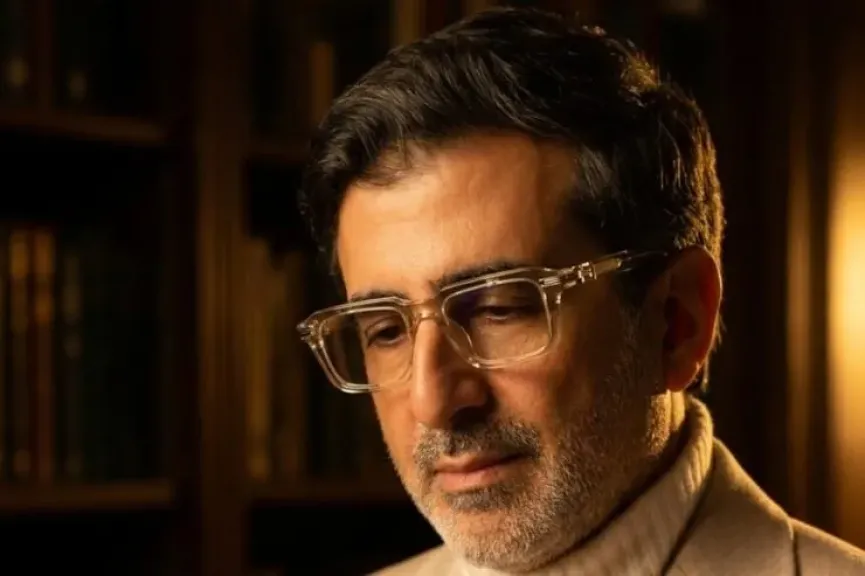
Entrepreneur Samer Choucair said SK Hynix’s historic Nasdaq listing represents a clear indication of the continuing global investment momentum behind artificial intelligence technologies and the growing investor interest in the digital infrastructure supporting this rapidly expanding sector.
The South Korean semiconductor company listed its American Depositary Receipts on Nasdaq in July 2026, giving international investors more direct access to one of the world’s leading producers of high-bandwidth memory.
Choucair explained that the company’s completion of one of the largest US offerings by a foreign business strengthens investor confidence in the semiconductor industry, particularly in companies producing advanced memory chips that are essential to artificial intelligence applications and data centers.
The offering raised approximately $26.5 billion, reflecting strong market demand for exposure to a company occupying a critical position in the global AI supply chain.
Samer Choucair noted that expanding global investment in cloud computing and digital infrastructure supports long-term demand for high-performance memory solutions.
This gives leading companies in the sector greater opportunities to grow, increase production capacity, and invest more extensively in technological innovation.
Choucair added that a listing in the United States provides SK Hynix with greater market liquidity and makes its shares more accessible to international investors.
It could consequently support further capital flows into the semiconductor industry while giving investment funds additional opportunities to diversify their technology portfolios.
Entrepreneur Samer Choucair emphasized that institutional investors increasingly regard artificial intelligence infrastructure companies as some of the most important drivers of economic and technological growth over the coming years.
However, investing in this sector requires careful assessment of valuation levels, global competition, technological cycles, and semiconductor supply-chain developments.
Choucair noted that emerging economies, including Gulf countries, can benefit from this momentum by expanding investment in digital infrastructure, data centers, artificial intelligence, and advanced computing.
Such investments can support economic-diversification objectives and accelerate the transition toward knowledge-based economies.
Concluding his remarks, Samer Choucair emphasized that the future of artificial intelligence investment will not be limited to software applications.
It will increasingly depend on companies controlling the foundational technologies required to power the industry, particularly advanced semiconductors and high-performance memory.
He added that these technologies will remain among the principal foundations of global technological growth during the next decade.