
Samer Choucair: Cooling US Inflation Reinforces Kevin Warsh’s Data-Led Strategy and Reshapes Investor Priorities
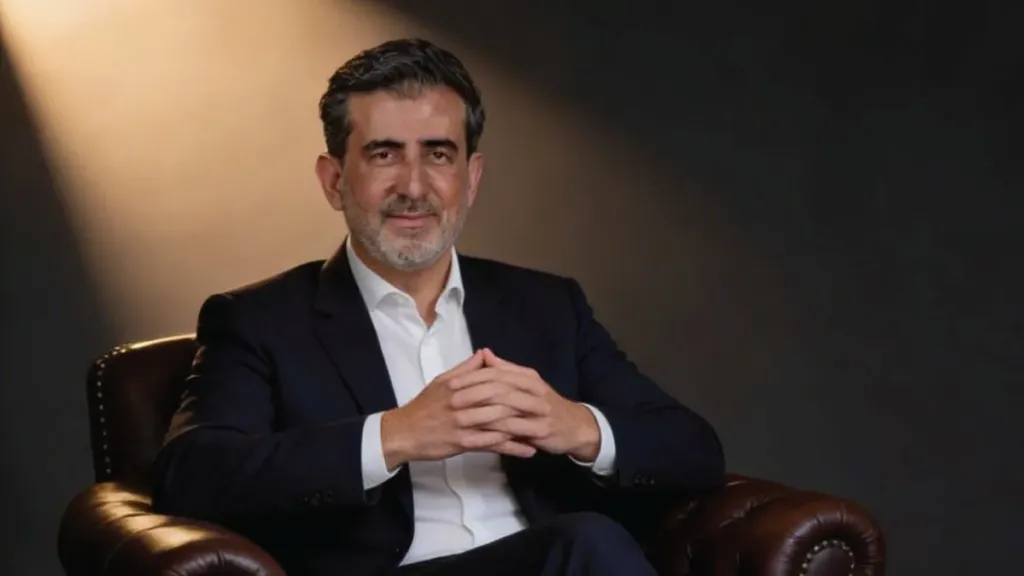
Investment leader Samer Choucair said the notable decline in US inflation has reshaped market expectations for the direction of monetary policy, increasing the likelihood that the Federal Reserve will keep interest rates unchanged at its next meeting.
He explained that this outlook is consistent with the data-led approach adopted by Federal Reserve Chair Kevin Warsh, who assumed the role in May 2026.
Choucair noted that these developments reduce the likelihood of rapid monetary easing and support the continuation of a “higher-for-longer” interest-rate environment.
This has direct implications for global asset valuations, capital flows, and financing costs in emerging markets. Samer Choucair emphasized that institutional investors must focus on sectors and assets capable of remaining resilient under a relatively stable monetary policy environment, while preparing for continued changes in expectations surrounding future rate adjustments.
Inflation is reshaping the direction of US monetary policy
Samer Choucair explained that the decline in US inflation is more than a positive monthly reading. It represents an important shift in the global investment environment because it reinforces the credibility of a policy framework based on actual economic data rather than predetermined expectations.
Choucair added that this development reduces the risk premium associated with sudden changes in interest rates and gives institutional investors greater visibility over the likely direction of monetary policy in the coming months.
He noted that markets increasingly view the latest inflation figures as a sign of relative stability in Federal Reserve decisions rather than as a temporary improvement in price indicators.
Kevin Warsh maintains a flexible, data-led approach
Samer Choucair noted that annual US consumer-price inflation declined to 3.5% in June from 4.2% in May. The Producer Price Index also fell by 0.3% during June on a seasonally adjusted monthly basis.
Choucair added that, although inflation remains above the Federal Reserve’s target, the latest data provide policymakers with more flexibility and reduce the immediate need for another change in interest rates.
He explained that market pricing following the inflation release indicated approximately a 90% probability that the Federal Reserve would keep rates unchanged at its July meeting, broadly supporting Warsh’s preference for flexibility and decisions based on incoming economic evidence.
Choucair added that Warsh emphasized during his recent congressional testimony that elevated inflation remains a central concern and that the Federal Reserve is reviewing how it collects, evaluates, and communicates economic data.
Warsh also highlighted the rapid expansion of investment in artificial intelligence and data centers, while noting that the Federal Reserve continues to assess its implications for inflation, employment, and long-term productivity.
Direct implications for global markets
Samer Choucair explained that relatively stable interest-rate expectations could keep US Treasury yields at elevated levels, supporting the US dollar and placing pressure on capital flows into emerging markets, particularly economies facing simultaneous fiscal and current-account deficits.
Choucair added that equity-market performance is likely to remain uneven. Certain financial and cyclical sectors may benefit from sustained interest rates, while highly valued growth and technology companies could face additional pressure unless they demonstrate the ability to generate strong cash flows without relying on lower financing costs.
He noted that continued resilience in the US economy, combined with declining inflation and the absence of a recession, may support global energy demand, creating a potentially positive environment for oil-exporting economies.
Choucair added that currency markets may experience further volatility when investor expectations diverge from the Federal Reserve’s actual policy decisions.
Restructuring investment portfolios
Samer Choucair emphasized that sovereign wealth funds and institutional investors should reassess their exposure to interest-rate-sensitive assets and increase their focus on sectors that have demonstrated resilience in a higher-for-longer environment.
Choucair added that greater stability in US monetary policy creates an opportunity to strengthen long-term investment in infrastructure, the digital economy, and assets whose returns depend more heavily on structural trends than on short-term movements in interest rates.
He noted that artificial intelligence remains one of the most important structural drivers of economic growth.
Samer Choucair explained that selective investment in the sector should therefore be viewed as a long-term strategic allocation rather than merely as an opportunity linked to the economic cycle.
Choucair also stressed the importance of managing currency exposure through appropriate hedging instruments, particularly while the US dollar remains supported by relatively strong economic data and elevated interest rates.
Positive implications for Saudi Arabia and Gulf economies
Samer Choucair explained that greater stability in US monetary-policy expectations comes at a time that supports Saudi Arabia’s economic diversification programs under Vision 2030.
It can help reduce volatility in external financing costs while preserving the appeal of foreign direct investment in non-oil sectors.
Choucair added that Gulf investment funds, which maintain substantial exposure to international markets, may benefit from reduced uncertainty in risk pricing.
This could allow capital to be directed more efficiently toward infrastructure, tourism, advanced manufacturing, and digital-economy projects.
He noted that continued resilience in the US economy, supported by moderating inflation, may also sustain global energy demand and provide additional support for oil revenues and Gulf budgets during the region’s economic transformation.
A strategic outlook for institutional investors
Concluding his remarks, Samer Choucair said institutional investors will continue monitoring core inflation and US labor-market data over the next 12 months to determine whether monetary policy will remain unchanged or gradually shift toward limited adjustments.
Choucair added that, over a three-to-five-year horizon, structural trends led by artificial intelligence and the transformation of the energy sector will remain the principal drivers of investment returns, regardless of short-term changes in monetary policy.
Samer Choucair emphasized that successful long-term capital-allocation strategies will depend on portfolios combining protection against monetary-policy risks with investment in assets that benefit from productivity growth and innovation.
He concluded that the latest inflation data do not alter the major structural direction of the economy, but they provide institutional investors with greater clarity to recalibrate their portfolios with increased precision and efficiency.