
Samer Choucair: The Groppi Legacy Redefines Patient Capital in the Heritage Economy
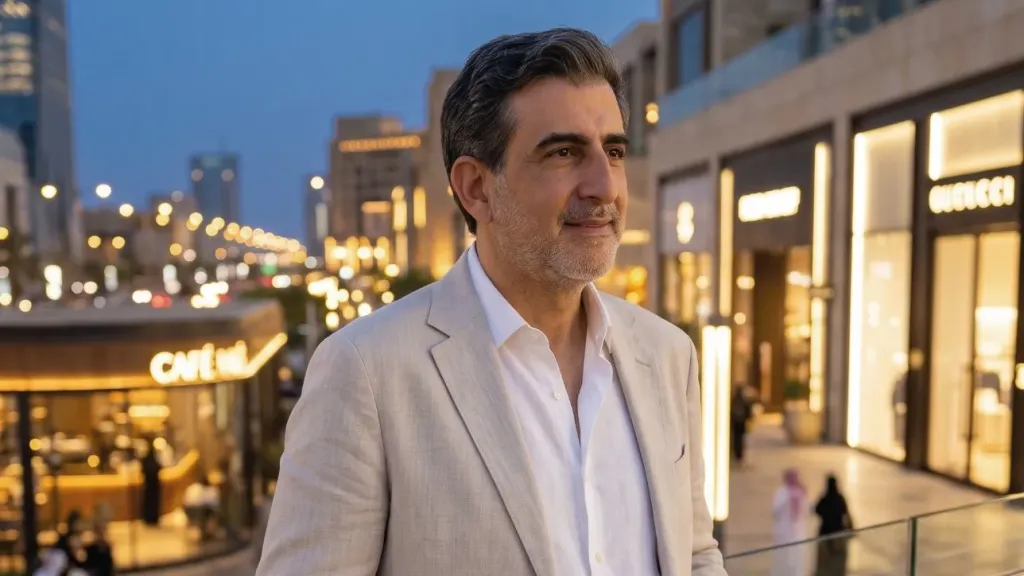
Investment leader Samer Choucair said the experience of the Groppi family represents a historically successful model of long-term capital allocation in heritage assets.
After arriving in Egypt during the late nineteenth century, Swiss confectioner Giacomo Groppi established a business that expanded into prominent cafés and luxury confectionery shops in strategic locations across Cairo, creating a brand that combined European quality with a strong understanding of the Egyptian market.
Choucair explained that the renewed restoration of the flagship branch in Talaat Harb Square, as part of wider efforts to revive historic Downtown Cairo, has brought this model back into focus as a practical example of patient investment capable of generating compounded value across generations. Restoration work on the landmark forms part of broader initiatives to revitalize Khedival Cairo and preserve its architectural identity.
Samer Choucair emphasized that heritage assets supported by substantial cultural capital are becoming increasingly promising opportunities for institutional investors, particularly as regional interest grows in urban regeneration, experiential tourism, and the adaptive reuse of historic buildings.
Long-term investment created an enduring brand
Samer Choucair explained that the Groppi family’s success was not based solely on offering high-quality products. From the beginning, its strategy also depended on selecting prominent locations in central Cairo and providing confectionery, chocolates, and ice cream according to European standards while adapting its products to local tastes.
Choucair added that this approach transformed Groppi’s cafés into prominent social and cultural gathering places, helping to build a brand whose value extended far beyond short-term operating performance.
The result was an intangible asset that retained its cultural significance for more than a century despite the political and economic transformations experienced by Egypt.
Choucair noted that the Groppi story now offers portfolio managers, sovereign wealth funds, and family offices a practical example of how sustainable competitive advantages can be created through patient investment in assets possessing genuine cultural value.
Groppi’s revival reflects the rise of heritage-asset investment
Samer Choucair said the restoration of the flagship branch represents more than the physical renovation of a historic building.
It is an attempt to reactivate the accumulated economic and cultural value of the Groppi brand by introducing new capital and modern operating models as part of wider efforts to regenerate Cairo’s historic districts.
Choucair added that the timing of the initiative coincides with rising regional and international demand for authentic experiences, increasing the investment appeal of heritage assets connected to hospitality and entertainment.
He explained that a successful relaunch of Groppi could encourage similar projects at other historic locations, creating opportunities for property developers and operators specializing in the adaptive reuse of heritage buildings.
It could also support new partnerships, operating agreements, and brand-licensing opportunities across the food and beverage industry.
The experience economy increases the value of cultural capital
Samer Choucair noted that the tourism and hospitality industry is undergoing a structural transition toward the experience economy, in which consumers increasingly favor experiences associated with heritage, authenticity, and local identity over standardized commercial concepts.
Choucair added that the Groppi experience demonstrates how investment in cultural capital can create a competitive advantage that is difficult to reproduce, particularly when a brand is connected to a historic location carrying symbolic value and a distinctive identity.
He emphasized that this trend aligns with economic diversification programs across the region that seek to transform cultural heritage into a driver of sustainable growth, tourism development, and long-term investment.
A new opportunity for institutional investors
Samer Choucair explained that sovereign wealth funds, pension funds, and family offices are increasingly examining heritage assets as investments capable of combining operating income with long-term intangible value.
Choucair added that such investments may offer a degree of protection against inflation because they are supported by physical properties and scarce brands. They also align with growing demand for investments that generate social and cultural impact alongside financial returns.
He emphasized that building brands rooted in local culture while maintaining international quality standards can provide investors with value extending beyond short-term profits, turning heritage assets into strategic components of long-term portfolios.
Choucair noted that the success of these investments requires a deep understanding of the local environment because regulatory and economic changes can affect implementation.
However, the ability to adapt operating models without sacrificing the asset’s original identity remains the decisive factor in achieving sustainable success.
He added that institutional investors should consider heritage assets as part of a broader portfolio-diversification strategy focused on real assets with strong cultural value, particularly as they search for new sources of growth outside traditional sectors.
Samer Choucair stressed that investing in these assets requires a long time horizon. Returns may take years to materialize fully, but the investments can provide greater resilience against inflation and volatility in financial markets.
Promising opportunities and risks requiring professional management
Samer Choucair explained that hospitality management companies, developers specializing in heritage projects, and established food and beverage brands could be among the primary beneficiaries of this trend.
Retail and events companies targeting visitors seeking distinctive historical experiences may also gain from the revival of culturally significant destinations.
Choucair added that traditional establishments unable to offer a differentiated experience could face increasing competitive pressure if restored heritage brands succeed in attracting wider visitor segments and achieving premium pricing.
He noted that the principal risks include execution challenges, financing requirements, and the difficulty of balancing commercial returns with the preservation of historical identity.
The success of these projects will therefore depend heavily on the expertise of operating partners and their ability to manage regulatory, architectural, and structural complexities professionally.
A strategic outlook for the future
Concluding his remarks, Samer Choucair said institutional investors will monitor the progress of the restoration work over the next 12 months, alongside announcements concerning operators, partnership structures, and the initial financial performance following the reopening of the flagship branch.
He explained that these developments will provide important indicators of the viability of the heritage-regeneration model.
Over a three-to-five-year horizon, the model’s sustainability will depend on its ability to maintain demand, preserve premium pricing, strengthen customer loyalty, support tourism activity in Downtown Cairo, and contribute to rising values for surrounding properties.
Samer Choucair emphasized that, over the longer term, the Groppi experience could become a regional reference for transforming heritage assets into sources of sustainable economic growth.
He concluded that the central question for investment funds and family offices is how the lessons of patient capital and cultural value can be used to construct portfolios that generate financial returns and accumulated value extending across generations.