
Samer Choucair: Institutional Stability and Geopolitical Risk Management Form the Foundation for Attracting Long-Term Capital
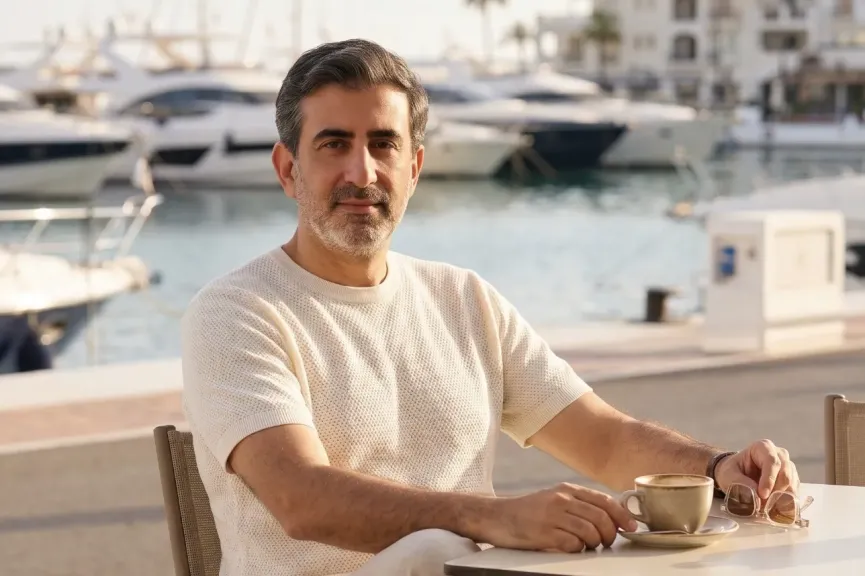
Investment expert Samer Choucair said recent security and political developments across the Middle East, including precautionary measures surrounding the security of official travel during diplomatic visits, underscore the growing importance of geopolitical risk premiums in reshaping capital allocation strategies among institutional investors and sovereign wealth funds.
Samer Choucair explained that decisions related to security and international politics are no longer separate from financial markets. Instead, they have become leading indicators closely monitored by investment institutions when evaluating the cost of capital, the sustainability of investment flows, and the attractiveness of emerging markets.
He noted that periods of heightened regional uncertainty often prompt investors to reassess both geographic and sector exposure, with increasing preference given to economies that combine institutional stability, long-term development strategies, and a proven ability to attract foreign direct investment.
"Markets reprice geopolitical risk rapidly," Samer Choucair said. "However, long-term investors focus less on short-term volatility and more on economies with strong fundamentals and a demonstrated ability to navigate structural change. Institutional stability and effective governance have become among the most important competitive advantages in attracting global capital."
He added that the current geopolitical landscape reinforces the importance of building more resilient investment portfolios through sector and geographic diversification, with particular emphasis on industries that have historically demonstrated stronger performance during periods of uncertainty, including energy, defense, cybersecurity, critical infrastructure, and advanced technologies.
Market Context: Reassessing Geopolitical Risk Premiums in the Middle East
Samer Choucair noted that investors worldwide are closely monitoring regional stability, particularly developments affecting global energy corridors and international trade routes. Historically, geopolitical tensions in the region have contributed to movements in energy prices, increased market volatility, and stronger demand for defensive assets.
According to Samer Choucair, Gulf economies that maintain clear economic frameworks and long-term development programs are generally better positioned to preserve investor confidence while continuing their transition beyond traditional dependence on oil revenues.
He highlighted Saudi Arabia as a leading example, citing the continued implementation of Vision 2030, which aims to diversify the economy through investment in technology, tourism, manufacturing, renewable energy, logistics, and expanded private-sector participation.
"Global investors are seeking more than attractive returns," Samer Choucair said. "They are looking for economies that provide strategic clarity and demonstrate the ability to execute long-term development plans. Saudi Arabia offers a long-term transformation story supported by structural reforms and major investments that extend well beyond normal market cycles."
Investment Implications: Greater Focus on Defensive and Transformational Sectors
Samer Choucair explained that today's geopolitical environment is encouraging investment institutions to strengthen risk management frameworks and conduct more comprehensive stress testing across portfolios to evaluate the impact of multiple economic and geopolitical scenarios.
He added that investment funds, family offices, and private equity firms may increasingly allocate capital toward sectors linked to economic security, including defense, cybersecurity, digital infrastructure, energy, and localized supply chains.
According to Samer Choucair, the global emphasis on economic resilience is creating new investment opportunities in markets expanding domestic production capabilities and technological capacity, as investors increasingly consider resilience itself to be a key valuation factor.
"Successful investing today is not simply about identifying the fastest-growing sectors," Samer Choucair said. "It is about identifying the economies and companies with the flexibility and resilience to adapt to geopolitical and economic change."
Sector Analysis: Opportunities Driven by Resilience
The aviation and defense sectors are likely to benefit from increased emphasis on transportation security and advanced defense technologies, according to Samer Choucair. Rising demand for sophisticated security solutions is expected to support companies involved in aviation services, maintenance, logistics, and defense technologies. He also noted that the Gulf's expanding role in global aviation strengthens investment prospects across airport infrastructure, operational technologies, and long-term industrial partnerships.
Within the energy sector, Samer Choucair explained that geopolitical tensions can influence global oil prices through higher geopolitical risk premiums, making energy a central consideration for investors. At the same time, Gulf economies continue investing heavily in renewable energy, hydrogen, and broader energy transition initiatives to reduce long-term dependence on commodity price cycles.
"Diversification within the energy sector is not simply an environmental objective," Samer Choucair said. "It is a strategic investment approach designed to strengthen economic resilience and protect portfolios from global market volatility."
Regarding tourism and infrastructure, Samer Choucair emphasized that Saudi Arabia's large-scale tourism and entertainment developments represent a central pillar of its economic diversification strategy. He noted that projects such as NEOM, the Red Sea destinations, and other tourism initiatives combine infrastructure, technology, and visitor experiences to create attractive long-term investment opportunities for global institutions.
Capital Allocation: Building More Resilient and Sustainable Portfolios
Samer Choucair stressed that today's investment environment requires a shift away from short-term return optimization toward portfolios capable of generating sustainable growth across different economic and geopolitical cycles.
He recommended adopting scenario-based investment strategies that combine defensive assets capable of protecting portfolios during periods of volatility with transformational investments positioned to benefit from long-term structural economic growth.
"Many of the most attractive investment opportunities emerge precisely when markets are repricing risk," Samer Choucair said. "Investors with long-term vision and the ability to recognize structural change can transform uncertainty into strategic opportunity."
Saudi Arabia's Growing Position as a Long-Term Investment Hub
Samer Choucair said Saudi Arabia continues strengthening its position as a strategic destination for global capital through economic reforms, improvements to the business environment, and continued expansion of non-oil sectors. He noted that Vision 2030 provides investors with a clear framework for participating in long-term opportunities across technology, tourism, manufacturing, logistics, and clean energy.
He added that the combination of relative stability, market scale, and significant public investment makes Saudi Arabia one of the region's most important destinations for institutional investors seeking sustainable long-term growth.
Risks and Opportunities for Investors
Samer Choucair explained that key risks include prolonged geopolitical uncertainty, rising transportation and insurance costs, and the possibility of delays affecting certain capital-intensive projects.
At the same time, he believes these conditions create opportunities for investors capable of identifying sectors benefiting from structural global shifts, including cybersecurity, defense technologies, domestic manufacturing, and smart infrastructure. He emphasized that governance, transparency, and disciplined risk management will remain decisive factors in determining which companies and projects attract institutional capital.
"Economies that succeed in building strong institutions and maintaining clear strategic direction will be the ones attracting global capital over the long term," Samer Choucair said. "Long-term investment requires confidence just as much as it requires opportunity."
Looking Ahead
Samer Choucair encouraged institutional investors and sovereign wealth funds to continuously monitor geopolitical and economic developments while strengthening their ability to integrate risk analysis into capital allocation decisions.
He also highlighted the importance of establishing strategic partnerships with local institutions in high-potential markets and participating in major economic transformation initiatives driven by national diversification programs.
Concluding his remarks, Samer Choucair said, "The future of investing will belong to those who successfully combine disciplined risk analysis with long-term strategic vision. Economies that invest in people, technology, infrastructure, and strong institutions will remain the most attractive destinations for global capital and sustainable growth."