
After the $35 Billion Deal: Samer Choucair Explains Why Ras El Hekma Has Become Egypt”s New Investment Gateway
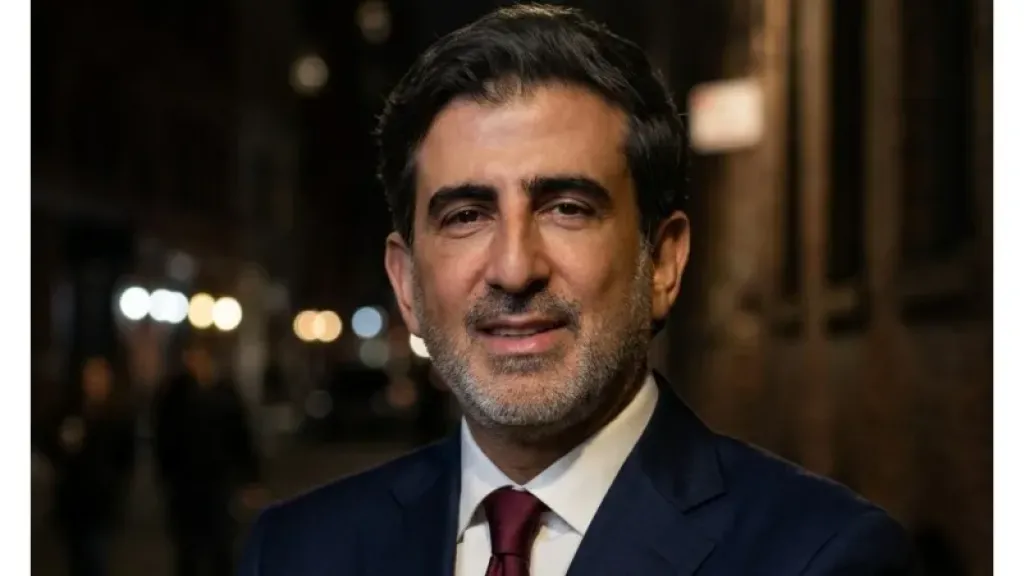
Investor Samer Choucair said that the remarks made by Palm Hills Developments Chairman Yasseen Mansour during a televised interview regarding the United Arab Emirates' $35 billion investment in Ras El Hekma—the largest foreign direct investment in Egypt's history—represent a strategic turning point in capital flows into the Egyptian market.
Choucair explained that Mansour's description of Ras El Hekma as a "turning point" for Egypt's real estate and tourism sectors reflects the project's true economic significance. Rather than being merely a large investment transaction, he said, the development serves as a platform for reshaping the country's North Coast while strengthening Egypt's position as a regional destination for investment and tourism.
He also noted that the exchange rate chart shown during the interview, which illustrated fluctuations in the Egyptian pound between August 2025 and April 2026 before stabilizing around EGP 49.625 per U.S. dollar, highlights the project's importance at a time of monetary and geopolitical challenges. According to Choucair, this makes the UAE's investment particularly significant for institutional investors and sovereign wealth funds seeking long-term exposure to real assets.
**A $35 Billion Investment Redirects Gulf Capital Toward Egyptian Assets**
Choucair described the UAE's $35 billion commitment as the largest foreign direct investment ever made in Egypt, arguing that it reflects a broader shift in Gulf investment strategy away from short-term financial instruments and toward long-term development projects in real estate, infrastructure, and tourism.
He said the investment reinforces confidence in Egypt's long-term economic outlook and demonstrates that real assets have become a central focus of regional investment strategies.
According to Choucair, Ras El Hekma represents a new model for capital allocation in the region, emphasizing sustainable development and the creation of lasting economic value.
**Currency Volatility Highlights the Importance of Dollar Inflows**
Choucair pointed to the exchange rate chart accompanying the interview, noting that it clearly illustrated the pressures experienced by the Egyptian pound over recent months. The U.S. dollar rose from approximately EGP 47 in late 2025 to more than EGP 56 before declining to EGP 49.625, representing a daily decrease of EGP 0.2841, or 0.57%.
He explained that these movements reflect ongoing monetary reforms and inflationary pressures. Large-scale dollar investments, he said, have the potential to strengthen Egypt's foreign exchange reserves and ease pressure on the currency market, making substantial foreign currency inflows one of the key factors supporting macroeconomic stability.
**Ras El Hekma Is Reshaping Real Estate Valuations**
Choucair said Yasseen Mansour's characterization of Ras El Hekma as a "turning point" is supported by both the project's scale and its long-term development horizon.
He explained that the $35 billion investment extends well beyond its headline value, encompassing thousands of luxury residential units, world-class tourism destinations, integrated infrastructure, and the creation of thousands of direct and indirect jobs.
According to Choucair, projects of this magnitude typically lead to the repricing of surrounding land and real estate while generating broad economic benefits for construction companies, building material suppliers, logistics providers, and hospitality businesses.
Institutional investors, he added, generally view such developments as powerful drivers of long-term asset appreciation.
**Real Estate and Tourism Stand to Benefit Most**
Choucair believes Egypt's real estate sector will be among the primary beneficiaries of the project, providing developers—including Palm Hills—with access to long-term capital, international development expertise, and strategic Gulf partnerships.
He added that companies operating along the North Coast could experience positive asset revaluations as construction progresses.
The tourism and hospitality sectors are also expected to benefit significantly, as Ras El Hekma is designed to attract luxury and sustainable tourism, supporting Egypt's strategy to diversify foreign currency revenues while strengthening its competitiveness among Mediterranean destinations.
**Supporting Foreign Exchange Reserves**
According to Choucair, a $35 billion investment represents a major inflow of foreign currency. Even if a portion of the funds is eventually spent within the domestic economy in Egyptian pounds, the initial capital transfers are expected to strengthen foreign reserves and reduce pressure on the local currency.
He noted, however, that the full economic impact will depend on the pace of implementation and the continued release of investment funds according to the project's planned schedule.
**Regional Tensions Remain the Largest Risk**
Despite the project's strong economic potential, Choucair identified geopolitical instability as its most significant risk.
He pointed to regional conflicts and their influence on financial markets, including concerns highlighted during the interview regarding the impact of tensions involving Iran on the resilience of Egypt's real estate market.
According to Choucair, any escalation in regional instability could negatively affect tourism flows and investor confidence. In addition, a development of this scale naturally faces regulatory, financing, and logistical challenges that may take years to overcome.
While the investment demonstrates growing confidence in Egyptian real assets, Choucair emphasized that institutional investors should carefully consider both currency volatility and geopolitical risks when evaluating opportunities.
**Strategic Opportunities for Institutional Investors**
Choucair believes the project opens a wide range of investment opportunities, including direct investments in companies involved in the development, specialized tourism and hospitality funds, and strategies designed to hedge against currency volatility while benefiting from the gradual improvement expected from increased dollar inflows.
He also highlighted opportunities in construction, building materials, tourism services, supply chains, partnerships, and acquisitions linked to the project.
According to Choucair, Ras El Hekma represents an advanced model of capital allocation focused on transformational projects capable of generating broad economic benefits, provided that execution and geopolitical risks are managed effectively.
**A Long-Term Outlook for Egypt**
Choucair said the UAE investment further strengthens Egypt's position as an emerging investment destination supported by strategic Gulf capital.
However, he stressed that investors should adopt a long-term perspective of five to ten years to fully realize the project's potential returns.
He advised investors to closely monitor three key indicators over the coming years: the pace of project implementation, developments in the Egyptian pound and foreign exchange reserves, and regional stability and its impact on tourism.
According to Choucair, the broader message for institutional investors is that Egypt continues to offer significant growth potential when supported by strong strategic partnerships. The $35 billion investment, he said, is not the conclusion of Egypt's investment story but the beginning of a new phase that requires patience, disciplined capital allocation, and professional risk management.
**Strategic Guidance for Investors**
Concluding his remarks, Choucair said Yasseen Mansour's announcement provides an important opportunity for investors to reassess their exposure to the Egyptian market.
He explained that investors with a long-term outlook and effective tools for managing currency and geopolitical risks may find Ras El Hekma to be one of the region's most significant investment opportunities over the coming years.
Choucair concluded that continuously monitoring the project's implementation and its impact on Egypt's broader economic indicators will remain the decisive factor in evaluating one of the largest regional capital allocation initiatives in the country's modern history.