
Samer Choucair: Major Global Events Have Become Integrated Economic, Security, and Media Ecosystems
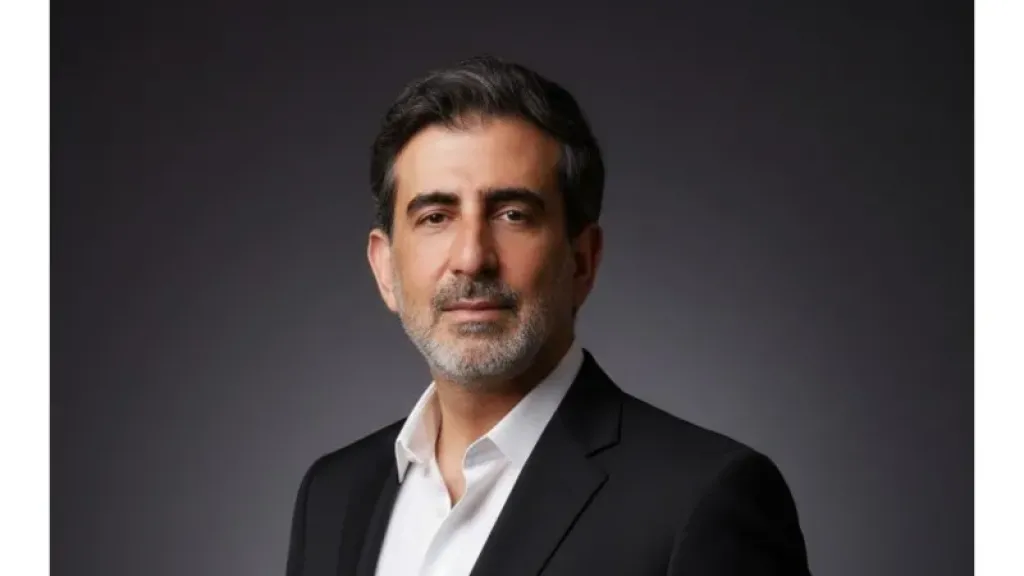
Investment expert Samer Choucair said that the announcement of the marriage of global music star Taylor Swift and American football player Travis Kelce in New York City represents far more than a social occasion. According to Choucair, it reflects the profound transformation of the global entertainment industry, where the personal milestones of celebrities now intersect directly with economics, media, security, and brand management.
Choucair explained that the widely circulated image showing a man in a formal suit standing alongside two New York Police Department officers outside a modern building should not be viewed as merely a security photograph. Instead, he said, it symbolizes the intersection of global celebrity, institutional security, and the extensive operational planning that now accompanies internationally significant events.
He noted that the wedding of Taylor Swift and Travis Kelce, reportedly held on July 3, 2026, at Madison Square Garden in New York before approximately 1,000 guests from the worlds of entertainment and sports, with comedian Adam Sandler officiating the ceremony, illustrates the scale and cultural significance of the event. Choucair said it quickly evolved beyond entertainment headlines into a story with worldwide economic and media interest.
According to Choucair, although the widely shared image does not directly feature the bride or groom, its visual elements capture the broader significance of the occasion. The formal attire conveys institutional organization, the serious expressions reflect discipline and readiness, while the presence of police officers and the urban setting highlight the security dimension that has become inseparable from the management of major international events.
He added that the contrast between a private celebration and visible security measures reflects the nature of celebrity in the modern era. Personal milestones involving global public figures, he said, are no longer isolated private occasions but events requiring extensive security planning and media coordination, particularly in a city such as New York, which regularly hosts internationally prominent gatherings.
Choucair emphasized that security at such events is no longer simply a precautionary measure but has become an integral component of event production itself. The officers seen in the image, he said, represent the largely unseen infrastructure that enables large-scale events to operate successfully, just as Madison Square Garden itself became a carefully managed venue for hosting a globally significant celebration.
He further explained that the importance of the wedding lies not only in the prominence of the couple but also in the union of two of the world's most recognizable figures from music and professional sports. Taylor Swift, a 14-time Grammy Award winner whose Eras Tour generated substantial economic activity across host cities, and Travis Kelce, a three-time Super Bowl champion with the Kansas City Chiefs, together represent two of the most influential sectors within the global entertainment economy.
According to Choucair, their marriage symbolizes the convergence of two of the world's largest entertainment industries, transforming what would traditionally be viewed as a private event into a global cultural and economic phenomenon.
He also noted that the image illustrates an important reality: celebrity at the highest level is inseparable from comprehensive security infrastructure. Such arrangements, he argued, are not a luxury but an economic necessity, as high-profile events attract thousands of visitors, journalists, photographers, and media organizations, generating significant economic activity across hospitality, hotels, transportation, broadcasting, and related industries. Every widely shared image, even one taken outside the event itself, contributes to the overall marketing value and public visibility of the occasion.
Choucair pointed out that the economic ecosystem surrounding these events extends well beyond what audiences see. Previous Taylor Swift tours demonstrated how a single entertainment event could inject billions of dollars into local economies through tourism and consumer spending. A wedding of this scale, he said, introduces additional commercial opportunities through sponsorship agreements, media rights, commemorative merchandise, and indirect benefits for companies operating across the sports and entertainment industries.
He added that images showing formally dressed individuals alongside security personnel have become a recurring feature of major international events, reflecting the existence of an entire industry operating behind the scenes, including private security firms, crowd management specialists, event insurance providers, and risk management companies. These sectors continue to experience sustained growth as the global entertainment industry expands.
According to Choucair, in an era where an event's value is increasingly measured by digital engagement and online visibility, every image effectively becomes an economic asset that enhances both the event itself and the brands associated with it.
He also discussed the growing influence of social media, noting that the widely circulated image spread rapidly through messaging platforms while carrying the branding of a well-known news agency and generating significant online engagement. This, he argued, raises important questions about how news is consumed in the digital age.
Choucair stressed that even when a news story is accurate, the accompanying image may not necessarily have been captured at the exact moment of the event or fully represent its circumstances. Images may be symbolic or sourced from a different context, illustrating the growing challenge of maintaining media credibility at a time when visual content has become one of the most powerful tools for shaping public perception.
He added that this reality highlights the importance of developing stronger media literacy skills, particularly among audiences in the Arab world, enabling people to distinguish between illustrative images and documentary photographs. Rapid online circulation, he noted, does not always provide complete context.
According to Choucair, the image does not diminish the authenticity of the event itself but rather presents it visually in a way that amplifies its reach. While this increases media value, it also places greater responsibility on news organizations and digital platforms to clearly explain the context surrounding published visual material.
He further stated that the event offers valuable lessons for Gulf countries that continue investing heavily in the entertainment sector through strategic initiatives. Projects such as Qiddiya, Diriyah, and Riyadh Season demonstrate the importance of attracting world-class events as engines of economic growth and diversification.
Choucair explained that hosting internationally recognized figures requires much more than modern infrastructure. It demands advanced capabilities in security, crowd management, media operations, and national brand protection to maximize operational efficiency and long-term economic returns.
He also noted that the police officers featured in the image symbolize the critical but often overlooked role played by security institutions in ensuring the success of major international events by protecting guests and maintaining the smooth operation of complex gatherings.
Concluding his remarks, Choucair said that while the marriage of Taylor Swift and Travis Kelce marks a new chapter in their personal lives, it also opens a broader discussion about the future of the entertainment industry, particularly as advances in artificial intelligence continue making image generation and manipulation increasingly accessible.
He emphasized that the widely shared image, with its symbolism of professionalism, security, and institutional management, reminds the world that celebrity is no longer defined solely by cameras and public attention. It has become a responsibility requiring sophisticated management across security, economic, and media dimensions.
Choucair concluded by saying, "Major global events are no longer measured simply by attendance figures. Their true value lies in their ability to generate sustainable economic impact, strengthen media credibility, and demonstrate the effectiveness of the institutions managing them, because genuine success begins with the careful management of the details that the public rarely sees."