
Samer Choucair: Investing in Children from Birth Is One of the Most Impactful Economic Models
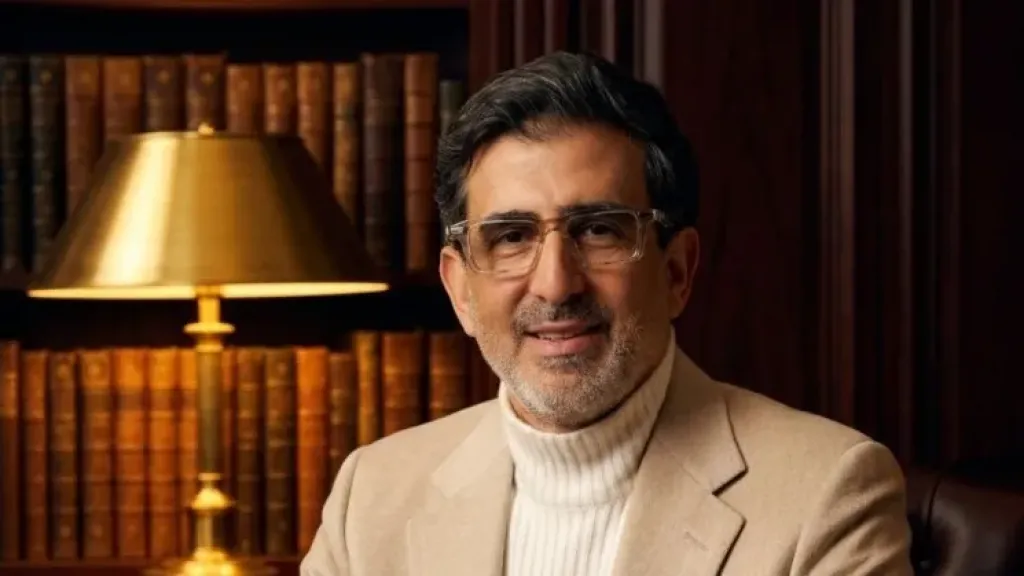
Investment expert Samer Choucair stated that the United States' launch of the "Trump Accounts" program alongside celebrations marking the country's 250th anniversary represents a strategic shift in the relationship between the state and its citizens. Rather than focusing solely on direct financial support, the initiative aims to foster an investment culture from birth, helping build sustainable wealth for future generations.
Choucair said that the widely circulated image of President Donald Trump announcing the program while standing behind a podium surrounded by American flags, with a prominent national monument in the background, represents far more than a political or ceremonial moment. Instead, it conveys a symbolic economic message that connects America's historical legacy with the future of its national economy.
He explained that the backdrop, featuring monumental stone carvings and illuminated American flags, gives the event significance beyond the launch of a financial initiative. It reflects the continuity of American institutions while linking the nation's 250th Independence anniversary with a long-term economic vision centered on building wealth for future generations.
Choucair added that the visual presentation clearly demonstrates how national symbols can reinforce long-term economic policies, transforming investment in people into part of the nation's broader narrative rather than a standalone financial measure.
He noted that the "Trump Accounts" program provides every American child born between 2025 and 2028 with a government-funded investment account worth $1,000. The accounts offer tax advantages similar to individual retirement accounts, while allowing families and employers to make additional contributions. Funds will be invested in low-cost index funds tied to U.S. equities, including funds tracking the S&P 500 Index.
According to Choucair, the philosophy behind the initiative extends far beyond the initial $1,000 contribution. Its objective is to instill the concepts of ownership and investing from the earliest stages of life, strengthening financial literacy and encouraging future generations to focus on building assets rather than relying primarily on consumption or traditional forms of government assistance.
Choucair emphasized that launching the program during the country's 250th Independence celebrations gives it important symbolic significance, presenting it as a renewal of the American Dream by economically empowering younger generations during a period marked by rapid technological change, evolving labor markets, and rising living costs.
He explained that the U.S. economy currently requires innovative tools to address wealth inequality and that investing in children from birth represents one of the most effective long-term strategies for strengthening both human and financial capital.
Choucair added that millions of children are expected to benefit from the initiative over the next four years. Combined with contributions from families and private employers, these accounts could channel billions of dollars into U.S. financial markets over the coming decades, supporting long-term demand for equities while strengthening an investment culture among American households.
He also noted that the initiative could help reduce intergenerational wealth inequality if it succeeds in increasing saving and investing among middle- and lower-income families. In addition, it presents significant growth opportunities for fintech companies specializing in investment account management and financial education for children and young adults.
Choucair pointed out that the program also sends a global message reinforcing the continued attractiveness of U.S. capital markets as a destination for long-term investment at a time when major economies are competing intensely to attract capital and drive innovation.
He explained that the visual elements of the announcement carry strategic symbolism. The monumental stone faces represent historical continuity, while the American flags symbolize national unity. President Trump's central position in the image reflects the role of political leadership in shaping economic policies whose effects may extend for decades.
Choucair added that linking history with investment conveys the idea that genuine national independence is achieved not only through political sovereignty but also by enabling citizens to own productive assets and participate actively in the economy.
He emphasized that the initiative creates substantial opportunities for financial markets, with expectations of supporting growth in asset management firms, fintech companies, and digital investment platforms while encouraging the development of artificial intelligence-powered investment solutions and automated portfolio management.
At the same time, Choucair noted several challenges that deserve careful attention, including financial market volatility that could affect investment values during certain periods, as well as the importance of building a comprehensive financial education system to ensure these accounts become genuine wealth-building tools rather than dormant savings vehicles.
Choucair said the initiative offers an important model for countries pursuing economic diversification, particularly the Gulf states, where investment in human capital aligns closely with long-term development objectives.
He added that Saudi Arabia, through Vision 2030, has established an advanced model for investing in people, developing financial markets, and promoting entrepreneurship, making international initiatives such as this valuable opportunities for exchanging expertise and adopting global best practices in building knowledge-based investment-driven economies.
Choucair stressed that programs of this nature highlight the importance of partnerships between governments and the private sector in promoting investment awareness, creating more sustainable financial systems, and empowering younger generations to build wealth responsibly.
He further noted that long-term capital flowing into U.S. markets through these investment accounts could deepen market liquidity and benefit international investors, including Gulf sovereign wealth funds that continue diversifying their portfolios while seeking stable long-term growth opportunities. The initiative may also create additional opportunities for cooperation between the United States and the Gulf region in financial technology and financial education.
Concluding his remarks, Choucair said that the true value of any economic program should not be measured by its size at launch but by its ability to transform individual behavior and build a lasting financial culture across generations. He emphasized that investing in children from birth represents one of the world's most sustainable economic models when combined with financial education and sound governance.
He concluded by saying: "National wealth does not begin when people enter the workforce. It begins when governments and societies provide individuals with the tools to invest in their future from the very first day of life. The world's most successful economies are those that plant the seeds of wealth early and reap their benefits across generations."